John McTernan, a former political secretary to Tony Blair, has argued that defence spending is an "insatiable beast" and that new Chancellor John Healey is right to tame it. Writing in a comment piece, McTernan says the Ministry of Defence grossly overspends then claims poverty, and that it is time it was treated as just one part of a progressive government.
Healey's appointment signals a balanced approach
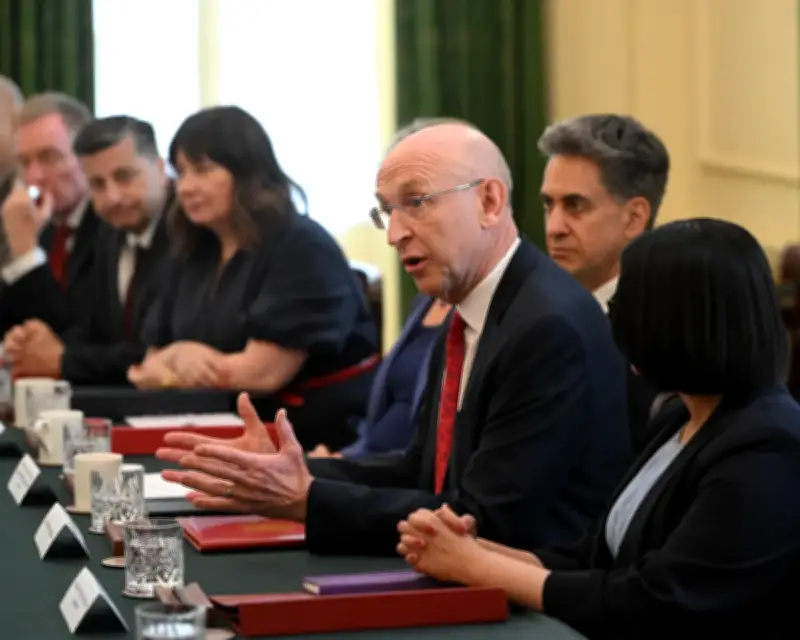
McTernan notes that Prime Minister Andy Burnham's appointment of Healey as chancellor showed confidence, ending weeks of speculation that the choice was between energy secretary Ed Miliband and home secretary Shabana Mahmood. Healey's two years as defence secretary mean he knows both sides of the argument on meeting Nato defence spending targets without derailing social ambitions.
The article points out that last week it was revealed that balancing defence, social care, council housing and devolution would be deferred to a spending review next year, with October's budget set to be a low-key, continuity affair. McTernan says this is good because the facts about the MoD are stark, citing National Audit Office reports detailing failures in spending control.

Producer capture and the military industrial complex
McTernan recalls a saying from his time as a special adviser in the MoD during the Gordon Brown government: if you wanted to know what was going on in procurement, you spoke to BAE Systems. He says this was a sardonic acknowledgment of producer capture by UK defence industries, and that phrases like "sovereign capability" or GDP percentage targets mean the same thing: the military industrial complex is hungry.
He argues this is a strong reason for Wes Streeting's appointment as defence secretary, noting he has seemingly tamed the NHS appetite for overspending. The Institute for Fiscal Studies reported last week that the NHS saw no spending top-up for frontline services from the Treasury reserve or capital budgets for the first time since 2013-14.
Geopolitical context and political responses
McTernan says geopolitics looms over the defence question, noting that President Trump was the "godfather" of the Hague investment plan committing Nato allies to higher defence spending, despite threats to alliance members. He criticises Keir Starmer's approach of flattery and subservience, saying going along with a bully reinforces their behaviour.
He highlights Canada's Prime Minister Mark Carney as modelling a more appropriate response, including a Davos speech sketching a new world order and floating a deepening Canada-EU partnership that could set a precedent for the UK to realign with the EU without rerunning the Brexit debate. He also praises Miliband, now foreign secretary, for taking the UK seat on the World Bank rather than delegating it.
Defence as a positive tool
McTernan argues the question rarely addressed is what kind of country we are fighting for, with Burnham's programme including "growth in every postcode", fixing social care, devolving power and building council houses. He says defence can be a wedge for Burnham, noting the Conservatives and Reform UK were so eager to support Trump they wanted the UK to commit to the Iran war, and criticising the SNP and Greens on defence positions.
He concludes that defence is returning to the right space in UK politics: neither an unfeasible demand on resources nor a neglected backwater, but a positive tool for a progressive government.