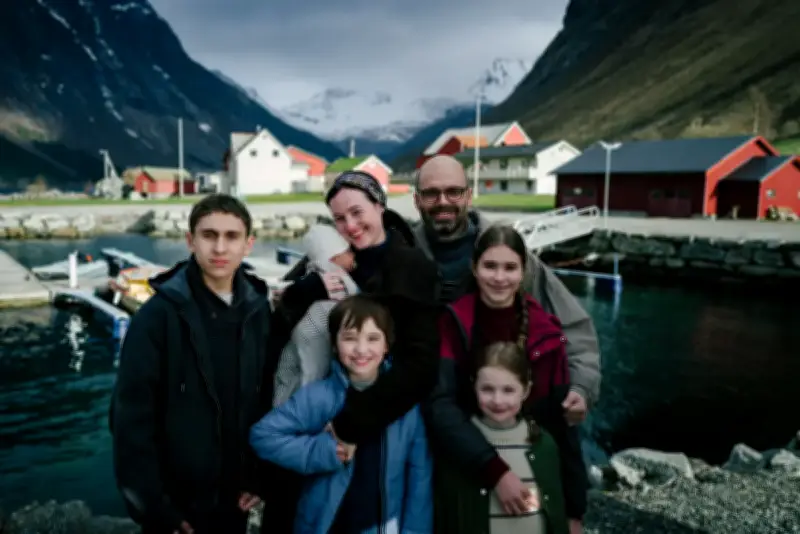
Cristian Mungiu's Cannes-winning film Fjord has reignited a culture clash between Nordic liberal values and eastern European family traditions, drawing record audiences in Romania and sparking debate about the EU's internal contradictions. The drama, which echoes the 2015 case of a Romanian couple whose children were removed by Norwegian authorities, premiered in Romania as a one-day preview in June, reportedly attracting over 40,000 viewers across 53 towns and 96 cinemas in a single night – a number rarely seen for arthouse cinema in the country.
Familiar Fault Lines
The film references the 2015 case of Marius and Ruth Bodnariu, a Pentecostal couple from Romania living in Norway, whose five children were removed by Barnevernet, Norway's child welfare authority, over concerns about possible corporal punishment and religious indoctrination. The fallout in Romania lasted months, with diplomatic friction, public demonstrations and constant media coverage. The children were eventually returned, and the Bodnarius later resettled in Romania.
Mungiu does not retell the story beat for beat, but Romanian viewers recognised its origins. The reception divided audiences: some called the film "dangerously confusing" for raising questions about abuse, integration and belief without taking a clear position, while others argued its stance is embedded in form – in how sympathy is distributed and which characters receive interiority.
Legal and Cultural Divides
Romania criminalised corporal punishment in 2004, while Norway did so in 1987. A UN human rights body recently noted that Romania still needs to shift parental mindsets despite the ban. The Orthodox church has never fully shed a folk theology in which strict discipline raises a righteous child, even as doctrine and law increasingly say otherwise.
Mungiu has spoken of challenging "leftwing fundamentalism", a phrase conservatives have seized on as vindication, though he has equally condemned its rightwing counterpart. Some critics argue that intent stops mattering once a film reaches an audience, and that the dramatic architecture produces sympathy for the family almost by default.
Norwegian Perspective
Norwegian writer Magnus Nome notes that the flipside of Norway's "trust society" can manifest as a naive belief in the wisdom of its institutions. The European Court of Human Rights ruled against Norway in multiple cases between 2018 and 2021, criticising the system for not prioritising family reunification and for placing a Muslim mother's son in an Evangelical Christian family against her wishes. These rulings led to changes in Norwegian law, including a mandatory reunification goal and revisions to the Child Welfare Act.
Fjord portrays the system prior to these changes. A serious public debate has often been difficult because Barnevernet adheres to strict confidentiality, leaving only parents' versions to form the public narrative. Criticism has ranged from principled concern to radical conspiracy theories, including claims of adoptions for profit and organ harvesting, which have been debunked but continue to spread, amplified by foreign media and propaganda outlets.
Fjord is showing at the BFI London film festival on 17 October and in cinemas across the US from 9 October.