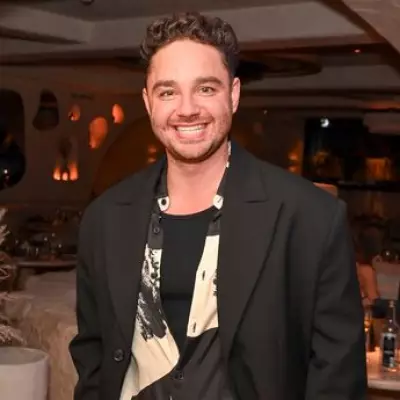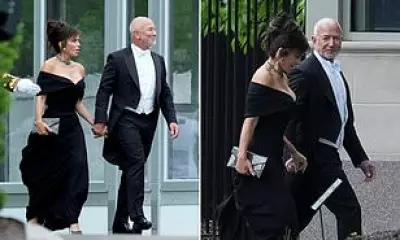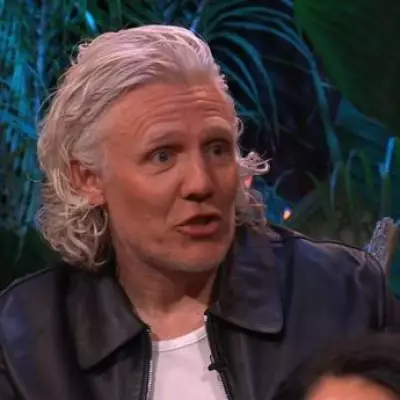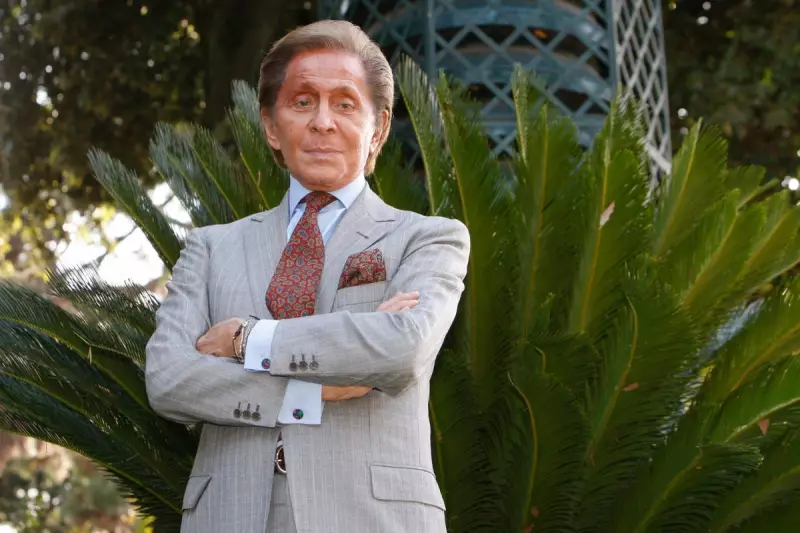
Today in Rome, the great and good of fashion and film gathered to bid farewell to the Italian fashion designer Valentino Garavani, who passed away at the age of 93. The funeral service attracted a constellation of stars from both industries, with attendees including Anna Wintour, Tom Ford, Donatella Versace, Anne Hathaway, Natalia Vodianova, Olivia Palermo, and Liz and Damian Hurley. Guests dressed impeccably to honour the designer's legendary standards of elegance, with Damian Hurley adding a distinctive Valentino-red scarf as a personal tribute.
A Fitting Tribute to an Emperor
As Anne Hathaway reflected on Instagram this week, "Now he rests forever surrounded by eternal beauty, a most fitting next chapter for the one true Emperor who gifted us all a legacy of unparalleled magnificence." Indeed, the title of "emperor" became synonymous with Valentino throughout his half-century career in fashion. This moniker was immortalised in Matt Tyrnauer's 2008 documentary, Valentino: The Last Emperor, which offered an intimate glimpse into the designer's lavish lifestyle and meticulous creative process.
The End of an Era
Renowned fashion journalist Suzy Menkes, who attended the funeral and co-wrote Valentino: A Grand Italian Epic with Tyrnauer, observed that "He was the last of an era." She elaborated, "This was a designer who loved being part of the story; he was very much personally involved. Everything was about the client, and they felt that he was a friend as well. That made him exceptional. That era doesn't exist any more." Menkes also recalled experiencing Valentino's legendary hospitality firsthand at his grand French countryside estate, noting the extraordinary attention to detail evident in both his home and gardens.

The Philosophy of Camera-Ready Elegance
Valentino's enduring influence stems from his profound passion for beauty, which he once described as his religion. Alistair O'Neill, professor of fashion at Central Saint Martins, explains that the brand remains synonymous with "being camera-ready." This concept originated in 1960s Rome, where Valentino met his life and business partner, Giancarlo Giametti, on the iconic Via Veneto – the very setting that inspired Federico Fellini's La Dolce Vita and the birth of the paparazzi culture.
Valentino's design philosophy consciously avoided fleeting trends and aesthetic fussiness, instead focusing on:
- Timeless elegance and sophisticated silhouettes
- Bold block colours that made a statement
- The iconic Valentino red – a unique blend of carmine and poppy red designed to flatter every wearer
"I know what women want," Valentino famously declared. "They want to be beautiful."
A Star-Studded Client Legacy
Throughout his career, Valentino's designs graced some of the world's most famous women, creating unforgettable fashion moments:
- Elizabeth Taylor wearing Valentino couture to the Spartacus premiere
- Jacqueline Kennedy Onassis choosing a Valentino ivory lace skirt suit for her wedding to Aristotle Onassis
- Princess Diana's numerous appearances in Valentino creations throughout her public life
- Gwyneth Paltrow's consistent red carpet selections
- Most recently, Nicola Peltz's controversial decision to wear a Valentino bridal gown rather than a Victoria Beckham design for her 2022 wedding to Brooklyn Beckham
From Lombardy to Global Recognition
Born in 1932 to a middle-class Lombardy family, Valentino developed an early passion for design, assisting local dressmakers while still in primary school. His cultured mother and businessman father provided crucial financial support during his formative years. At 18, he pursued formal training in Paris, studying at the École des Beaux-Arts and the Chambre Syndicale before apprenticing with legendary French couturiers including Jean Dessès, Christian Dior, and Guy Laroche.

This Franco-Italian fusion proved fundamental to his success. As Professor O'Neill notes, "What's interesting is that he was an Italian couturier but was trained in France. It's that particular mix that made him really special. He redefined what Roman couture stood for." Valentino successfully catered to a unique clientele blending Italian aristocracy with American starlets, applying Parisian codes of elegance to his distinctive vision.
The Partnership That Built an Empire
Valentino's enduring personal and professional relationship with Giancarlo Giametti formed the cornerstone of his success. Their partnership began in 1960 and spanned most of their lives, with Giametti managing business affairs while Valentino focused entirely on creative design. O'Neill describes this dynamic as "a very important part of his success" that allowed Valentino to maintain his pure artistic vision.
A Lasting Fashion Dynasty
When Valentino retired in 2008, he ensured continuity by appointing his design protégés Maria Grazia Chiuri and Pierpaolo Piccioli as co-creative directors. Piccioli later became sole creative director following Chiuri's departure for Dior in 2016. Both had risen through the Valentino ranks, beginning as accessories designers before mastering couture.
This sense of family extends throughout the Valentino organisation. The couture atelier employs experienced seamstresses – affectionately called "ragazzi" – many of whom have dedicated their entire careers to the house. Some artisans who created specific designs in the 1970s continue their craft today, preserving institutional knowledge and maintaining exceptional quality standards.
This commitment to continuity and craftsmanship has sustained Valentino's clear brand vision, ensuring its ongoing presence on red carpets worldwide. In 2010, Valentino posed a humble question to a fashion journalist: "I hope people will say, 'Mr Valentino, he did something for fashion, no?'" The magnificent funeral gathering in Rome, the enduring popularity of his designs, and the profound influence he exerted on global fashion provide a resounding affirmative answer to that question.