Paris Fashion Week 2026: Menswear Embraces Protection and Performance
As Paris Men's Fashion Week draws towards its conclusion, a powerful narrative has emerged across the runways. This season, designers are championing a new form of authority in menswear, characterised by a coat-first philosophy. The dominant trends are unmistakable: statement outerwear, even more pronounced shoulders, and impeccably sharp tailoring. These elements are transforming classic staples—from trench coats and suits to denim and workwear—into garments with a decidedly harder, more assertive stance.
A Shift Towards Practical Luxury
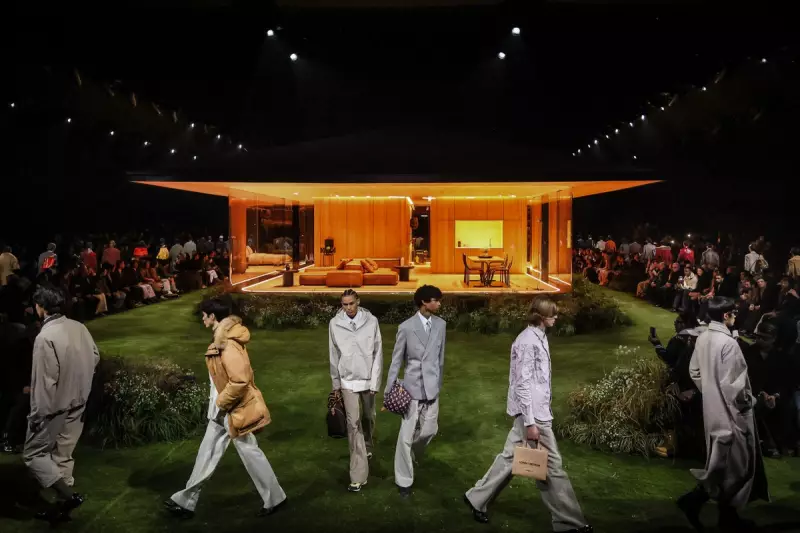
The overarching theme is a concerted push to make menswear more protective, performance-minded, and built for real life, all while retaining the theatrical showmanship for which Paris is renowned. This argument was presented most compellingly at the shows of two fashion giants. At Dior Men, creative director Jonathan Anderson skillfully manipulated classic codes into striking new proportions. Meanwhile, at Louis Vuitton, Pharrell Williams redefined luxury as practical convenience, upgrading heritage shapes with innovative features like weatherproofing, reflectivity, and engineered comfort for enhanced mobility.
This focus on functional elegance was a unifying thread, seen in collections from Ami Paris to Rick Owens, Yohji Yamamoto, and IM Men at Issey Miyake. The collective mission appears clear: rebuild the shoulder, reshape the body, and embrace the uniform—not as mere costume, but as modern, purposeful equipment.

Celebrity Influence Amplifies the Frenzy
The gravitational pull of celebrity culture continues to drive the global impact of Paris menswear, transforming runway moments into worldwide events within minutes. Dior's presentation was packed with VIPs including Robert Pattinson, Lewis Hamilton, and SZA. Louis Vuitton assembled a formidable front row blending music, film, and digital fame, featuring figures like Usher, Future, and Jackson Wang, alongside a runway cameo from BamBam of GOT7. While the clothes remain the central product, the surrounding frenzy is undeniably amplified by who is watching, who is posting, and who is seen wearing them.
Classic Silhouettes Reimagined for Modern Life
This season, many designers have moved away from novelty for its own sake, instead opting to take familiar silhouettes and enhance their performance. At Louis Vuitton, Williams presented a show filled with recognisable pieces—double-breasted suits, blousons, and polished outerwear. The innovation lay in the materials and construction. Tailoring incorporated reflective elements for night visibility, while jackets were reimagined as water-repellent hybrids. Fabrics were lightened, waterproofed, and sometimes adorned with crystal details mimicking raindrops.
Accessories followed this same intelligent logic, featuring caps designed to be crushed and spring back to shape, and shoes engineered to flex like sneakers while maintaining a traditional aesthetic. The message was unequivocal: luxury is not merely an appearance; it is also defined by capability.
The Defining Silhouette: Upward Focus and Controlled Volume
Across numerous brands, the silhouette focus has shifted decisively upward. The shoulder has become the season's primary design focal point—a junction where structure, protection, and attitude converge. Anderson's collection for Dior treated tailoring history as a series of creative pivots. Jackets referenced the 1940s and early 1960s, then were cut abruptly short or shrunken to expose the hipbone. Ordinary pieces were pushed into new scales, including an ankle-length round-neck sweater.
IM Men also emphasised shoulder architecture, remixing outerwear by integrating storm flaps into trench coats and amplifying volume. Yohji Yamamoto employed padding along arms and legs to create a uniform shape across different body types, then controlled that bulk with strategic buttons and adjustable details. Even when designers diverged on mood—from sharp and severe to romantic and strange—they converged on a fundamental idea: the male body is being actively redesigned through clothing.

An Emotional Undercurrent of Protection and Armour
A clear emotional undercurrent of protection runs through the collections. Paris is seemingly dressing men for a world perceived as harder, more uncertain, and more public. Rick Owens spoke of drawing inspiration from police uniforms and the impulse to confront a threat as a means of processing it. His runway presented skinny foundations layered with cropped jackets, tactical hybrids, and materials reminiscent of leather and Kevlar, featuring ambiguous details that hinted at insignia without becoming literal costume.
Yamamoto also referenced army and workwear, but proposed a softer kind of protection through enveloping layers designed to endure long periods outdoors. IM Men's draped, layered looks promoted a related, less militant idea: clothing as nomadic shelter. This season captures a tension between authority and rebellion, perfectly encapsulated by Owens' question: "sheriffs or outlaws?"
Sharpening Everyday Wearability
Despite the bold experimentation, the week has not abandoned the principles of everyday dressing. Ami Paris's anniversary show was built on a foundation of real Parisian style—think camel coats, stripes, denim, and clean tailoring—then refined through superior proportion and styling. The clothes were designed for easy mixing, with subtle shifts making them feel contemporary, such as longer coats that sit better on the shoulder.
The takeaway is that the daily wardrobe remains paramount, but it is being systematically tightened, upgraded, and sharpened. Dries Van Noten advanced this concept through masterful colour and craft. Other designers, like Julian Klausner, explored themes of "coming of age," featuring men in hand-me-down coats, with knitwear serving as a central engine—from structured-shoulder cardigans to patterned collar pieces on narrow coats and cloaks, even reintroducing kilts and skirt-like layers into the mix.
Styling as a Powerful Signal
Many of the season's most potent statements have emerged from styling choices as much as from the garments themselves. At Dior, Anderson's "anti-normal" attitude manifested in wild wigs and ruff collars, transforming formal, historical references into something sharp and slightly dangerous. Conversely, at Louis Vuitton, the styling remained restrained, allowing the innovative materials and construction to communicate the message: classic shapes, but built for movement and weather.
The Final Verdict Awaits
While Dior and Louis Vuitton set a definitive tone, the remainder of the schedule has reinforced it across a spectrum of registers—from the wearable precision of Ami Paris to the confrontational control of Rick Owens, the protective layering of Yohji Yamamoto, and the sculpted outerwear of IM Men. As the week concludes, the final shows will determine whether this season's decisive turn towards function, shape, and protective elegance represents a deeper, lasting shift in menswear, or remains a distinctive Parisian moment where luxury convincingly demonstrated its potential for practicality.