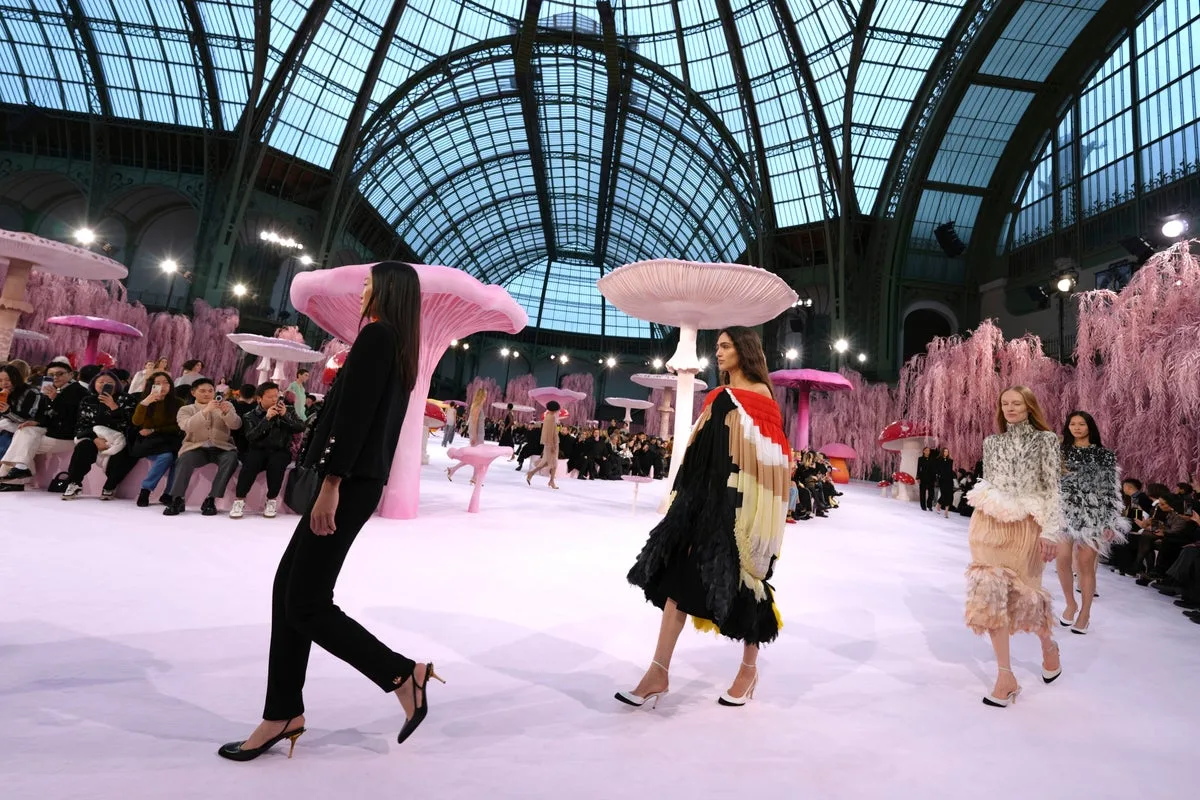
Paris Couture Week Reveals Unexpected Shift Towards Wearable Luxury
The most remarkable development at Paris couture this season wasn't a specific silhouette or colour palette, but rather a fundamental philosophical shift: haute couture became genuinely wearable. This represents a significant departure from traditional couture's museum-piece approach, with designers across the board embracing a lighter, more down-to-earth aesthetic that prioritises real-world wearability without sacrificing the extraordinary craftsmanship that defines the category.
A Season of Transparency and Lightness
Transparency emerged as the season's dominant theme, though designers approached it with remarkable sophistication. The objective wasn't mere exposure, but rather showcasing craftsmanship designed to appear weightless and ethereal. Chanel opened Matthieu Blazy's debut couture collection with a masterful reinterpretation of the house's classic skirt suit rendered in blush organza – familiar yet ghostly in its execution. The tailoring remained impeccably strict while the fabric achieved an airy, almost floating quality.
At Dior, creative director Jonathan Anderson explored similar territory through thoughtful contrast, pairing nearly sheer ribbed tanks with intricately embroidered evening skirts – creating a compelling dialogue between couture fantasy and real-life practicality. Armani Privé, under Silvana Armani's direction following her uncle Giorgio's passing, demonstrated how lightness could translate into ultimate luxury, with organza shirts and ties appearing alongside shimmering "mille-feuille" gowns layered with micro-crystals that never felt heavy.
Couture for Real Life
A secondary but equally significant trend emerged throughout the week: couture's deliberate movement toward the daily wardrobe. Blazy explicitly framed his Chanel collection as "real-life couture" – garments designed for work, theatre, and everyday occasions – while maintaining the house's legendary polish. Anderson challenged traditional couture conventions by arguing that structural integrity doesn't require corsetry, instead using knitwear as couture structure with tailoring-level precision.
The most compelling evidence of this wearable direction came from front-row fashion, where celebrities mirrored the runway's dressed-down philosophy. Jennifer Lawrence arrived at Dior in a men's coat with oversized fuzzy cuffs, jeans and black shoes – a look that perfectly captured the season's accessible luxury ethos. Armani Privé presented relaxed suiting with softened tailoring and a more edited lineup, suggesting couture as something to live in rather than merely survive.
Nature as Narrative
Designers consistently referenced natural motifs throughout the collections, though they approached them less as decorative elements and more as symbolic codes representing freedom, escape and transformation. Chanel incorporated birds that fluttered across seams through feather effects, buttons and embroideries, lending the collection a dreamlike quality. Dior began with oversized cyclamen floral earrings that established a tone of reverence and reinvention simultaneously.
Schiaparelli offered a more confrontational interpretation of nature, with designer Daniel Roseberry exploring animalistic elements including wings, spikes, claws and scorpion tails that transformed the body into something altered and almost dangerous. Viktor & Rolf pushed this instinct toward metaphor, building their collection around flight and staging transformation through removable, kite-inspired elements that transformed grounded black garments into something freer and brighter.
Structural Innovation and Colour Dynamics
Despite the prevailing softness, couture simultaneously demonstrated remarkable structural innovation. Anderson opened Dior with hourglass volume meticulously constructed by hand through ruching, stitching and shaping in tulle – creating dramatic silhouette without traditional armour. French couturier Stéphane Rolland embraced geometric principles with balloon pants, jumpsuits and coats built from circular concepts and Cubist shapes, while Schiaparelli treated couture as sculpture with protrusions and rigid forms that transformed fashion into performance art.
Colour palettes largely remained within quiet, sophisticated tones – blush, pale pink, sand and celadon – allowing texture to carry the visual drama. Armani Privé's nuanced jade and soft pastels maintained controlled elegance, while Chanel's blush transparency made romance feel distinctly modern. The season's punctuations came through strategic colour contrasts: Rolland's cooked tones of burgundy, caramel and strong reds against stark black and white, culminating in Valentino's definitive exclamation point – the house's signature red presented with powerful simplicity.
This Paris couture season ultimately demonstrated that luxury fashion can evolve toward greater wearability without compromising the extraordinary craftsmanship that defines haute couture. The collections presented clothes that looked miraculous upon close inspection while simultaneously feeling like garments women could genuinely move and live in – a significant evolution for an industry traditionally associated with rarefied spectacle.