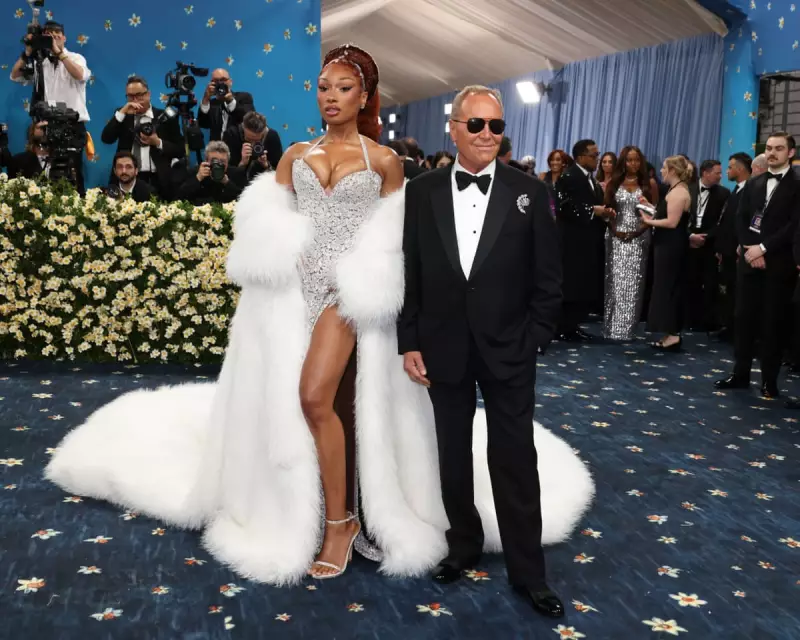
As the fashion world grapples with a noticeable return to extreme thinness on the catwalk, veteran designer Michael Kors is reaffirming his commitment to a more inclusive vision. Speaking to the Guardian ahead of the launch of his new flagship store on London's Regent Street, the 66-year-old founder of the eponymous label expressed concern that the industry is prioritising spectacle over the real needs of customers.
The 'Dirty Word' of Wearable Fashion
Kors, whose brand is often dubbed 'America's Armani' and constituted roughly 70% of sales for parent company Capri Holdings last financial year, lamented the industry's disdain for practicality. "When fashion people hear 'wearable', they think it's such a dirty word. And God forbid anyone says 'commercial'. To them, it's the worst thing in the world," he stated. His philosophy centres on solving problems for a diverse clientele, from first ladies to music megastars like Megan Thee Stallion, who attended the 2025 Met Gala with him.
This focus comes at a pivotal moment for Capri Holdings, which recently sold Versace to Prada in a $1.4bn deal. The move leaves the group, which also owns Jimmy Choo, to concentrate more intently on expanding the Michael Kors empire into a global behemoth, targeting the substantial mid-tier market.

Inclusivity Versus a 'Size Zero' Revival
Kors's stance is particularly salient against a backdrop of industry experts warning of a comeback for 'size zero' models, a trend some attribute to the normalising effect of widespread weight-loss drug use. In contrast to brands that have reverted to exclusively straight-sized models (a UK 4-8), Kors continues to cast a range of sizes on his runways.
"Unfortunately, I think fashion people can be overly trendy," Kors said, expressing frustration. "They think things are a trend rather than actually moving something forward. We all have families. We all know different people of different ages and different sizes. Don't you want them all to be invited to the party? That's to me how it should be."
This inclusive approach, spanning size, age, and race, is pegged as a core part of the brand's enduring appeal. It's an ethos embodied by campaigns featuring faces like Suki Waterhouse and a clientele that paradoxically includes both Michelle Obama and Melania Trump. Kors describes dressing for political life as "the trickiest thing in the world," akin to the red carpet where even celebrities are "petrified."
Building a Global Brand with High Street Appeal
The economic engine of the Kors empire is its accessible MICHAEL Michael Kors line, with its ubiquitous MK logo a fixture on high streets worldwide. Bags like the Quinn tote, priced around £230, and the Hamilton style, carried by Taylor Swift, are key to capturing the aspirational customer who has been priced out of soaring luxury markets. Rachel Morgans, fashion director at John Lewis, credits the brand's "brilliant price point" for its consistent top-seller status.
Despite rubbing shoulders with A-listers like Gemma Chan at glamorous events, Kors emphasises the importance of staying grounded. The day before his London store dinner, he was in a Philadelphia mall meeting customers. "If you lock yourself in your atelier... you're gonna limit yourself," he advised. "You have got to stay curious."
Now, with a refreshed focus from Capri Holdings following its failed $8.5bn merger attempt with Tapestry, the strategy is clear: leverage that curiosity to dominate the accessible luxury space. For Kors, who isn't dwelling on succession plans at 66, the mission remains solving sartorial problems for everyone. "As long as I still enjoy it and I'm curious and energised then great. If not I'll go do something else."