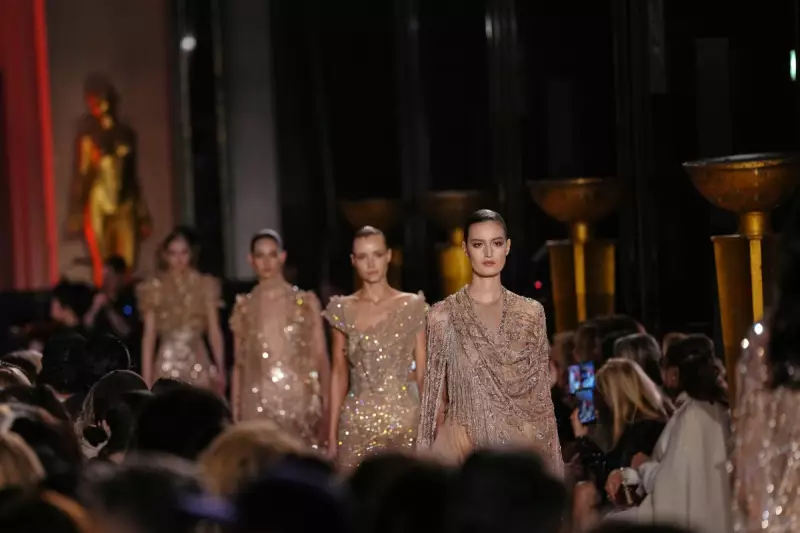
Elie Saab Evokes 1970s Jet-Set Glamour at Paris Haute Couture Week
Elie Saab's Spring/Summer 2026 haute couture presentation at Paris Haute Couture Week unfolded as a mesmerising fever dream of light and music, firmly rooted in nostalgic 1970s inspiration. Titled "Golden Summer Nights of '71", the collection served as both a homage to the jet-set glamour of that era and a personal journey back to the designer's own formative beginnings.
A Nostalgic Journey Back to Youthful Beginnings
Born in 1964, Saab founded his atelier in Beirut as a teenager in the early 1980s. This season's collection felt distinctly like a return to the spirit of youth, with the designer looking back at the decade that first ignited his creative imagination. The show opened onto a moonlit runway where a palette of blush, bronze, and warm desert tones dominated, continuing the standout colour trends that have defined this couture week.
Molten golds, rich chocolates, and soft roses shimmered beneath the lights, creating an atmosphere of opulent warmth. Pops of lilac and soft seafoam—two of the week's most notable shades—provided punctuations of contrast, yet the overall feeling remained overwhelmingly sultry and sunburnt, perfectly evoking the aesthetic of the Seventies.

Decade Details Meet Modern Silhouettes
The collection masterfully blended period-specific details with contemporary cuts. Skinny scarves, fringe, and open waistcoats offered clear nods to the 1970s, while deep V-necks, asymmetric lines, dropped waists, and fluid capes introduced a modern, relaxed sensibility to the silhouettes. The shimmer never ceased, with sequins rippling across dresses, crystal cascades spilling over bodices, and metal mesh catching the light like celestial constellations.
Intricate embroidery, recalling traditional Beirut techniques, grounded the lavish pieces in the founder's heritage, adding a layer of cultural depth to the glamour. Column skirts provided stiff structure—some so narrow they challenged the models' gait, as seen in one slight stumble—reinforcing the notion that these were garments created for dramatic impact first, with practicality as a secondary consideration.
Shifting Silhouettes and Ethereal Craftsmanship
Following trends set earlier in the week by houses like Chanel and Dior, Saab embraced manufactured forms and exaggerated, almost cartoon-like curves. This movement suggests designers are increasingly offering clients the freedom to fashion their body shapes as they desire, moving away from the classic, restrictive hourglass silhouette that dominated couture for decades.
While some shapes were intentionally restrictive, they also underscored that haute couture can represent a form of liberation as much as fantasy. Feathers rose elegantly from bodices and swept across shoulders, echoing a detail seen repeatedly throughout the week's presentations.
A Stripped-Back Finale of Understated Opulence
The finale delivered on every promise of glamour and artistry. The Elie Saab bride emerged from the darkness in a soft beige-rose slip dress, intricately interwoven with lace and embroidered with delicate stones. A bejewelled, thorn-like crown, dripping in gold, framed her face, while a floor-length train trailed behind her, light as air. The effect was utterly ethereal, like an image conjured from myth.
Minimal make-up, an absence of flashy jewellery, and softly tousled hair carried an understated sensuality throughout the looks. This deliberately stripped-back styling offset the opulence of the garments themselves, tempering even the most lavish creations and allowing their exquisite craftsmanship to take centre stage.
Ultimately, Saab's collection was a masterful exercise in nostalgic storytelling, blending personal history with period glamour to create a contemporary couture statement that felt both intimately reflective and spectacularly grand.