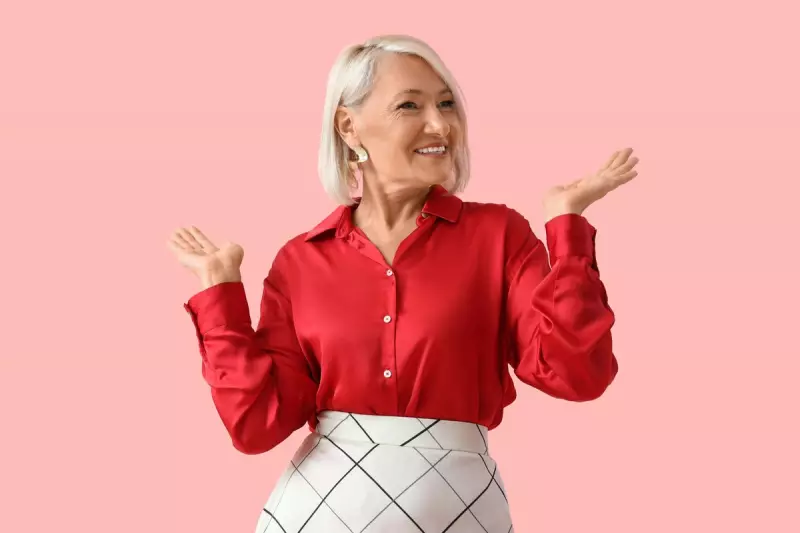
Colour analysis is experiencing a significant revival in recent years, with many discussions focusing on teenagers discovering their "seasons" or new parents re-evaluating their personal style. However, a pressing question often arises for individuals at different life stages: does the process work differently later in life? Specifically, does age alter the results, and is there an ideal time to undertake colour analysis?
The Expert's Perspective on Age and Colour
According to Michelle Marks, a seasoned colour analyst at House of Colour, age is largely irrelevant when it comes to determining your personal colour palette. "It doesn't matter what age you do it," she asserts, "you just get better at putting colours together and knowing what suits you." More importantly, Marks emphasises that the palette itself does not change over time.
"Your colour palette will never change with age. You may wear different colours from your palette as your skin becomes thinner, but you'll always have the same palette," she explains. "It will compliment your hair no matter what – whether you turn grey or white – you'll have the same season as when you were 20." Contrary to common assumptions, colour analysis does not advocate toning down with age; in fact, it often encourages bolder choices.

How Colour Analysis Works in Practice
Marks begins every session by assessing whether an individual has warm or cool undertones. "So the first thing we work out is are you warm? Are you cool," she says, "then we go between these two [seasons – winter and summer are cool, autumn and spring are warm]." From this foundation, contrast determines the specific season.
"So winter is bright and sharp and very high contrast, and the edges are really crisp and distinct, and then summer is much more soft, tonal and blended. So you could be cool and sharp, or you could be cool and soft, and so on." Warm seasons, which include autumn and spring, feature yellow undertones even in colours typically perceived as cool, such as blues and greens.
The process is highly visual, involving fabrics held beneath the face to compare shades like warm green against cool green or optic white beside cream. Subtle yet immediate changes can lead to colours once thought flattering being moved to a no-go pile. Marks recalls her own experience: after being identified as a winter, she initially resisted but acknowledged the logic. "I wanted to be anything but a winter and I was very upset. But I could see it makes sense."
Debunking Myths About Timing and Age
Many people assume colour analysis is best undertaken at specific life stages, such as after a major change or when hair begins to grey. Others wonder if seasonal timing affects results. Marks dismisses these notions, stating, "It makes no difference. You'll age in [the same palette]. So this is the joy of it, because you just actually get better and better at putting colours together and knowing what suits you and the best colours within your season."
She clarifies that someone in their sixties does not require a different season from their twenties; they may simply prefer different parts of the palette, such as softer versions with darker hair or more intense shades as they grow older.
Striking vs. Harmonious: A Key Distinction
Marks often encounters clients who mistake dramatic effects for flattery. "I do think when people dye their hair a funny colour it can look striking, but it doesn't necessarily compliment them. I think that can happen with jewellery as well. Sometimes things can look to stand out, but it doesn't mean it's harmonious." This distinction becomes increasingly important with age, as individuals may prioritise looking well-rested and authentic over following trends.
Even neutrals vary in suitability; for instance, cool-toned optic white differs from warmer creams or oysters. "They're very subtle differences, but when you wear the wrong one it makes a massive difference," Marks notes.

Reimagining Age Through Colour
Once a season is established, colours are categorised by impact: those wearable head-to-toe, those needing support, and those best in small doses. Instead of questioning if a shade is "too much," the focus shifts to whether it belongs to your palette, often yielding surprising answers.
In a culture that often promotes beige for older adults, colour analysis challenges ageist norms, demonstrating that every colour can be worn at any age with the correct undertone. As Marks's diverse client list shows, there is no expiry date on discovering what suits you. "I've done my children. I've done my grandma." Ultimately, timing is entirely optional.