Ryan Murphy's 'The Beauty' Falters in Its Satirical Ambition
Ryan Murphy's latest FX/Hulu body horror series, The Beauty, arrives at a time when cosmetic procedures like Ozempic and Botox have become increasingly normalised. The show presents a chilling vision of a dystopian future where an experimental injection promises complete aesthetic perfection, but its satirical impact is significantly weakened by a glaring casting contradiction.
A Premise Rooted in Contemporary Anxieties
Based on the comic book of the same name, The Beauty follows two FBI agents investigating a mysterious sexually transmitted contagion with bizarre effects. Victims either explode into visceral piles of gore or regenerate into impossibly attractive versions of themselves, embodying archetypal Western beauty standards with chiselled jawlines, sparkling eyes, and sculpted physiques.
The narrative centres on characters like Jeremy, portrayed by Jaquel Spivey and later Jeremy Pope, a depressed incel who seeks surgical transformation. His harrowing metamorphosis, complete with cracking bones and steaming skin, serves as the series' body horror centrepiece. The show features strong performances, including Isabella Rossellini as an eccentric socialite and Anthony Ramos as a menacing villain, alongside a compelling episode exploring a clandestine network of billionaires with exclusive drug access.

The Casting Paradox That Undermines the Message
Despite its promising premise, The Beauty faces a fundamental irony in its execution. The series aims to critique the beauty industry and the powerful figures who exploit societal insecurities, particularly targeting young people desperate to achieve the "hegemonic Instagram face." Yet, it chooses to represent the results of its fictional beautifying drug by casting real-life supermodel Bella Hadid and heiress Nicola Peltz Beckham.
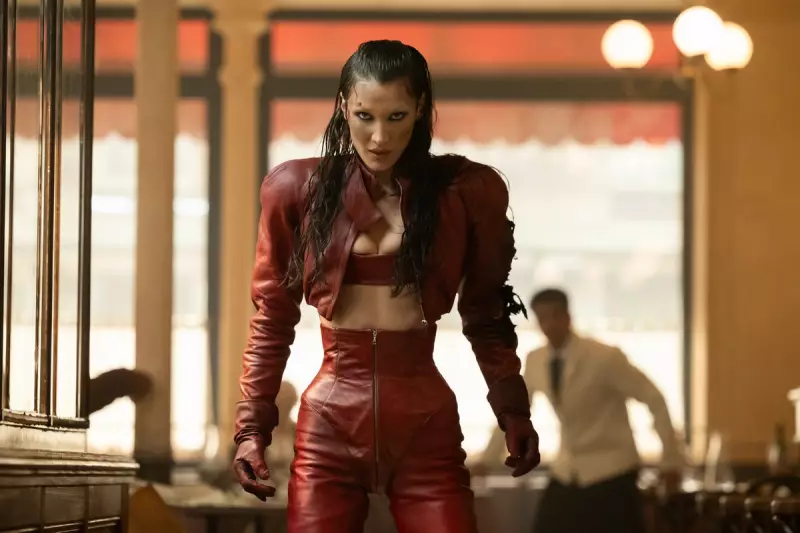
Hadid opens the series strutting on a Paris catwalk before her character succumbs to the drug's horrific side effects. Peltz Beckham appears later as a "yassified," younger, and conventionally hotter version of another character post-injection. This decision sends profoundly mixed messages. While both actresses deliver competent performances, their presence inherently contradicts the show's critical stance.
These women are emblematic of the very beauty standards the series seeks to satirise. Through their Instagram posts to millions, makeup tutorials, and celebrated skincare routines, they actively participate in setting the cultural benchmarks that The Beauty ostensibly condemns. The casting choice inadvertently reinforces the idea that true critique requires the veneer of the beauty it questions, thereby diluting its own argument.
Moments of Potent Reality Amidst the Contradiction
Where The Beauty succeeds is in its eerily accurate depictions of societal pressure. A particularly resonant storyline involves high schoolers scrambling to obtain the drug, reflecting real-world trends where teenagers as young as 16 pursue lip fillers and other procedures. The series cleverly mirrors contemporary phenomena, such as restaurants creating smaller dishes for those on appetite-suppressing drugs like Mounjaro or Wegovy.
The show posits a frighteningly plausible future where individuals might spend their life savings on a transformative injection. In this context, The Beauty should function as a stark warning. However, when Peltz Beckham's character delivers a monologue resisting beauty standards, the moment feels hollow, prompting viewers to question whether the series is genuinely critiquing the system or merely playing into it.
Ultimately, Ryan Murphy's The Beauty presents a fascinating but flawed examination of modern vanity. Its compelling horror elements and timely themes are undermined by a casting strategy that blurs its satirical line, leaving audiences to ponder if the show's message is as clear-cut as its characters' newfound perfection.