Rose Finn-Kelcey Review: Puns, Prayers, and Social Commentary in Northampton
Rose Finn-Kelcey Review: Puns, Prayers, and Social Commentary

A long-overdue celebration of Rose Finn-Kelcey in her home town reveals a conceptual artist whose work is as fresh and relevant as ever. Finn-Kelcey, born in Northampton in 1945, sought to create art that was neither pompous nor condescending—rare ideals in conceptualism. This exhibition at the new £5m Arts Collective in Northampton, a vibrant retrofit of historic municipal offices, marks a homecoming for the artist, who spent the 1970s onwards causing a feminist ruckus in London before her death from motor neurone disease in 2014.

Power to the People and Social Divides

Finn-Kelcey's approach is epitomised by Power for the People (1972), where she hoisted two large flags on Battersea Power Station. The flags, emblazoned with bold sans-serif letters, were punny, silly, and smart. They so riled posh neighbours across the river in Chelsea that they had them removed. This work encapsulates her focus on collectivity and societal thinking while exposing how those ideals are policed by those in power. The exhibition documents this with a large photograph showing the flags flapping and the power station belching fumes.

Another photo shows an installation of swinging saloon bar doors in a Texas park. Removed from context, they become dividers—architecture of separation and permission, dictating who can enter and where.

Wide Pickt banner — collaborative shopping lists app for Telegram, phone mockup with grocery list

House Rules and Spiritual Commentary

The theme of permission recurs in House Rules, two LED displays—one red, one green—with scrolling instructions: “clear it, calm it, dry it, whip it, chop it” on green, and restrictions like “no floating, no gaming, no trusting, no washing” on red. Like any feminist punk icon, Finn-Kelcey saw societal restrictions as expressions of power and repression.

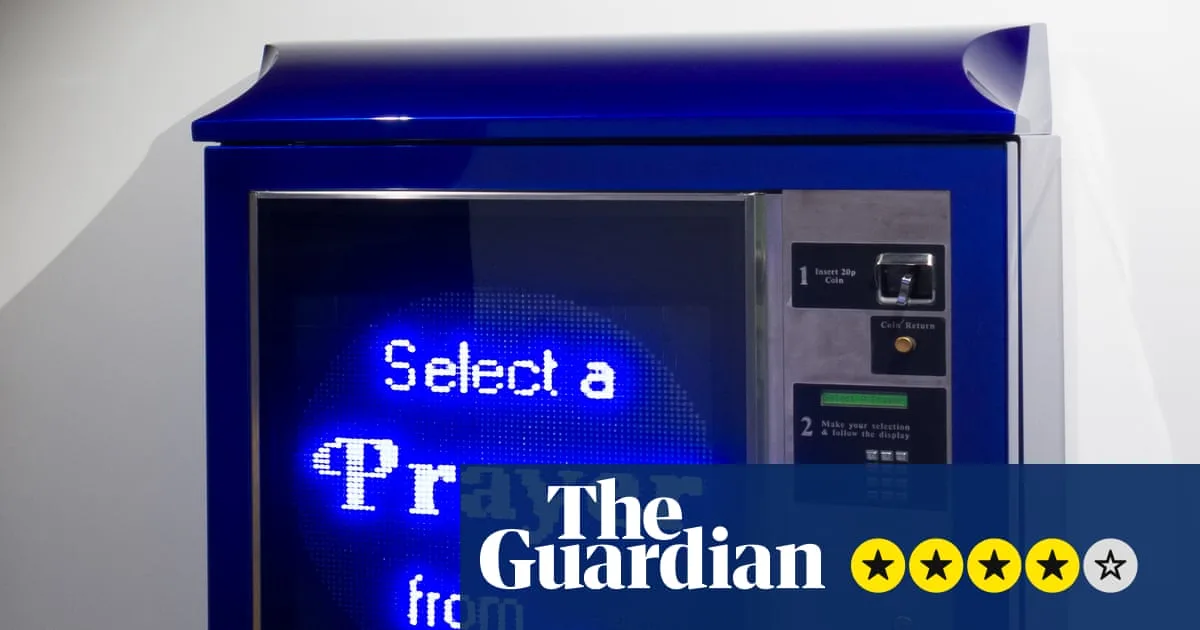
Her other major focus was spirituality. A large rug in the gallery depicts a Vatican postage stamp with God wearing an eye patch, like an all-powerful pirate. Blobby yellow sculptures, giant versions of Playmobil grain sacks, represent everyday souls trying to enter the Pearly Gates. While these works are somewhat ugly and obtuse, the standout piece is It Pays to Pray, a fully functional prayer vending machine. For 20p, users select a number and receive sad, silly, poetic stanzas on an LED screen: “No one will pull my hair,” “It’s not worth it,” “I just want to curl up and go to sleep.” These are prayers for 21st-century atheists, jaded millennials, and grumpy boomers—supplications for freedom and boredom.

Finn-Kelcey was a funny, direct, critical, satirical, and intelligible artist who cared deeply about people, spirituality, and power. While this is not the comprehensive retrospective her work deserves—it is a relatively small display of photos and objects—it serves as a great introduction to an artist to whom larger institutions should pay much more attention. Rose Finn-Kelcey: House Rules is at Arts Collective, Northampton until 1 August.

Pickt after-article banner — collaborative shopping lists app with family illustration