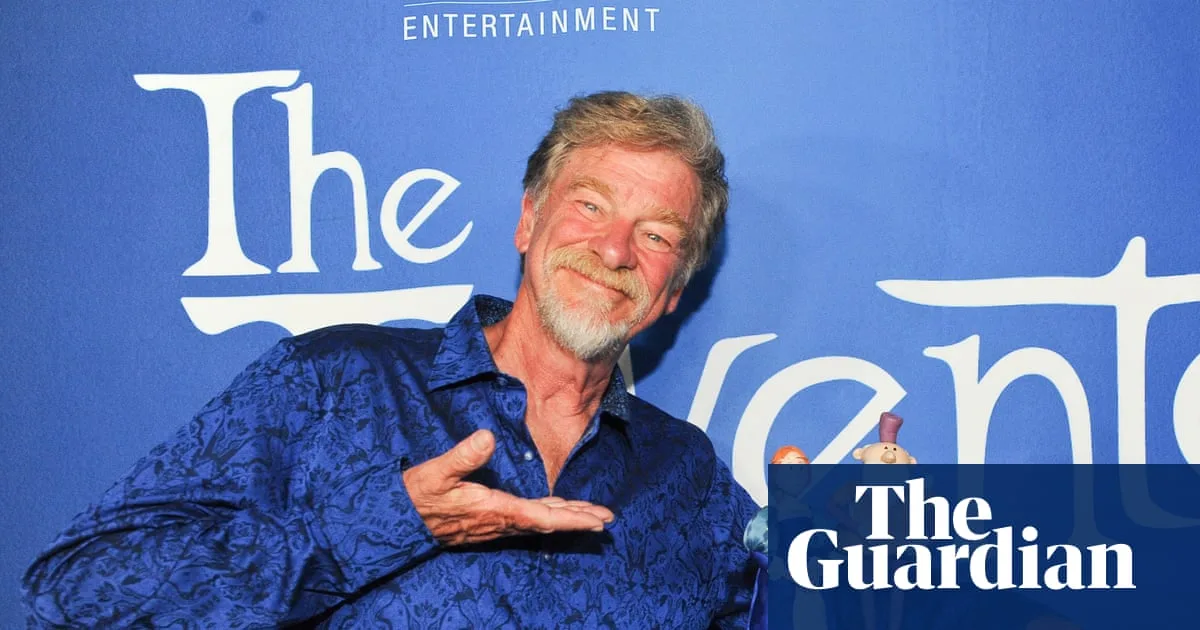
The animation world mourns the loss of Roger Allers, the visionary co-director of Disney's monumental hit The Lion King, who has died at the age of 76. Allers was a pivotal figure in the revival of Walt Disney's animation division during the late 1980s and 1990s, a period often referred to as the 'Disney Renaissance'.
A Legacy Forged in the Disney Renaissance
Throughout much of the 1980s, Disney's animation department was struggling. Roger Allers emerged as one of the key talents who helped to breathe new life into the studio. His early work on Oliver & Company in 1988, a creative retelling of Charles Dickens' Oliver Twist with a cast of cats and dogs, provided a significant box office success in the United States and signalled the impending creative resurgence.
Allers further honed his exceptional storytelling skills on subsequent blockbusters, including Beauty and the Beast in 1991 and Aladdin in 1992. His profound understanding of narrative and character development made him an indispensable asset to the studio during its most fruitful era.
The Crown Jewel: Co-Directing The Lion King
Roger Allers' most celebrated achievement was co-directing The Lion King alongside Rob Minkoff in 1994. The film, which ingeniously transposed Shakespeare's Hamlet to the African savannah, became a global cultural phenomenon. It grossed an astonishing $979 million worldwide and spawned a legendary stage musical, two sequels, a 2019 remake, and a 2024 prequel.
The project, however, had tumultuous beginnings. Originally conceived as a more sombre epic titled King of the Jungle, it underwent significant transformation. Allers and Minkoff were instrumental in steering the production, which was reportedly plagued by script issues and initial reluctance from top animators. They deepened the emotional core of the story, particularly the relationship between the noble king Mufasa and his cub son, Simba.
Producer Don Hahn credited the duo with realising some of the film's most touching moments, such as the iconic scene where young Simba places his paw into his father's giant footprint. Allers, who had recently lost his own father, confessed to a powerful personal connection to the material, which informed the film's heartfelt depth.
Following the film's success, Allers achieved "almost mythic status" within Disney, according to entertainment writer Jim Hill. He later co-wrote the libretto for the record-breaking stage adaptation with screenwriter Irene Mecchi, earning a Tony Award nomination in 1998.
Triumphs and Tribulations in Later Projects
Allers' next major project for Disney, Kingdom in the Sun, proved to be a deeply challenging experience. The film, which adapted Mark Twain's The Prince and the Pauper to the Inca empire with songs by Sting, faced extensive production difficulties. A behind-the-scenes documentary, The Sweatbox, captured the chaotic process, showing clashes between Allers' vision and studio demands for a broader comedy.
When the project was radically refashioned, Allers expressed grief for the film he had intended to make, famously retorting to a colleague's dismissal of the medium: "Then I guess Picasso could say: 'It's just a painting,' and Beethoven could say: 'It's just a symphony.'" He eventually departed the production, which was released in 2000 as the madcap comedy The Emperor's New Groove under director Mark Dindal.
A Lifelong Dedication to Animation
Born in Rye, New York, and raised in Arizona, Roger Allers was captivated by animation from childhood after seeing Disney's Peter Pan. He studied fine arts and, after travels in Greece, began his professional career working on projects like the sports comedy Animalympics and contributing to the groundbreaking Tron.
After joining Disney in 1985, his career became synonymous with the studio's revival. Following his time at Disney, he directed the Oscar-nominated short The Little Matchgirl and co-directed Open Season. He also served as the supervising director and writer on Kahlil Gibran's The Prophet, a 2014 animated film weaving together Gibran's philosophical poems.
At the time of his death, Allers was collaborating on a musical about the poet Jean de la Fontaine. He defined his artistic style as "storytelling with an aim to create something of sincere and moving emotion with a certain joie de vivre," and remained a passionate advocate for the personal touch of traditional hand-drawn animation.
Roger Allers is survived by his wife, musician Genaro Pereira, and by two children from his previous marriage. His legacy is indelibly etched into the history of animation through the timeless stories and profound emotions he brought to the screen.