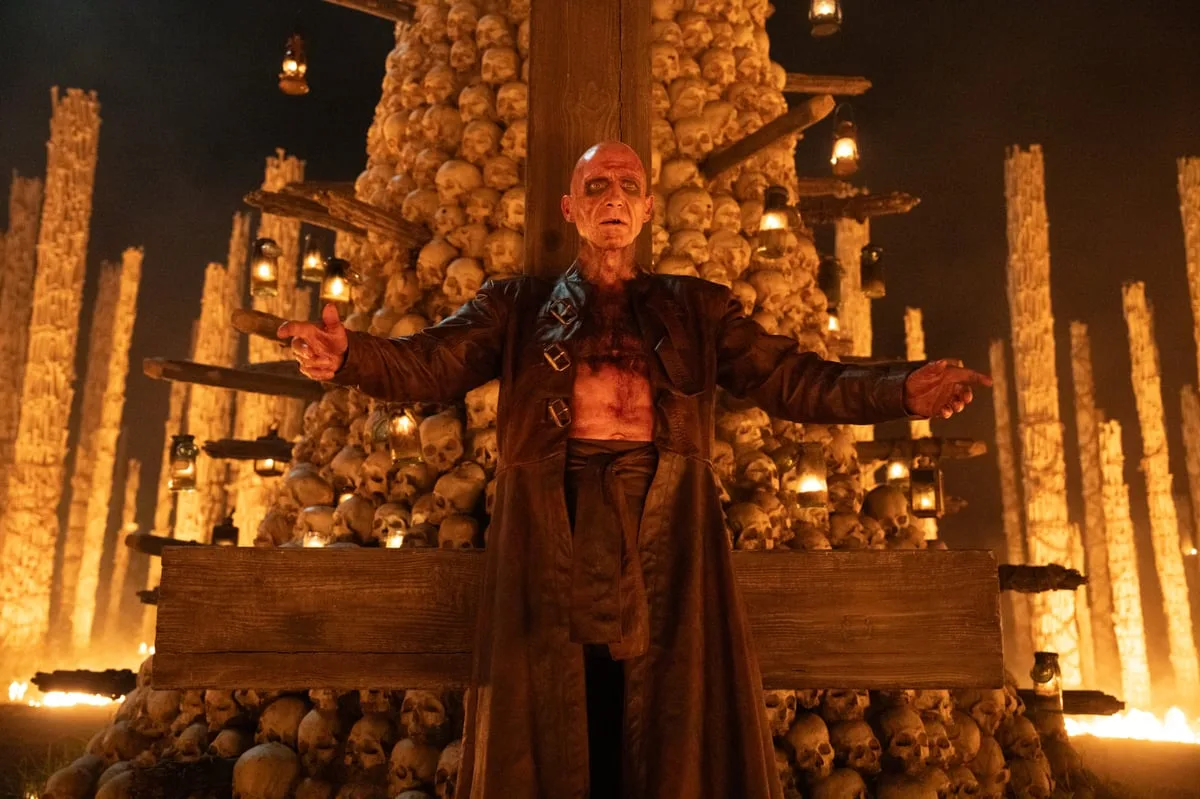
I recently attended a cinema screening that left me feeling physically unwell to the point of nearly losing consciousness, while the person seated beside me decided to exit the auditorium entirely. This particular blockbuster proved to be a relentlessly bloody and gore-saturated spectacle that induced genuine nausea and brought me perilously close to fainting. I was not alone in my extreme reaction to the film's content.
A Descent into Excessive On-Screen Brutality
During my youth, my friends and I would often compete to create the most graphically violent and gruesome short stories. After viewing 28 Years Later - The Bone Temple, it became evident that this adolescent pastime has not only persisted but evolved into a major cinematic strategy. I consider myself well-acquainted with horror and graphic content, frequently emerging victorious in those teenage writing contests, yet The Bone Temple operates on an entirely different level of intensity.
Plot and Disturbing Premise
Directed by Nia DaCosta with a screenplay by Alex Garland, this sequel continues directly from the events of 28 Years Later. The narrative follows young Spike, portrayed by Alfie Williams, after his kidnapping by a deeply unsettling gang of individuals resembling Jimmy Savile. This group, commanded by the sinister Sir Lord Jimmy Crystal, played by Jack O'Connell, refers to itself as 'the Fingers'. They traverse a desolate landscape, perpetrating acts they euphemistically label as 'charity'—which involves skinning victims alive—all supposedly in the name of Satan.
However, before any substantive plot development can occur, the film establishes a tone of overwhelming, grimy violence. Spike is forced into a lethal confrontation against one of the Fingers, where victory merely grants survival and membership within the gang, a fate portrayed as scarcely preferable to death.
Physical Reactions and Audience Walkout
Witnessing this scene unfold, I experienced more than simple queasiness. My vision began to darken, and a distinct tingling sensation spread through my fingers. As someone familiar with both cinematic violence and the pre-syncope symptoms preceding fainting, I recognised the signs immediately. I had to straighten my seat and concentrate on maintaining steady breathing for several minutes to remain conscious.
The film then shifts to reveal the formidable Samson, the Alpha infected character from the earlier film, portrayed by Chi Lewis-Parry. Further brutality ensues in a particularly graphic sequence. While I was focused on managing my physical response, the woman seated adjacent to me stood up, gathered her belongings, and departed the cinema. She did not return for the remainder of the screening.
The Role of Violence in Storytelling
In my view, violence can serve as a powerful narrative instrument. It possesses the capacity to propel a plot forward, elucidate power dynamics and character motivations, and, when deployed with skill, function as a compelling hook for audiences. Yet within The Bone Temple, the violence appears overwhelmingly gratuitous. Characters are subjected to skinning, severe beatings, stabbings, and torture with minimal narrative justification.
The storyline itself feels underdeveloped, consistently relegated to a secondary position behind Tarantino-esque geysers of blood. The plot fails to advance in any meaningful way, while the primary antagonist's motivations come across as hollow and fundamentally implausible.
Notable Performances Amidst the Carnage
Despite these significant criticisms, the film does feature some commendable elements. Ralph Fiennes delivers a remarkable performance as the iodine-drenched Dr Ian Kelson. His subtle comedic injections provide a much-needed respite from the otherwise uninspired proceedings. The peculiar bond he gradually forges with Samson, facilitated by opioids and a shared appreciation for Duran Duran, proves intriguing—though the notion that Dr Kelson is the sole individual in 28 years to achieve any breakthrough with the rage virus, especially with such limited resources, feels somewhat contrived.
On screen, Fiennes is effectively complemented by Jack O'Connell, who manages to strike a compelling balance between theatrical menace and a genuinely sympathetic vulnerability.
Final Assessment of the Franchise's Direction
In summation, The Bone Temple delivers several strong sequences and a handful of exceptional performances. Unfortunately, these positives are substantially overshadowed by a persistent and nagging sense that this franchise is undergoing a transformation into something unrecognisable from its origins. Much like the infected creatures that populate its dystopian world, the series itself appears to be descending into a state of gratuitous brutality, careening dangerously off its original narrative rails.