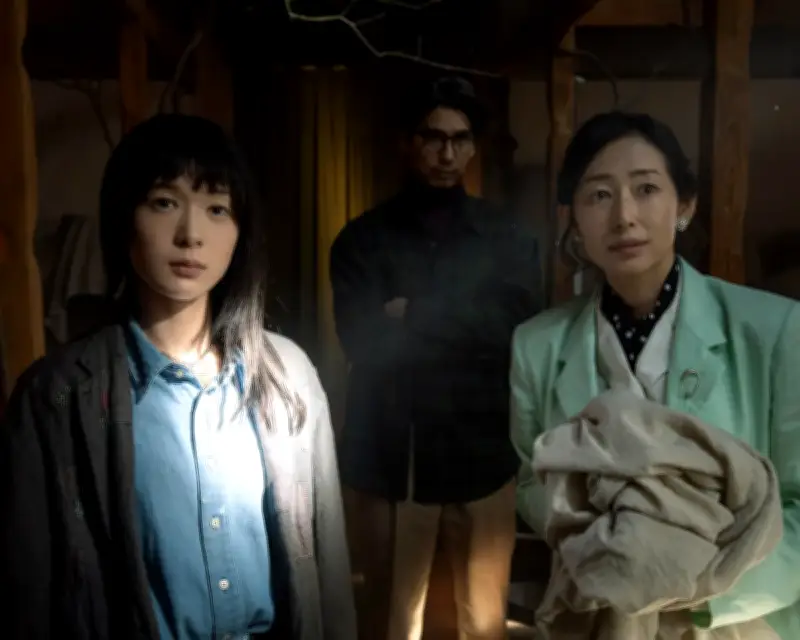
Moeka Hoshi, known for her role in Shogun, leads the Japanese-language horror thriller Never After Dark as Airi, a travelling ghostbuster for hire who confronts a wounded and recalcitrant spirit. The film, directed by Dave Boyle, is set for release on digital platforms from 2 November.
A Director Steeped in Japanese Culture
Viewers watching the film cold might be surprised to find that the director is not Japanese, given how deeply the story is rooted in Japanese lore and culture. Boyle has long been interested in Japan, having written, directed and starred in the 2006 feature Big Dreams Little Tokyo, about an American sharing a flat with an aspiring sumo wrestler.
More recently, Boyle served as a key director-producer on the Netflix series House of Ninjas. Never After Dark appears to have evolved as a side project between Boyle and House of Ninjas star Kento Kaku, who produced the film and takes a supporting role.
A Ghostbuster with a Sisterly Guide
The film follows Airi, a young woman with torn jeans and a raggedy haircut who travels the country in her Volvo as an itinerant ghostbuster. The ghost of her dead older sister Miku (Kurumi Inagaki) is always by her side but only visible in mirrors, as per folklore, offering advice about imminent danger and the spirit world.
Airi's latest job is to exorcise a spirit haunting a former hotel in the countryside. New proprietor Teiko (Tae Kimura) has been hearing bumps in the night and receiving creepy phone calls that might be from spirits, perverts, or both. Her son Gunji (Kaku) is sceptical of a supernatural explanation but takes a shine to Airi, especially when they discover a shared taste for niche music.
Old-School Effects and a Memorable Lead
Airi soon realises the apparition wandering the corridors is a man with a gruesomely smashed jaw (Mutsuo Yoshioka). She can interact with him on the astral plane through a ritual involving a candle, burnt offerings of her own hair, and a phenakistoscope, a 19th-century persistence-of-vision toy depicting a spirit rising from a body. Getting the spirit out of the house proves far from the routine exorcism she expected.
Boyle and his collaborators use charmingly old-school physical effects, reminiscent of early cinema pioneers like Georges Méliès. The approach relies on camera angles capturing faces in mirrors and reflections, wire work, and well-choreographed body doubles. While the characterisation is not especially complex, Hoshi brings spontaneity and intelligence to the lead role that is consistently winning. Never After Dark is available on digital platforms from 2 November.