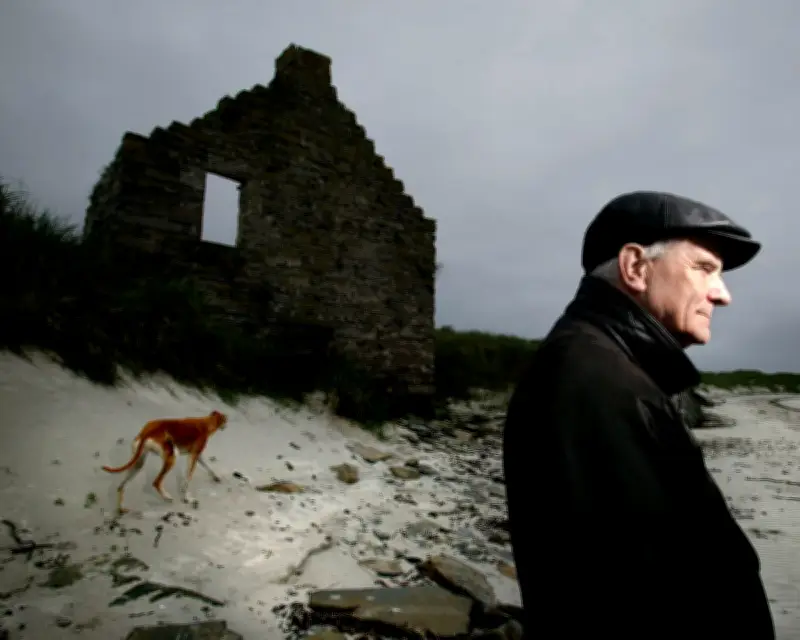
The St Magnus Festival, founded in Orkney in 1977 by composer Sir Peter Maxwell Davies and poet George Mackay Brown, celebrates its 50th edition this midsummer. This milestone highlights a living legacy of cultural and community connection, rooted in the archipelago's remote yet vibrant setting.
The Birth of a Festival
The first festival in 1977 premiered Maxwell Davies' chamber opera The Martyrdom of St Magnus in Kirkwall's St Magnus Cathedral, a 12th-century sandstone marvel. The opera tells the story of Magnus Erlendsson, Earl of Orkney, who became a Christian martyr. By staging it as the festival's inaugural event, Maxwell Davies made a bold statement: Orkney was not peripheral but a center for musical culture and world history.
Over the decades, the festival expanded beyond opera and symphonies to include community music-theatre works and composition courses. Notable figures like Judith Weir, James MacMillan, and current artistic director Alasdair Nicolson have all been influenced by Maxwell Davies' vision.

A Composer-Led Vision
While composer-led festivals like Benjamin Britten's Aldeburgh Festival had existed for decades, Maxwell Davies achieved similar artistic ambition in a remote part of the UK. He bound the festival's vision across music, poetry, and the arts to Orkney's island communities, creating a unique cultural fabric.
Maxwell Davies' Musical Alchemy
Maxwell Davies, who died in 2016, created music deeply rooted in Orkney's landscape. His repertoire, however, remains underappreciated and underperformed. He believed in alchemy and magic, using mathematical squares and pagan symbols in his creative process. His music is not atonal but finds new harmonic gravity, blending keys and modes in mysterious yet visceral ways.
His 10 symphonies, 10 Strathclyde Concertos, and 10 Naxos Quartets are now rare in concert programs. Yet his musical language pulses with the energy of Orkney's tides and storms, as exemplified in his Second Symphony, which he wrote while living on the island of Hoy.
The 432Hz Myth
The article also debunks the myth that music tuned to 432Hz has special healing properties. While some wellness practitioners claim spiritual benefits, the science is unfounded. Concert pitch has varied historically—from 465Hz in 17th-century Italy to 392Hz in France—and no single frequency is inherently magical. The relativity of tuning is its only constant.
Recommended Listening
This week, Tom Service recommends French composer Rita Strohl's chamber music, available on La Boîte à Pépites. The three-CD set includes trios, a string quartet, a Fantasy-Quintet, and an 1890 septet in C minor. Start with the Romance of the Septet to discover her enchanting musical world.