For many, the French New Wave cinema of the late 1950s and 60s has always projected an aura of intimidating cool. Actor Zoey Deutch, who stars in Richard Linklater's new film Nouvelle Vague, admits she initially felt shut out. "I thought I wasn't cool enough, or that I wasn't smart enough to get it," Deutch confesses, reflecting on her early encounters with the work of Jean-Luc Godard and François Truffaut.
Demystifying a Cinematic Revolution
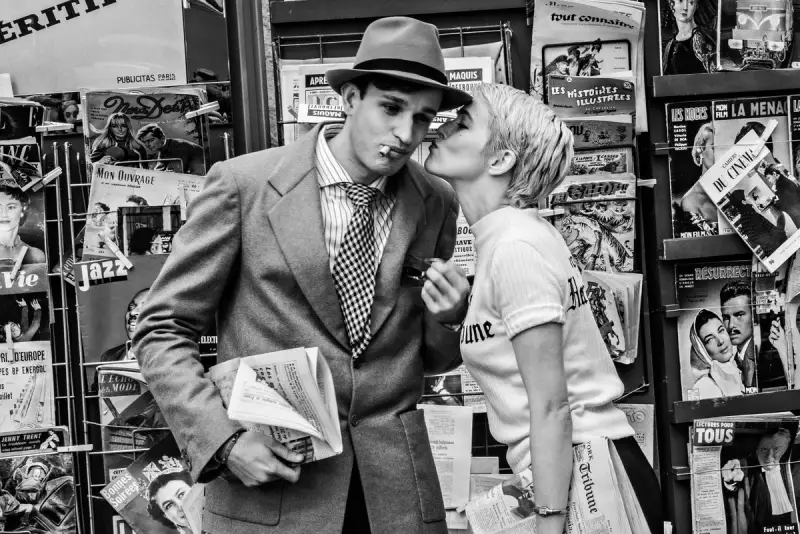
Linklater's film, which arrives in UK and Irish cinemas on 30 January 2026, aims to strip away that mystique. It is a black-and-white homage focusing on the frenetic, low-budget creation of Godard's groundbreaking 1960 debut, À bout de souffle (Breathless). The director, known for Boyhood and the Before trilogy, wanted to highlight the youthful joy and communal spirit behind the movement, rather than its daunting intellectual reputation.
"They're all very young – people coming together, making a film," Linklater explains. "To me, the Nouvelle Vague is always exciting in its looseness, its love of cinema, its freedom." He instructed his cast and crew to forget they were recreating a masterpiece and instead pretend they were making a scrappy film in 1959 that might not amount to anything. The required mindset was one of revolutionary uncertainty.

Capturing the Chaos of Creation
The film features a cast of relative unknowns, with Guillaume Marbeck making his feature debut as the mercurial Godard and Aubry Dullin embodying Jean-Paul Belmondo's iconic insouciance. Deutch, who last worked with Linklater over a decade ago, plays the young American actress Jean Seberg.
Deutch delved into Seberg's complex experience on the Breathless set, which followed two rigidly controlled films with director Otto Preminger. "Her experience filming Breathless was both groundbreaking and challenging," Deutch notes. "She described it as chaotic." Seberg later said of Godard that he wanted to capture something in her she didn't fully understand, focusing more on what she represented than who she was.
Marbeck's journey to playing Godard was itself haphazard. A photographer by trade, he arrived late to an eight-hour audition on an electric scooter and decided to stay in character all day, accidentally injuring a casting director's finger during a fight sequence. His portrayal captures Godard's puckish, infuriating genius and his belief that "films shouldn't cost much. It's the way to creative freedom."
A Lasting Legacy of Freedom
Nouvelle Vague broadens its focus beyond Godard to showcase the tight-knit community of cinephiles and critics from Cahiers du Cinéma who fuelled the movement. Linklater contrasts his own meticulous, heavily rehearsed filmmaking process with Godard's spontaneous, improvisational style, which often involved writing dialogue the morning of a shoot.
The director points out the profound and lasting influence of the French New Wave, particularly Breathless, on American independent cinema, from John Cassavetes and Martin Scorsese to Quentin Tarantino and the 'mumblecore' movement. The movement succeeded in lowering the stakes of filmmaking, proving that personal stories and experiences were worthy subjects.
For Deutch, the project has transformed her view of the New Wave from an exclusive club into an accessible source of inspiration. "If you love New Wave, you'll love this. And if you don't, it's funny and warm enough to win you over," she says of Linklater's film. She hopes it will invite a new generation to discover revolutionary works like Jules et Jim, Cléo de 5 à 7, and Pierrot le fou.
Reflecting on the enduring power of the era, Linklater observes that Breathless arrived just 65 years after the birth of cinema, highlighting how young the art form still was. "It's forever inspiring," he concludes, affirming the Nouvelle Vague's inexhaustible capacity to ignite filmmakers and audiences alike.