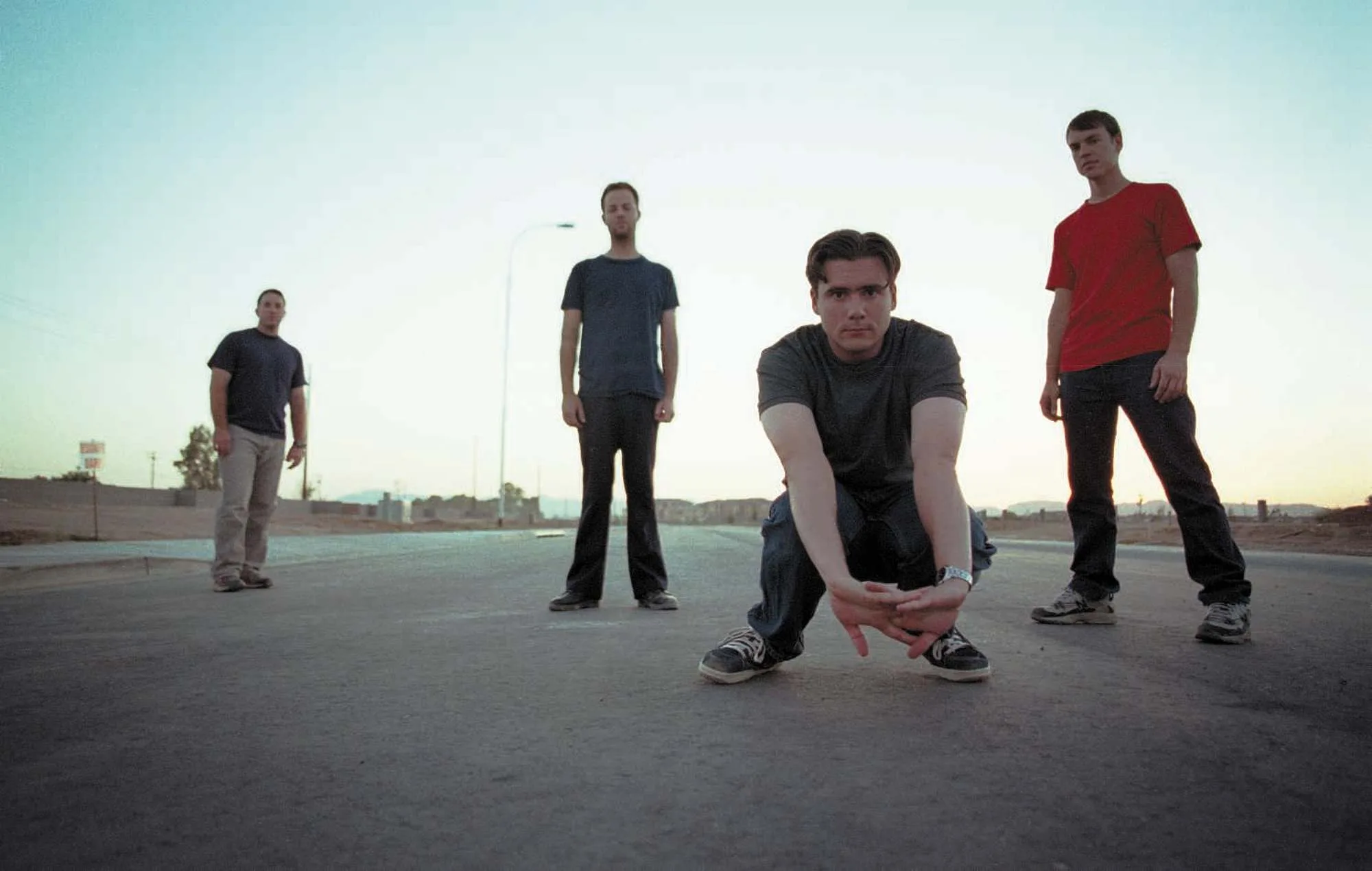
Jimmy Eat World frontman Jim Adkins has spoken to NME about revisiting their classic breakthrough album 'Bleed American' for its 25th anniversary, as well as plans for the tour and new material. The Arizona emo icons have a stacked summer of celebrations in honour of their huge 2001 LP, taking in a run of outdoor UK shows with a massive gig at London's Gunnersbury Park, alongside newly-announced North American gigs, and their return to the legendary Vans Warped Tour.
'Bleed American' saw the band turn from struggling underground pioneers into a mainstream global success. Their now classic third album 'Clarity' from 1999 would go on to achieve cult status as one of the best emo records of all time, but it was then seen as a commercial failure and saw them dropped by their label, Capitol. Signing to Dreamworks for the 2001 follow-up, the band didn't know what was around the corner – let alone that they'd be here to take 'Bleed American' on the road again 25 years later.
Adkins explained how the album was unconsciously driven by 'the seemingly disposable ways that we're sold happiness or the thing that's gonna do it for you and fill that black hole inside your spirit'. He told NME: 'It is commerce, it is disposable, it might feel good for a minute for sure, but is that really it? Is that really going to do it? There's a healthy place to put that kind of solution, but it doesn't arrive without some work.'

Reflecting on the album's enduring legacy, Adkins said: 'I have no idea why it's been able to do that. Questions like that are the last thing in the universe on your mind when you're creating something, or even now. We just had this batch of ideas that we were excited about and decided to record them.' He also dismissed the notion that the album was a 'make or break' moment, saying: 'The business and industry side of things was all just noise in the background.'
Looking ahead, the band are preparing for the anniversary shows and working on the long-awaited follow-up to 2019's 'Surviving'. Adkins noted that the band's mindset going into 'Bleed American' was shaped by their experience of being dropped: 'We had no illusions about how little that system gave a fuck about bands like us... We learned pretty quickly that the less you have to rely on outside assistance to do what you want to do, the better off you are.'