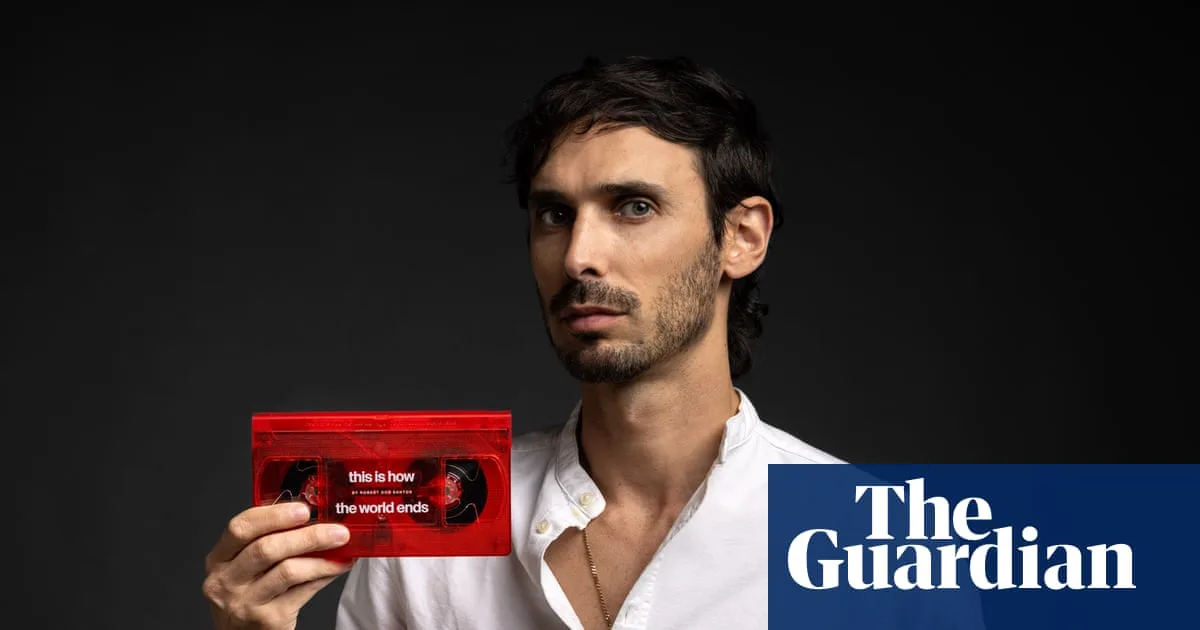
In an era dominated by streaming and digital downloads, one filmmaker is taking a bold, retro step. Roberto dos Santos has released his debut feature film, This Is How the World Ends, exclusively on VHS—making it the first straight-to-VHS movie in two decades.
A Deliberate Challenge to Modern Convenience
The film, which follows two siblings reuniting at an end-of-the-world party, is described as On the Beach meets Burning Man. But its release method is what truly sets it apart. In the early 2000s, 90% of British households owned a VCR, but by 2016, the last VCR manufacturer ceased production. Releasing a film on VHS today is a deliberate act of resistance against the ease of streaming.
“I love the idea that you need to be part of the club to watch this,” dos Santos explains. “It’s for people that have a specific taste. There is a band of human beings who really understand what we’re doing.”
From Lawyer to Filmmaker
Originally a lawyer, the South African director moved into film after multiple armed robberies. “I realised that I’m going to die one day and, if I’m going to die, I might as well do something that I’ll really, truly, passionately enjoy.” This existential drive permeates the film, which grapples with themes of hedonism and the end of the world—caused, in this case, by AI.
Imperfection as a Virtue
Dos Santos is no fan of AI. “Someone once said that if your mum can do it, it doesn’t have value,” he says. “If everybody can do something, then nobody can do it.” He believes that the imperfect, physical nature of VHS forces viewers to engage actively with art. “You have to order a tape and, for some people, actually go out and buy a VCR. I’m asking people to do a lot, but that’s what it means to be a human.”
A Growing Niche Market
Despite the format’s obsolescence, there is a dedicated community of VHS enthusiasts. The subreddit r/VHS has 73,000 members, and companies like Witter Entertainment release specialised VHS editions of modern films. Even Alien: Romulus got a limited VHS release in 2024. For many, the appeal lies in nostalgia and the desire to own a physical copy in an age of ephemeral streaming.
“Hey, maybe we shouldn’t digitise everything,” dos Santos says. “I’m a massive fan of vinyl. I love that if I put Led Zeppelin IV on, I have to listen to the whole thing. I’ve got to commit to listening to Stairway to Heaven without skipping it.”
A Compromise Worth Making
The film itself is visually stunning, shot in HD with beautiful desert landscapes. Watching it on VHS means losing detail and cropping the image, but dos Santos embraces the compromise. “Compromise is a part of experiencing life. Some film-makers would stick their noses up at VHS. But that’s the price you pay for being a human and for bumping up against the four corners of the world, and in this case, the four corners of the screen.”
An Unconventional Release Strategy
Dos Santos is flipping the traditional release model: first VHS, then Blu-ray and DVD, and finally cinema and streaming. “We’re doing the opposite of what used to happen,” he says. The strategy is already paying off; demand has been so high that they had to order more tapes. “I’ve had people send me videos of them buying a VCR just to watch it. It’s madness. This will never be full-on mainstream, but I’m very happy about that. It’s nice to have a niche, and for those who are crazy and passionate enough, it’s saying: ‘Hey, there are others like us.’”
This Is How the World Ends is released on 7 June, which is also World VCR Day.