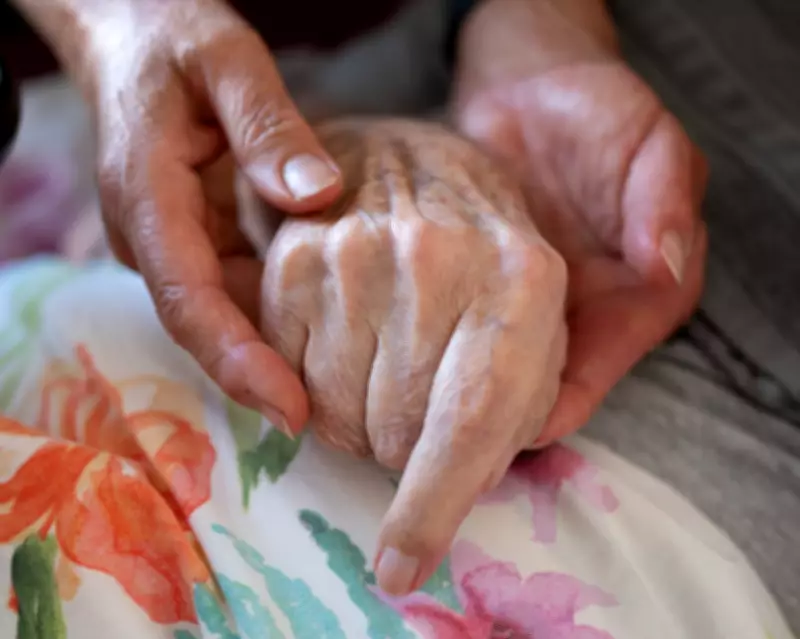
Intimate Portraits of Life's Final Chapter: Confronting Death with Compassion
Renowned documentary photographer Sibylle Fendt has created a profoundly moving series of portraits that offer intimate insights into the final stages of life. Her work, inspired by the personal experience of her husband Hendrik's death in May 2024 after a long illness, captures individuals spending their remaining time at home surrounded by family and friends.
Breaking the Silence Around Death
With death still considered a significant social taboo in contemporary society, Fendt's photographic project creates a vital space for openness, closeness and compassion. Her images document moments where pain, tenderness and love become inseparably intertwined during life's concluding chapter.
The photographs reveal raw emotional landscapes that challenge conventional avoidance of mortality discussions. Through her lens, Fendt captures what she describes as "an environment in which we felt safe despite the indescribable grief" during her husband's final moments at home.

Personal Stories of Terminal Illness
The series includes powerful testimonies from subjects confronting their mortality. One participant, identified as Köhler, shares: "I would like those around me to realise that my cancer frightens me no end. And that the difference is that they will probably live on, live longer, be able to organise their lives differently. My time here is very, very limited."
Another subject, Günther Stanzl, 84, expresses the universal fear with poignant honesty: "You can pretend you are not afraid, but of course you are. You're scared and why shouldn't you be? We only have one life."
The Transformative Power of Home Care
Multiple subjects describe how returning home from hospital transformed their experience of terminal illness. Chris recounts: "When the doctor at the hospital said: 'There's nothing more I can do for you,' we thought it was over, but it all turned out quite different. We came home to a much calmer place. I didn't have to die – not immediately. I could go on living for a moment."
Fendt herself experienced this transition, noting that after "an odyssey of hospital visits, and unsuccessful treatments," the decision to stay at home brought unexpected relief despite knowing what lay ahead.
Caregivers' Perspectives and Devotion
The series also highlights the experiences of caregivers providing end-of-life support. Christa cares for her husband at home with what Fendt describes as "incredible devotion," often singing old folk songs whose lyrics surprisingly reference themes of farewell.
Mrs Schiller reflects on the caregiving experience: "At some point, I just want to be able to look back on this time and say: 'We did a good job.' And that, actually, we maybe even had a good time."
Intergenerational Connections and Legacy
The photographs capture powerful moments between generations, particularly in parent-child relationships during terminal illness. One daughter explains her motivation for caregiving: "For me, this has a lot to do with giving back. The intergenerational contract is not a one-way street for me. My papa was always there for me. And my papa looked after me, cared for me and comforted me."
She continues: "It's a given for me that I can now repay him with all my love and the knowledge I have acquired. It's simply a tribute to him as a person."
Creating Space for Difficult Conversations
Fendt's subjects repeatedly emphasize the importance of breaking the silence surrounding death and aging. As Christa insists through the photographer's account: "the silence surrounding age and death needs to end. She longs for a society in which a willingness to help and care for others is valued much more highly."
The photographic project, titled "Before the time comes" and available from Kehrer Verlag, represents a significant contribution to changing cultural attitudes toward mortality through visual storytelling that combines artistic excellence with profound human insight.