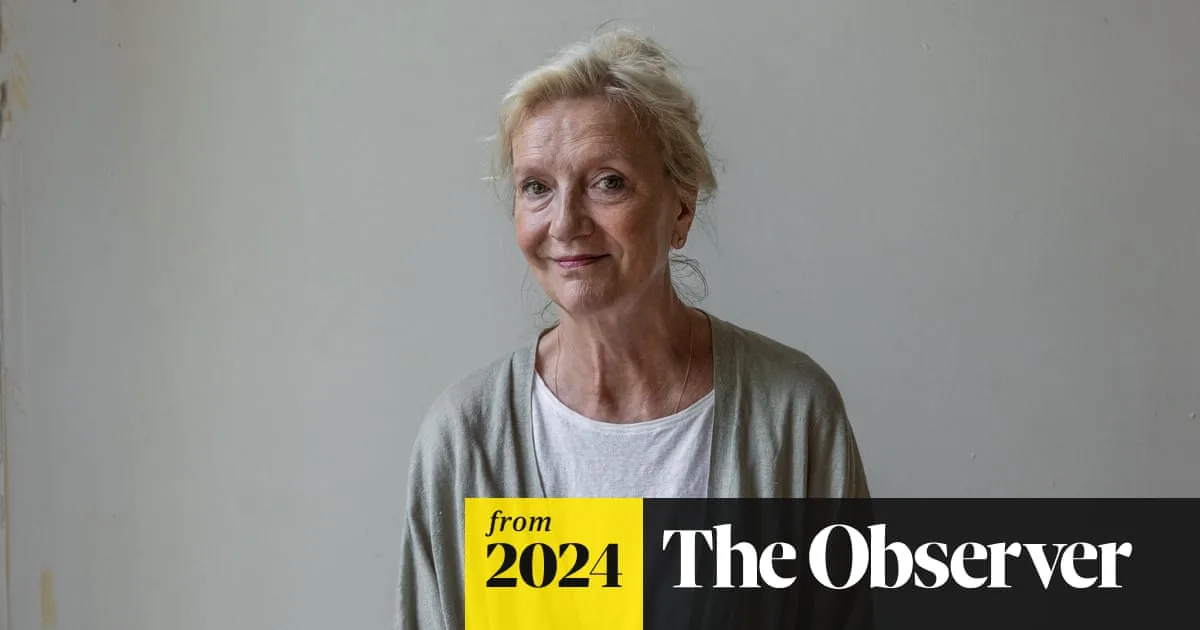
Elizabeth Strout: I Probably Have One Book Left in Me

Elizabeth Strout, the Pulitzer Prize-winning author beloved by literary giants such as Hilary Mantel and Zadie Smith, has revealed that she likely has only one more novel left in her. The 70-year-old writer, whose works have sold over two million copies worldwide, returns with her 11th novel, The Things We Never Say, introducing a new protagonist after years of focusing on characters like Olive Kitteridge and Lucy Barton.

A New Hero from an Unlikely Source

Strout found the inspiration for her latest hero, Artie Dam, in a peculiar way. A longtime friend sent her a page of old obituaries from the 1960s and 1970s. Among them was a photograph of a man with an ordinary, kind face that stayed with her. Eventually, she realized this was Artie Dam, an unassuming history teacher in late middle age whose life is filled with secrets. Unlike her previous protagonists—the crotchety Olive Kitteridge and the quiet, courageous Lucy Barton—Artie is Strout's first major new character in years, and the novel is set outside her native Maine.

The Quotidian Charm of Strout's Fiction

Strout's books are often described as 'quotidian,' reveling in seemingly unremarkable lives. They explore communities where people harbor secret grudges, passions, and private shame, often plagued by loneliness. Literary heavyweights have praised her work, but Strout is most moved by shy readers who queue at book signings to whisper what her novels have meant to them. One nervous Italian woman once told her through an interpreter, 'You have seen into my soul.'

Wide Pickt banner — collaborative shopping lists app for Telegram, phone mockup with grocery list

The Things We Never Say tells the story of Artie Dam, a respected teacher, loyal husband, and caring father who is dogged by thoughts of suicide. A moral man troubled by the political direction of his country, he struggles to make small talk at dinner parties, initiating discussions about free will that invite bewildered looks. At the heart of the novel is a revelation that shifts the ground under Artie's feet, turning those closest to him into strangers. One of the only people he can talk to is an old friend, Ken Moynihan, who turns out to be a Republican—a political difference Strout knows well from her own friendships.

A Political and Sad Novel

Written in the lead-up to Trump's second presidential victory, the novel uses the election as a dividing line, after which the world around Artie begins to degrade. When asked if her famous empathy extends to the president, Strout is blunt: 'No.' She notes the deep rumblings and divides in America and admits she has no idea how it will turn out. The novel is political and, like many of Strout's books, desperately sad. She didn't realize how sad until she read it back.

Loneliness hums through her stories like a low, blinking lightbulb, but Strout says she rarely feels lonely herself. 'I was thinking just the other day—I don't actually feel lonely. I mean sometimes, once in a while, I think, "Oh, I feel so lonely." But that's very rare. But I'm aware that it's a theme in my work, and so I think I must be plugging into the isolation that we all have just by being inside our own selves and our own bodies.'

Strout's Writing Journey

Strout grew up in Maine, where her father was a professor and her mother an English teacher. She didn't publish her first novel, Amy and Isabelle, until age 42. Influenced by writers like William Trevor, Alice Munro, and Virginia Woolf, she worked various jobs—waitressing, temping, training as a lawyer—while writing. She credits her imagination to a childhood of stillness, growing up in the middle of nowhere without a TV. 'My mind just kept doing whatever it needed to do,' she says.

Part of Artie's disillusionment in the new novel involves the creeping arrival of AI in the classroom. Strout herself isn't very online, noting that people no longer read as much on subways, instead glued to their phones. She lived in Oxford for a year in her twenties, working in a pub, and noticed class differences there in a way she hadn't in America. Class has become a rich seam in her stories, as she quotes her character Lucy Barton: 'I think it's the lowest part of who we are, this need to find someone else to put down.'

Pickt after-article banner — collaborative shopping lists app with family illustration

The Challenges of Writing and Motherhood

Strout juggled writing with teaching and motherhood. For over 10 years, she taught at a community college, starting classes at 7am so she could be home with her daughter after school, and might get two hours to write every other day. 'It's a tough thing to be creative and have children. I think especially for women, I'm sorry to say that, but I think the women issue is still very real,' she says. She never shut herself away from her daughter, and her first novel was published just as her daughter was about to leave home. 'I don't think that's a coincidence,' she adds.

Since then, her career has included Booker and Women's Prize shortlists and major screen adaptations. Olive Kitteridge became an acclaimed HBO miniseries, and there are plans to adapt The Things We Never Say. Strout mentions with regret that her first choice for Artie was the late Philip Seymour Hoffman. Last year, she brought together Olive, Lucy, and Bob Burgess in Tell Me Everything, which she thinks will be the last time she writes about Olive. 'I feel that I'm done with her, but I have said that so many times and been wrong, so I honestly don't dare say it.'

One More Book?

How many books does she have left? 'Probably one,' she says decisively. 'I was waiting for a while and I thought, "Oh, wow, I'm actually done," but there's a bit of bubbling going on, so we'll see.' She feels she has pretty much said what she needs to say and doesn't want to continue with subpar work. 'I might just be exhausted. I might just have said it all, you know?'

'The Things We Never Say' is published by Penguin Viking.