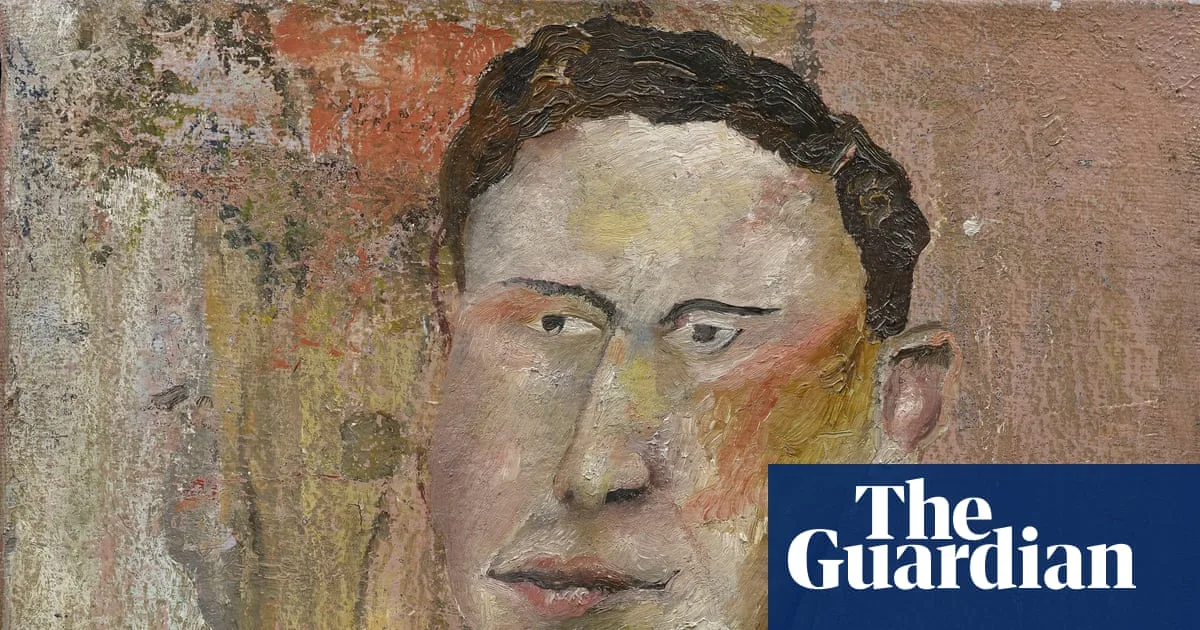
An early portrait by Lucian Freud, which the artist repeatedly denied was his work, has been authenticated and will be shown publicly for the first time. The painting, titled Man in a Black Scarf, was created in 1939 when Freud was a student at the East Anglian School of Painting and Drawing in Hadleigh, Suffolk.
The sitter is believed to be John Jameson, a friend of Freud's and a member of the whiskey family. The work gained wider attention after appearing on the BBC's Fake or Fortune? programme in 2016, where art historian Philip Mould concluded it was very likely a Freud. However, the artist had consistently denied painting it before his death in 2011.
Freud's denial is thought to have stemmed from a personal feud with the original owners, Denis Wirth-Miller and Richard Chopping, fellow students at the Suffolk school. Designer and author Jon Lys Turner, who inherited the painting, said Wirth-Miller kept a list titled '13 Reasons to Hate Lucian'. Wirth-Miller gave Turner the work on condition that he authenticate and sell it to infuriate Freud.

Turner spent 19 years trying to have the work verified, but experts were reluctant to contradict the artist. A breakthrough came two years after Fake or Fortune? when records in the Tate Britain archive showed that Freud had been painting John Jameson in 1939, matching the portrait.
Man in a Black Scarf will be exhibited at the Garden Museum in London as part of the 'Benton End: A Paradise of Pollen and Paint' exhibition, running from 2 June to 20 September 2026. The show highlights the connection between Freud and his teacher Cedric Morris, who also painted a stylistically similar portrait of Freud in 1940.
Turner described the portrait as having 'a confrontational gaze and these large eyes and the great thick paint sort of daubed and quite roughly handled'. While the painting has not been valued, it was speculated in 2016 to be worth over £300,000, though Freud's works have sold for tens of millions.