The best thing about living in Soho is the noise, the constant hum and thrum of the city, which I have known since I was a child sitting on the balcony of my father's Berwick Street flat, listening to the thrilling throng beneath me, longing to be old enough to join it. Now, after 30 years in and out of the sounds of Soho, I remain enthralled by its beat.
But not if the nimbys, also known as the Soho Society, have anything to do with it. At their last AGM, they vowed to veto every new venue licence application, including renewals, extensions, and both permanent and temporary requests. These killjoys are Soho's grim reaper. It seems the only sound they appreciate is a death rattle.
The society claims to make Soho a better place to live, work, and visit, yet the people whose livelihoods and social lives depend on Soho maintaining its vibrancy disagree. Shopkeepers are up in arms, and clubbers are in tears. As Sadiq Khan said on X: complaining about nightlife when you choose to live in Soho is like living in South Kensington and complaining about the museums.

I have been drawn to live, drink, dine, and play in Soho in every decade of my life, lulled in by its cornucopia of sleaze. I once flat on Marshall Street with my desk by the window, where the clamour outside delighted my journalist's ear as it tuned into snippets of revealing conversation, the tenor of arguments, and the cadence of the street. Occasionally, an actual news story would unfold on my doorstep, usually a drunk celebrity snogging someone they should not. I used to enjoy the blare of passing rickshaws blasting random snippets of Lady Gaga and the Human League, although this year their music was banned. What next? Will the Hare Krishna's chanting be interdicted or Berwick Street Market traders' cries proscribed?
Rhythms of the Night
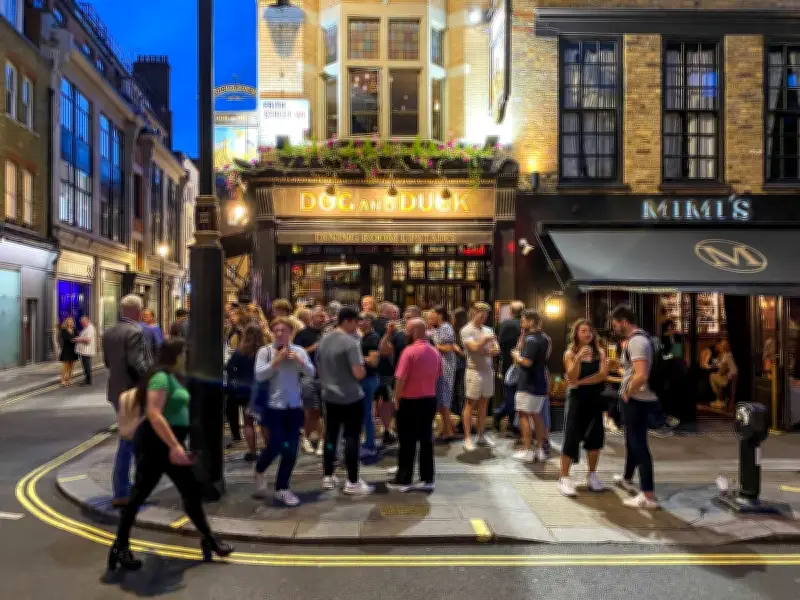
The Soho Society seems to hope that by curtailing clubs' operating hours and objecting to any venue opening after 11pm, it will grind Soho's streets into submission. But Soho's circadian rhythm is not so easily interrupted. It begins with beeping binmen, the call of delivery drivers, the bustle of market traders and shopkeepers unshuttering, followed by the buzz of incoming office workers, excitable tourists, restaurant and bar staff, and as the crowds on the streets swell, the late lunchers clashing with the early-evening din outside the John Snow, the Coach and Horses, and the French House. Dating couples arrive, along with cackling girls and gay boys, screaming and caterwauling, disappearing in and out of bars, catching the tail end of their karaoke, giggling as they enter sex shops, staggering out of Trisha's, screaming joy and anger. There are the shrieks of foxes, screaming lovers' tiffs, sirens, and shotgun blasts of car engines skidding through narrow alley streets.
When I left London for rural life, it took ages to adjust to losing this white noise. Four years later, I am back in London longing to hear it again. My God, the countryside is boring.
It's Madness to Move to an Area Then Attack Its Very Character
One might be tempted to wonder if Soho Society members, the society was established in 1970, are simply getting old. Not chronologically, but psychically. After all, my father lived happily among Soho's commotion into his eighties, relishing shuffling between Bar Italia, Ronnie Scott's, and whatever new restaurant we decided to try that week. He did not hate the noise; he thrived in it. It is what kept him young and why he made Soho his home.
Khan is right: it is madness to move to an area then attack its very character. Soho has not been farmland since the 16th century. For the past 400 or so years, in all its fine cacophony, it has been of the best and worst of the zeitgeist.
Proud History of Sleaze
It is funny to hear anyone call Soho seedy now. I remember the 1990s when it was so rough you could not get a takeaway delivered at night and Carnaby Street was an endless strip of bootleg Nirvana T-shirt shops. Now it is gentrified stratospherically, overrun with TikTok hot-chocolate spots, bubble-tea joints, and stores selling skateboard gear to kids. If anything, I wish it was grottier.

The sex shops, strip clubs, peep shows, and once ubiquitous cracked doors with red model signs did not just signal sleaze. They were a signpost for freedom, marking out the area as a liminal, non-judgmental space, a zone of permissiveness. A hub for queer life, sexual expressiveness, and joyful debauchery. Where else can you pop into your local newsagent for milk and come out clutching a bottle of poppers? Soho, as it is for so many people, was the first place I went gay clubbing. It has been the scene of countless screaming matches, dates, drunken snogs, confessions, and job offers in my life.
It Is Not Even Good Capitalism to Silence Soho
In the 1990s, it was synonymous with louche members' clubs crammed with legendary drinkers, including Francis Bacon, Lucian Freud, Damien Hirst, Alex James, and Keith Allen at the Colony and Groucho. Soho's streets still promise some of that hedonism. Must what is left be sacrificed at the altar of house prices?
It is not even good capitalism to silence Soho. The city needs the money a night-time economy brings.
But the worst thing is imagining a Soho fallen silent. That really would be disquieting.