One Battle After Another Review: DiCaprio's Clowning Anchors Anderson's Ferocious Epic
Paul Thomas Anderson has crafted a swaggering, funny and profoundly timely action epic with One Battle After Another, a film where momentum never lets up and where supporting actors Sean Penn and Teyana Taylor consistently steal the show. This ferocious American masterpiece poses a central, haunting question: what becomes of a revolutionary when their revolution fails? Do they retreat into quiet obscurity, or do they pass the torch to the next generation with a hopeful plea to set the world right?
A Definitive Artist's Statement
While debates will undoubtedly rage about whether this represents Anderson's absolute masterpiece, standing alongside works like The Master and There Will Be Blood, there's no denying its power as a definitive artist's statement. Anderson has tinkered with this project for nearly two decades, originally inspired by Thomas Pynchon's novel Vineland, and has arrived at Warner Bros with a reported $130 million budget, shooting on lavish 70mm film for release in VistaVision and Imax formats.
This is unmistakably Anderson's action epic, opening with the capital "C" Cinema image of Perfidia Beverly Hills, played with magnificent presence by Teyana Taylor, as she storms into an immigration detention centre. Her righteous fury is palpable as she declares to Sean Penn's humiliated Colonel Steven J Lockjaw, "this is an announcement of a motherf***ing revolution." From this explosive beginning, the film maintains a ferocious pace through editor Andy Jurgensen's masterful work.

DiCaprio's Buffoonery and Taylor's Power
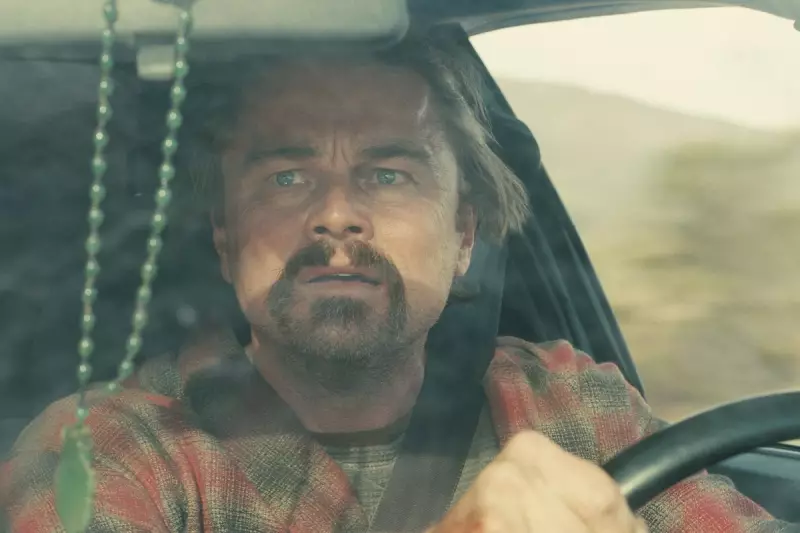
Leonardo DiCaprio delivers a performance he has finessed beautifully in recent years, playing Bob as a well-meaning buffoon with a broken heart who becomes utterly infatuated with Perfidia. He totters through the film's midsection in a bathrobe and tiny hair bun, wielding a phone charger in search of an outlet and throwing toddler-like tantrums when he forgets revolutionary passcodes. DiCaprio proves himself an accomplished clown when required, yet Anderson never allows the comedy to undermine the film's serious political underpinnings.
Teyana Taylor's performance as Perfidia represents one of the film's most powerful elements, with cracks appearing in her revolutionary armour that reveal the human cost of resistance. Meanwhile, Sean Penn creates a twitchy, teeth-grinding cartoon villain in Colonel Lockjaw, a character with just enough heartbeat to feel like a palpable threat. His sexual obsession with Perfidia becomes an obstacle to his induction into the white supremacist secret society known as the Christmas Adventurers.
Supporting Cast Excellence and Political Resonance
The electric cool of Benicio del Toro's Sergio St Carlos provides another highlight, playing a karate teacher who runs an underground network assisting undocumented immigrants. Chase Infiniti makes her screen debut as Willa, the daughter Bob must raise alone after the French 75 radical group disbands and Perfidia disappears.
What makes One Battle After Another particularly striking in our current apocalyptic moment is its underlying message of hope. For all its formalist pleasures – the humour, relentless pace, and visual grandeur – the film recognises with clarity what it means to exist as an entire human being under systems of oppression. Anderson demonstrates an Olympian gymnast's flexibility with tone, able to shift from DiCaprio's clowning to chilling scenes of planted agitators giving police excuses for violent suppression.
The director's work maintains a taut, haunted feeling throughout, never allowing audiences to forget the inequality of power and resources between resistance movements and the systems they combat. This tension manifests in Taylor's performance, in the distance between father and daughter, and in the contrast between revolutionaries who surrendered to fear and those who inherited their fire.

A Timely Conclusion
One Battle After Another builds to an emphatic, timely conclusion that suggests every battle – whether fought on streets or within hearts – will prove worthwhile eventually. The film's climactic car chase sees pursuers rising and falling beneath undulating roads like the shark in Jaws on the hunt, a technical marvel that serves the story's emotional and political stakes.
While Anderson took inspiration from Pynchon's Vineland, borrowing character outlines and incidents, he has created something entirely his own – a work that looks resolutely forward where contemporaries like Quentin Tarantino have looked back. At 162 minutes with a 15 certificate, One Battle After Another represents cinema operating at its most ambitious and politically engaged, proving that to resist is to live and to live is to resist.