Sundance 2026 Opens with Carousel: A Static Romance Drama Starring Chris Pine and Jenny Slate
Carousel Review: Chris Pine and Jenny Slate in Static Sundance Drama

Carousel Review: Chris Pine and Jenny Slate Are Lost in Static Romance Drama

The Sundance Film Festival 2026 has officially commenced, but the opening narrative premiere, Carousel, has left critics underwhelmed. Directed by Rachel Lambert, this small-town indie romance stars Chris Pine and Jenny Slate in a story that struggles to connect emotionally despite its aesthetic ambitions.

A Festival Tradition with Modern Challenges

This year's festival carries added weight, marked by grief over the loss of founder Robert Redford and its relocation from Park City. Against this backdrop, Carousel represents the sort of character-driven American independent film that has been Sundance's lifeblood for nearly five decades. Yet, as the industry landscape has evolved, such intimate stories often find it difficult to gain traction beyond the festival circuit.

Recent years have seen similar films, like 2023's A Little Prayer, premiere to critical acclaim only to face limited releases and audience reach. The current cinematic climate appears particularly unkind to this subgenre, which flourished more readily in the 1990s and early 2000s. Carousel thus arrives at a challenging moment, attempting to revive a style that once defined independent cinema.

Lush Direction Undermined by Erratic Script

Director Rachel Lambert employs a sensory-rich approach, filling the film with consuming musical selections and longing shots of nature. Her visual and aural craftsmanship occasionally captivates, reminiscent of her previous Sundance entry, Sometimes I Think About Dying. However, these technical achievements cannot compensate for a script that feels underdeveloped and emotionally distant.

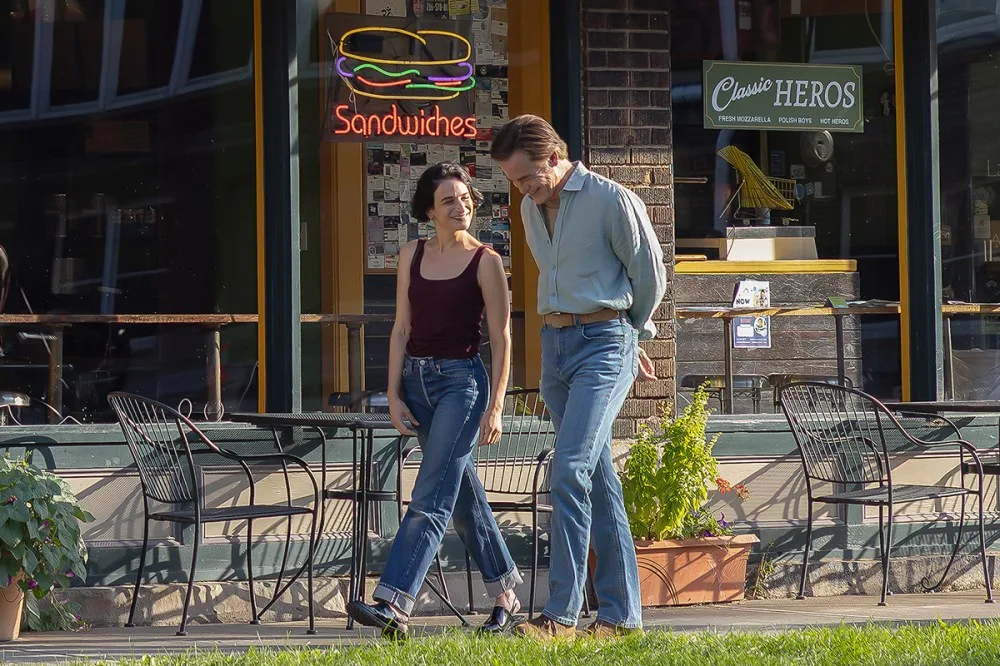
The narrative follows Chris Pine as a doctor grappling with midlife uncertainty. His character faces multiple pressures: a daughter struggling with anger and anxiety, a medical practice in financial trouble, and the reappearance of a past love, played by Jenny Slate. While this setup embodies classic Sundance themes, Lambert's execution falters, leaving characters feeling thinly sketched and their motivations unclear.

Strong Performances Cannot Salvage Narrative Gaps

Chris Pine delivers a compelling performance, suggesting potential for a later-career shift into more dialogue-driven roles. He portrays an emotionally limited man with convincing nuance. Jenny Slate brings her signature charm to the role of the returning love interest, and the pair share enough chemistry to hint at what a stronger film might have achieved.

Supporting actors, including Sam Waterston and Heléne Yorke, are unfortunately underutilised, their characters lacking substantial development. The film's most effective moment comes in a drawn-out, messy argument between the central couple in the final act. This scene is intensely performed, yet viewers may find themselves confused about the underlying issues, as if eavesdropping on strangers' conflict.

A Frustrating Lack of Emotional Payoff

Ultimately, Carousel suffers from a fundamental disconnect. For a film centred on the enormity of love and loss, it fails to generate the strong feelings it seeks to explore. Lambert introduces intriguing complexities, such as parenting another's child or reconciling youthful romance with adult maturity, but these themes never find satisfying resolution.

The conclusion features an overblown romantic gesture that feels unearned, leaving audiences unmoved. Like many Sundance films that fail to resonate, Carousel spins in circles without arriving at a meaningful destination. While beautifully crafted in parts, it remains a frustrating experience that highlights the challenges facing intimate indie dramas in today's market.

Carousel premiered at the Sundance Film Festival 2026 and is currently seeking distribution.