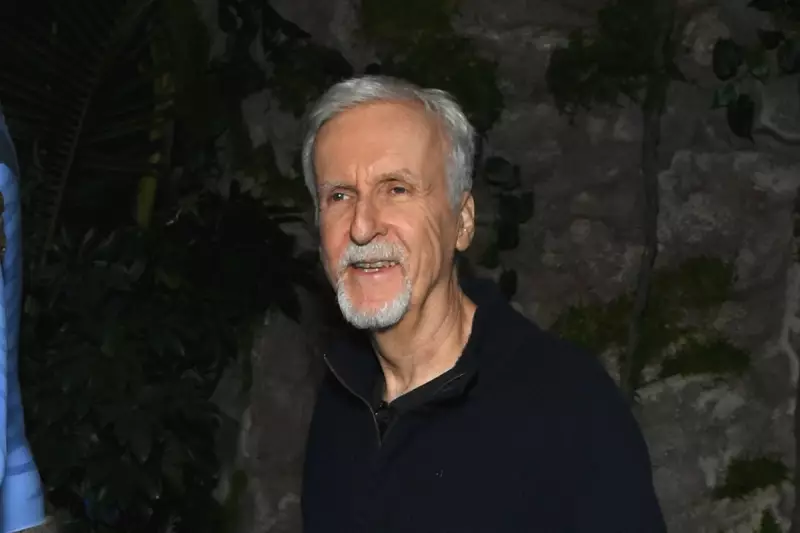
Acclaimed filmmaker James Cameron has issued a stark rejection of using artificial intelligence to create or replace actors, labelling the very concept as "horrifying". In a candid interview, the Titanic and Avatar director drew a clear line between the advanced performance capture technology he employs and the emerging trend of generative AI in entertainment.
The Art of Performance Capture vs. AI Generation
Cameron passionately detailed the intricate process used in his upcoming film, Avatar: Fire and Ash, set for release on 19 December. He described it as a "celebration of the actor-director moment." For underwater scenes on the moon Pandora, stars like Sigourney Weaver and Zoe Saldaña performed in a massive 250,000-gallon tank.
"We use a whole bunch of cameras to capture the body performance of the actor," Cameron explained. "And we use a single camera (or now we use actually two) to video their face. They are in a close-up 100 per cent of the time. It's very much like theatre rehearsal."

He positioned this labour-intensive, collaborative method as the direct antithesis to generative AI, where a character and performance can be conjured from a simple text prompt. "That’s the opposite. That’s exactly what we’re not doing," he stated. "I don’t want a computer doing what I pride myself on being able to do with actors. I don’t want to replace actors, I love working with actors."
The Fundamental Limitations of Generative AI
Cameron elaborated on what he sees as the inherent creative ceiling of AI systems. He argued that while the technology's output can be "astonishing," it is ultimately a derivative magic trick. "What generative AI can’t do is create something new that’s never been seen," he asserted.
"The models are trained on everything that’s ever been done before... So you will innately see, essentially, all of human art and human experience put into a blender, and you’ll get something that is kind of an average of that," Cameron said. He emphasised that AI cannot replicate the unique spark of human experience: "You won’t find the idiosyncrasies of a particular actor."
He predicted that because of this, "The act of performance, the act of actually seeing an artist creating in real time will become sacred, more so."
Industry Backlash and the AI Actor Controversy
Cameron's comments resonate with significant ongoing tensions in Hollywood regarding the use of AI. Earlier this year, the unveiling of an AI "actor" named Tilly Norwood sparked an uproar. Norwood, a virtual creation owned by talent studio Xicoia, prompted reports that Hollywood agents were exploring her potential.
The reaction from established actors was swift and critical. In the Heights star Melissa Barrera called the news "gross," while former child actor Mara Wilson questioned the ethics of compositing the faces of living women to create a digital entity.
This debate was central to the 2023 SAG-AFTRA strike, where the union representing 160,000 actors fought against proposals they alleged would allow studios to scan background performers, pay them for a single day, and then own and reuse their digital likenesses indefinitely.
While Cameron acknowledged exploring AI to reduce visual effects costs, he remains steadfast on human creativity for core filmmaking. "I don't want an AI model to write my scripts," he told IGN in September. "Any good screenwriter has a particular lens on the world, a unique lived experience... I don't think what's going to ultimately change for me is storytelling with actors."