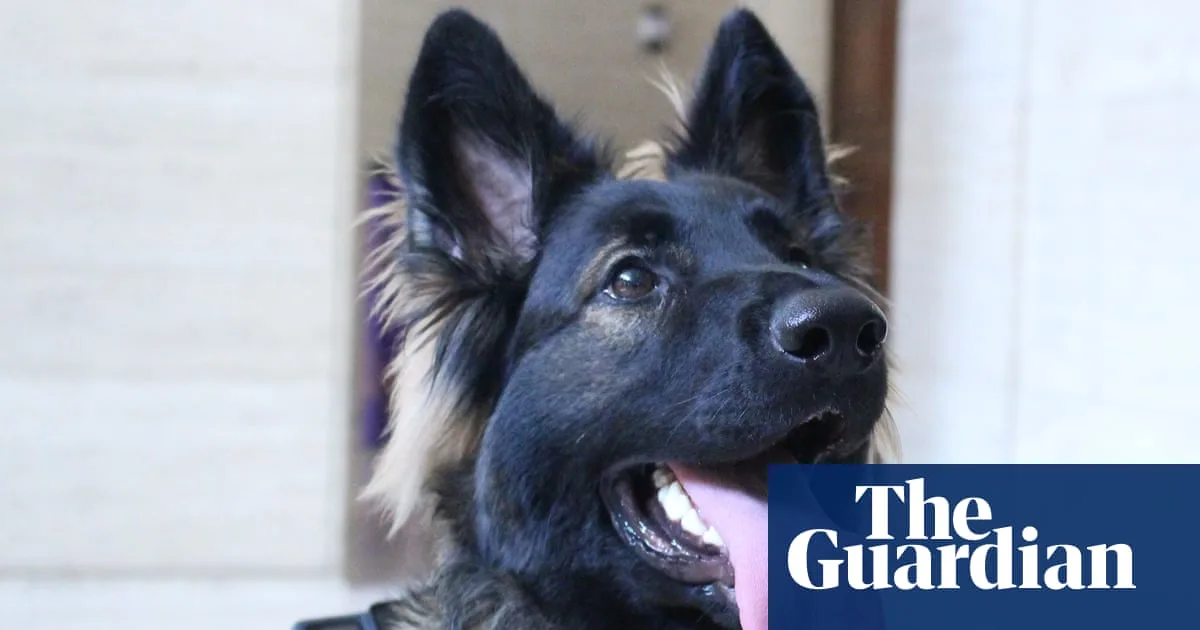
A groundbreaking new film titled Blondi offers a unique perspective on the final days of the Third Reich, seen through the eyes of Adolf Hitler's beloved German shepherd. The short film, which premiered recently in Brixton, London, features an unusual cinematographic approach: the camera was strapped to the back of Lexie, a seven-month-old German shepherd, making her the world's first 'cinemadographer' or canine co-director of photography.
The film's creators, Pablo Álvarez-Hornia (producer) and Jack Salvadori (co-director), conceived the project to explore a completely different creative input. Salvadori, who has always loved dogs, wanted to relinquish control and let the dog's natural movements shape the visual narrative. The result is a disorienting yet immersive experience, with sudden changes of pace and unconventional angles that evoke the chaos and discomfort of the bunker.
A Historical and Uncomfortable Perspective
Blondi, the dog, was a real historical figure given to Hitler by Nazi party secretary Martin Bormann in 1941. She was used as a propaganda tool to showcase Hitler's supposed love for animals. The film covers the final days of the war, as generals deliver bad news to a trembling Führer, and culminates in Blondi's tragic role in testing cyanide pills for Hitler's suicide.
Álvarez-Hornia emphasizes that Blondi represents pure innocence, devoid of ideology or moral reckoning. The film's unsettling atmosphere is heightened by the dog's perspective, which captures the tension and despair without understanding the horrors around her.
Behind the Scenes: A Chaotic Production
The making of Blondi was as unconventional as the film itself. The crew shot without official permissions, often scrambling to dress up locations like London's Senate House as a 1940s office while avoiding security. The script was adapted from a short story by Peter Greenaway, who agreed to repurpose it after Salvadori reached out as a fan. Renowned cinematographer Robert Richardson advised using a real dog instead of a trained one, a decision that proved crucial.
Casting human roles was challenging: actors had to accept that their screen time depended on whether Lexie looked at them. This created a dynamic where performers competed for the dog's attention, mirroring the insecurity of Hitler's generals vying for his favor. The Führer was played by Nicola Pedrozzi, a Swiss actor found on a mountain, who was chosen for his ability to 'vibe with the dog' and deliver lines with a needy coldness.
Why a Dog's Perspective Matters
The film's unique viewpoint is not a gimmick; it serves to highlight the absurdity and horror of the Nazi regime's final days. Salvadori notes that dogs capture energies, and Lexie's responsiveness to the tense atmosphere added authenticity. The crew's anxiety about not having shooting permissions contributed to the claustrophobic feel, which the dog picked up on.
Despite the experimental approach, the film is not comedic. Salvadori explains that the humour lies in the absurdity of watching such terrible events from a dog's perspective, but there is nothing to laugh at. The bunker scenes are grim, with no happiness even for the dog.
Future Projects
Salvadori and Álvarez-Hornia are already working on their next feature, a full-length film set in a colonial villa in South America about a Nazi exile living in seclusion with maids and a dog. This time, they plan to shoot conventionally, as Salvadori admits he could not give up more control than he did with Blondi.
The film Blondi challenges traditional filmmaking and offers a fresh, uncomfortable lens on history, proving that sometimes the most innovative perspectives come from the most unexpected sources.