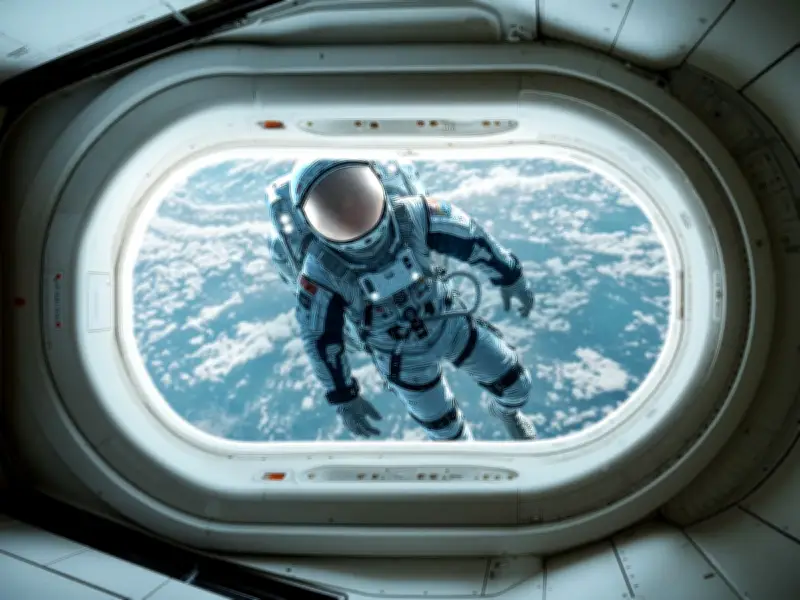
An astronaut completed a haunting and selfless final act before being launched into space, fully aware he would not return alive. Soviet cosmonaut Vladimir Komarov, a test pilot and aerospace engineer, was sent on a mission in a faulty spacecraft, becoming the first human to die in a spaceflight incident.
The Tragic Mission of Soyuz 1
Komarov had previously commanded Voskhod 1, the first spaceflight to carry more than one crew member, in October 1964. For that achievement, he was awarded the Order of Lenin and named a Hero of the Soviet Union. He was later chosen as the solo pilot for Soyuz 1, the Soviet space program's first crewed test flight. His backup was national hero Yuri Gagarin, the first human in space.
On April 24, 1967, Komarov successfully re-entered Earth's atmosphere on his 19th orbit, but tragedy struck when his parachute failed to deploy. The Soyuz capsule crashed at full speed into the ground, killing him instantly.

Foreknowledge of Disaster
According to former KGB agent Venyamin Russayev, both Komarov and Gagarin knew the Soyuz spacecraft was unsafe. Russayev claimed Komarov told him, "I'm not going to make it back from this flight." When asked why he didn't refuse the mission, Komarov replied, "If I don't make this flight, they'll send the backup pilot instead. That's Yuri, and he'll die instead of me. We've got to take care of him."
In a 1997 BBC interview, Russayev recounted that Komarov "burst into tears" at this point, saying, "He cracked. Maybe he just let out all the tension, and he began to cry." Russayev also alleged that Gagarin tried to have Komarov removed from the mission, believing Soviet leadership would not risk a national hero on a doomed flight. However, Komarov refused to put Gagarin's life at risk.
Controversy and Legacy
Russayev's claims have been disputed by some space historians, who question his version of events. Nevertheless, Komarov's story remains a poignant example of sacrifice in the pursuit of space exploration. His death highlighted the dangers of early spaceflight and led to improvements in spacecraft safety.
Space travel continues to be a global endeavor, aimed at ensuring humanity's long-term survival and deepening our understanding of the universe. While animals and astronauts have lost their lives in the quest for knowledge, their sacrifices have paved the way for future discoveries.