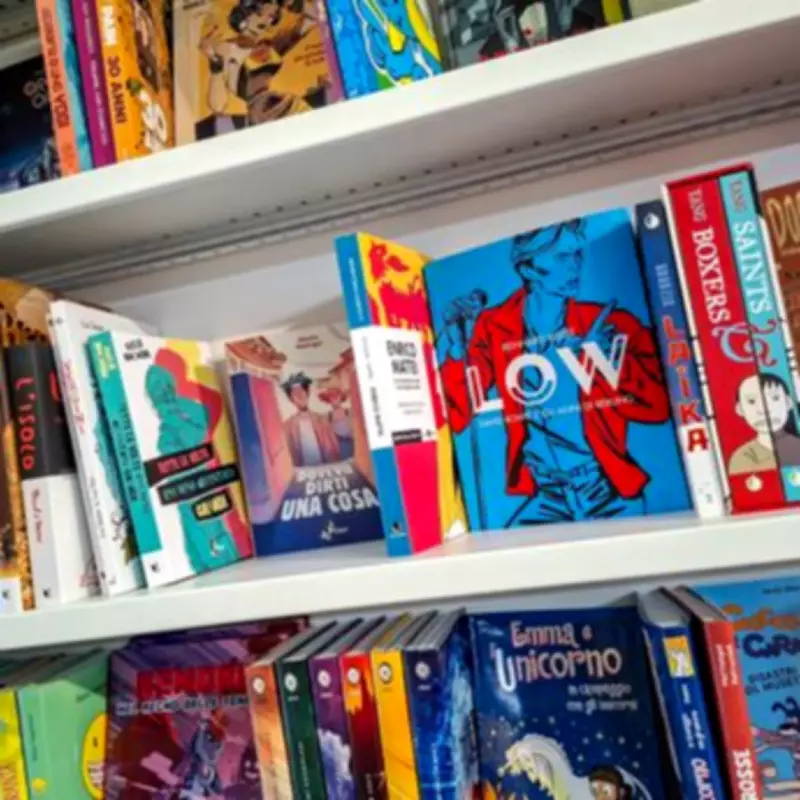
Graphic novels have moved into the mainstream, offering readers visually driven stories that blend striking artwork with storytelling across genres from fantasy to superheroes and psychological drama.
Graphic novels and comics have seen a steady rise in mainstream popularity in recent years, with readers increasingly turning to the format for stories that combine visual storytelling with emotional depth, genre experimentation and bold artistic style. Far from being niche, the medium now spans everything from horror and fantasy to superhero reinventions and literary adaptations.
What makes comics particularly compelling is how much of the storytelling is done visually - meaning tone, pacing and emotion are often carried just as much by illustration as by dialogue. The result is a reading experience that can feel immediate, immersive and highly stylised, with each title offering something distinct in both form and narrative.

Here are five standout comics that demonstrate the full creative range of graphic storytelling.
Witchblood: The Hounds of Love
Witchblood: The Hounds of Love by Matthew Erman introduces Yonna, a centuries-old witch travelling through the desert with a restless, chaotic energy that immediately defines the tone of the series. One review describes it as “such a high intensity, vibrant read,” capturing the way the comic leans heavily into atmosphere, colour and momentum rather than traditional exposition.
After a collision in the desert leaves her stranded, Yonna is driven by two simple goals: repairing her bike and getting revenge. What follows is a fast-moving introduction to a character who is both ancient and impulsive, written with a tone that shifts between humour and mysticism.
Matthew Erman balances comedic, almost modern dialogue with the idea of an immortal being still capable of pettiness and emotion, while the visual storytelling does much of the heavy lifting. Lisa Sterle’s artwork, paired with vibrant colouring, turns every panel into something expressive and stylised, with character design and movement communicating just as much as the dialogue itself. The result is a comic that prioritises feeling, aesthetic and energy, creating a world that is less about precise rules and more about immersive, chaotic charm.
Zatanna by Jamal Campbell
Zatanna by Jamal Campbell is widely noted for its confident approach to visual storytelling, particularly its decision to remove inner monologue entirely. One review highlights this as a deliberate creative choice, noting that it “may seem like such a simple story choice but says so much about Campbell’s confidence in the story he is telling,” emphasising the trust placed in artwork and pacing rather than explanatory narration.
The issue opens as a performance, with Zatanna presented as a stage magician addressing an audience, immediately grounding the story in spectacle and pretence. Jamal Campbell builds this theatrical framing into the structure of the comic itself, using large-scale double-page spreads and layered panel layouts to mimic the rhythm of a live show.
From there, the narrative shifts into a mission involving the possession of Vi’irra by a plague spirit, where Zatanna is forced into both performance and combat. The introduction of Allura - a former family rival turned unexpected ally - adds further tension, while the reveal of Zatanna as the Prime Magus marks a striking tonal shift. In these moments, the artwork deliberately changes palette and composition, stripping back colour and emphasising shadow to underline her power.
Swamp Thing by Alan Moore
Swamp Thing by Alan Moore is regarded as one of the most ambitious reinventions in comic book history, taking a character that began as a traditional monster and reshaping him into something far more conceptual and mythological. One review describes the run as “an experiment” that still holds up, noting how it permanently changed the way readers understand the character - particularly the idea that Swamp Thing is not Alec Holland, but an elemental avatar of “The Green,” a living force connected to all plant life on Earth.

From there, the series expands far beyond origin mythology into a layered ecological and supernatural world. Alan Moore builds storylines involving plant consciousness, interdimensional travel and threats that range from occult horror to cosmic imbalance, with arcs like American Gothic blending horror storytelling with broader cultural commentary.
One review highlights how the series moves between “rich cultural thesis” and large-scale comic crossover without losing narrative clarity, with ideas like underwater vampires and lunar-linked transformations showing just how far the mythology stretches. Despite its scale, the run remains grounded in character, using its supernatural framework to explore identity, nature and transformation in a way that still feels influential today.
Invincible by Robert Kirkman
Invincible by Robert Kirkman is frequently praised for its fresh and often subversive take on the superhero genre. As one reviewer puts it, “now this is how you tell a superhero story!” What sets the series apart is how it begins with familiar superhero foundations - a teenage protagonist discovering his powers and stepping into a legacy - before gradually dismantling expectations of what heroism actually looks like.
At the centre of the story is Mark Grayson, a seemingly ordinary high school student who learns that his father, Omni-Man, is the planet’s most powerful hero and a member of the alien Viltrumite race. What initially appears to be a traditional mentorship arc quickly becomes more complex as Mark’s understanding of heroism, morality and loyalty is challenged.
Early storylines follow him balancing school life with superhero duties, while facing threats ranging from rogue scientists to larger intergalactic forces. As the narrative expands, the series moves into multiverse travel, cosmic conflict and a long-running confrontation with Thragg that reshapes Earth’s future. Despite its escalating scale, the emotional core remains grounded in Mark’s personal growth, making it both accessible and unexpectedly impactful.
Harleen by Stjepan Šejić
Harleen by Stjepan Šejić offers a psychological retelling of the early relationship between Harleen Quinzel and the Joker, reframing a well-known origin story through a more grounded, character-led perspective. One review describes it as “an incredibly reverent, beautiful book that is unrelentingly passionate about the character,” highlighting the way it centres Harleen’s internal world rather than simply focusing on her eventual transformation into Harley Quinn.
Told largely through Harleen’s point of view, the story unfolds as a retrospective narration, with her reflecting on events that have already taken place - suggesting both memory and regret. Before she becomes Harley Quinn, she is portrayed as uncertain, isolated and lacking direction, which makes her increasingly vulnerable to manipulation by the Joker.
Rather than rushing into transformation, the narrative lingers on her emotional state and gradual unravelling, while also weaving in appearances from familiar Gotham characters to ground the story within its wider universe. The result is a more introspective and character-driven take on a familiar arc, focusing on psychology and influence rather than spectacle alone.
Taken together, these comics show just how broad and inventive the graphic novel format has become. From mythological reinventions and superhero subversions to psychological origin stories and visually driven fantasy worlds, each title demonstrates how storytelling can shift when image and text work side by side.
These books use layout, colour and structure to build meaning in ways that feel immediate and immersive. For readers new to the medium, they offer a strong entry point into a form that is as varied as it is visually compelling, and far more expansive than it’s often given credit for.