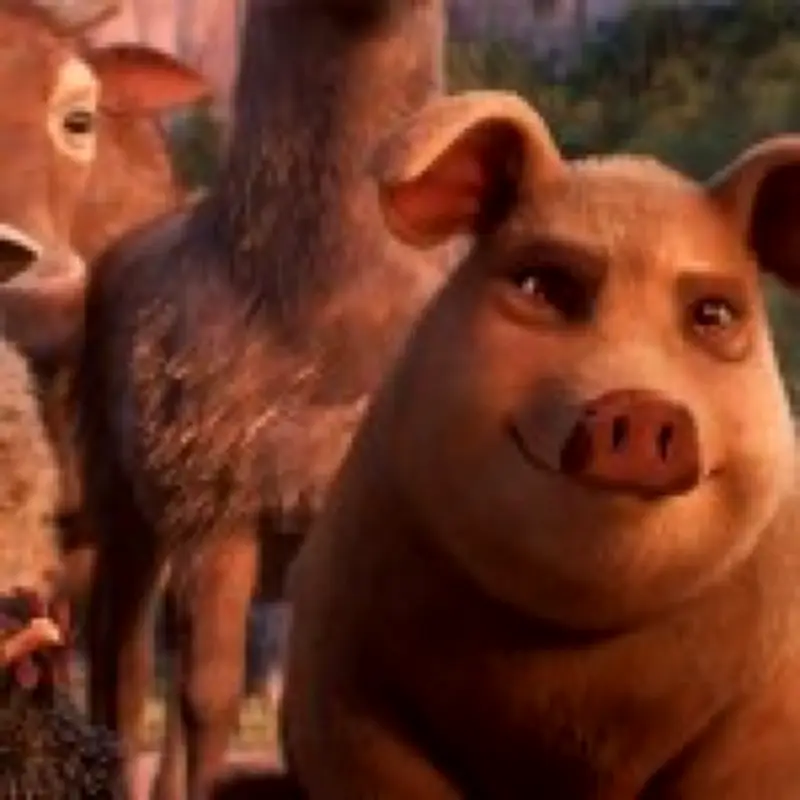
Andy Serkis' new animated adaptation of George Orwell's Animal Farm has been criticized as a watered-down, soulless mess that loses the original's bleak political allegory. The film, which hits cinemas on Saturday, July 18, relocates the story from rural England to America and adds new characters, including a perky piglet named Lucky and a tech billionairess voiced by Glenn Close.
Plot and Changes
The story begins fairly faithfully: a mean, drunken farmer neglects his animals and plans to send them to the slaughterhouse. However, the animals quickly oust the humans and take over the farm, led by the pigs. Snowball (Laverne Cox) establishes key Orwellian rules like 'All animals are equal,' but is soon overthrown by Napoleon (Seth Rogen), a greedy dictator. Writer Nicholas Stoller updates the allegory from Soviet totalitarianism to modern corporate corruption, but the clarity is lost in a confusingly cosy kids' caper.
Voice Cast and Animation
The CGI is bland and featureless, relying on a starry voice cast including Kieran Culkin, Steve Buscemi, Kathleen Turner, and Woody Harrelson as Boxer the workhorse. Harrelson also serves as narrator and is described as 'lovely.' However, the film includes plentiful fart gags, with Napoleon declaring 'This is the sound of freedom' after a massive one, drawing criticism for dumbing down the source material.
Critical Reception
According to Larushka Ivan-Zadeh, chief film critic for Metro, the adaptation 'lacks not just teeth and claws – it lacks soul.' The nursery-level conclusion that 'what is always right is helping each other' and cringe rap music have left many critics unimpressed. The film runs 94 minutes and features a flashy, incoherent climax involving robots, henchmen, lasers, and underwater escapes.
In an age of strongman leaders, Orwell's Animal Farm remains relevant, but this adaptation fails to capture its essence. As Ivan-Zadeh notes, 'You can feel Orwell spinning in his grave.'