England's World Cup Victory and Tyneside Life
Sixty years ago this month, England defeated West Germany 4-2 to lift the World Cup at Wembley Stadium, with captain Bobby Moore hoisting the Jules Rimet trophy. More than 32 million people watched on television as the Three Lions, including Ashington-born brothers Bobby and Jack Charlton, united the nation in celebration.
Two hundred and sixty miles north, the following day's Sunday Sun featured England's football heroes alongside stories about council rent rises, foot and mouth disease, and a man threatening to jump off a 100-ft crane at Newcastle Quayside. Life on Tyneside continued as normal.
Industrial Past Meets Modernisation
Tyneside in 1966 was caught between its industrial past and an approaching wave of modernisation. Coal, shipbuilding, and heavy engineering dominated daily life, even as redevelopment reshaped town centres. Multi-storey tower blocks replaced Victorian terraces in Newcastle's west and east ends, transforming the skyline. The city's new Civic Centre, built in modernist style, was under construction and would open in 1968.
Unemployment was notably low, with plenty of jobs in shipyards, factories, shops, and offices. Working people had more disposable income than ever before, and many were determined to enjoy themselves.
Cultural Scene and Entertainment
While Newcastle could not compete with London's cultural energy, a glance at the Evening Chronicle's listings from 60 years ago shows plenty of activity. At the Odeon on Pilgrim Street, cinemagoers could watch Those Magnificent Men In Their Flying Machines; the ABC Haymarket showed The Moving Target; and the Essoldo on Westgate Road screened The Great Wall. My Fair Lady was nearing the end of a successful run at the Theatre Royal, while a production called Odd Man In played at the Flora Robson Playhouse in Jesmond.
The after-dark scene boomed. At the Club a'Gogo on Percy Street, large queues formed several times a week to see rising acts like the Spencer Davis Group and John Mayall's Bluesbreakers, as well as resident house band the Junco Partners. At La Dolce Vita on Low Friar Street, late-night cabaret was billed as 'World Cup Floorshow', while at the City Hall, American bluesman Jimmy Witherspoon appeared under 'Jazz World Cup' auspices.
Historical Context and Archive Photos
As July 1966 drew to a close, England prepared for the World Cup final against West Germany, only 21 years after World War II had ended. The 4-2 victory remains a momentous national milestone, a moment when the country felt united, and even the streets of industrial Tyneside paused to celebrate.
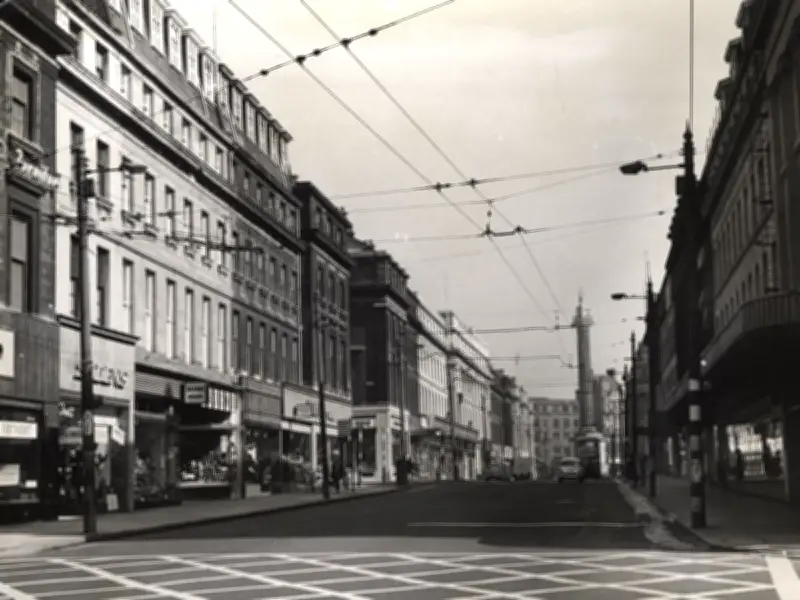
Ten archive photographs recall scenes captured around Tyneside 60 years ago: fun in the sun at Tynemouth outdoor pool; Newcastle United in action against Blackburn Rovers at St James' Park; the Ship Inn at Wallsend; striking seamen meeting at Mill Dam, South Shields; the Essoldo cinema on Westgate Road; Grainger Street looking towards Grey's Monument; a queue of traffic at the old Scotswood Bridge; workers constructing the Tyne Tunnel meeting midway under the river; a diesel service stopping at Newcastle Central Station; and derailed cement wagons after a rail crash at Lamesley, Gateshead.