Stornoway's Traitors Champion Sparks National Conversation on Accents
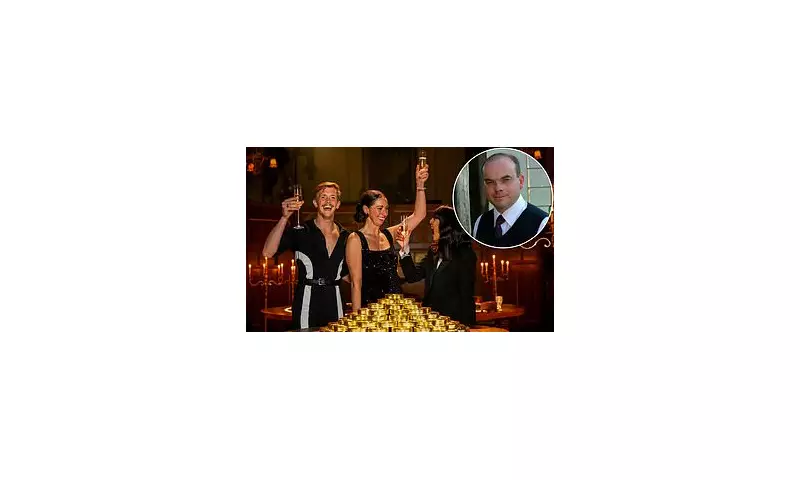
Last Friday evening, at approximately quarter to ten, a seismic wave of celebration erupted across the Isle of Lewis. The collective jubilation – a massive exhalation, universal fist-pumps, and whoops of joy – felt powerful enough to launch delayed CalMac ferries and potentially unsettle governments. The source of this euphoria was Stephen Libby, a 32-year-old Stornoway native, who had just triumphed in the BBC's hit reality show The Traitors through breathtaking style, Abba-esque jumpsuits, genuine intellect, and unwavering integrity.
An Unprecedented Celtic Alliance
In a glorious Celtic partnership, Libby joined forces with Rachel Duffy, 42, from Newry in County Armagh, to achieve what no previous contestants had managed. Never before had paired Traitors won the competition, as alliances typically collapsed by the next episode due to inevitable duplicity. Furthermore, no female Traitor had previously reached the final stage. Their victory was particularly remarkable given the strategic precision they demonstrated throughout the competition.
Time and again, at precisely the right moments, Stephen and Rachel moved to 'murder' or banish threats to their joint cause, while their most dangerous rivals essentially eliminated themselves through tactical errors. The tension reached its peak during that final, astonishing pause by the crucial fire-pit, when the Stornoway contestant could have claimed the entire £95,750 prize pool for himself through ultimate treachery. As ten million viewers watched, clutching their chair-arms in anticipation, convinced he would betray his partner, Libby instead demonstrated remarkable loyalty.

The Emotional Climax and Cultural Impact
Even host Claudia Winkleman was so astonished by the enduring bond between these faithful Traitors that she momentarily wept, potentially jeopardising her carefully applied makeup. The show provided appointment-viewing family television through what many described as the bleakest, most challenging January in half a century, keeping audiences on the edge of their seats until the dramatic conclusion.
While some commentators have suggested that the popularity of such a deception-based format signals national moral decline, this perspective overlooks how elements of feint, subterfuge, and strategic deception exist across numerous competitive fields – from Grand Masters chess and tennis to rugby, where penalty kicks often involve deliberate misdirection.
The Accent Advantage
The fascinating aspect of the Stornoway-Newry alliance extends beyond mere trust, focus, guile, and nerves of steel. Their success may owe much to their distinctive regional accents. Stephen Libby himself recognised this advantage even before filming began, noting that his 'educated-Stornoway' voice made him appear personable and approachable, causing people to lower their guards quickly during initial meetings.
Similarly, Rachel Duffy's Irish Borderlands purr shares this quality of being difficult to read in terms of class, background, or pretension. Both accents feature remarkably clear diction that international viewers have widely praised. The Lewis accent represents something of an outlier within British linguistic patterns, characterised by flat, insistent, questioning vowels, a slightly thick palatal 'l', and firm consonants, with the distinctive rhotic 'r' rolled in the throat rather than rattled by the tongue tip.
Political Voices Through History
This accent analysis naturally extends to the political sphere, where voices have tormented many professional politicians throughout British history. Harold Wilson deliberately simplified his vocal delivery, while Margaret Thatcher transformed her Lincolnshire dialect into the tones of a gin-and-Jag matron after consulting voice coaches, including actor Laurence Olivier and television producer Gordon Reece.
Former Scottish Labour leader Iain Gray, despite his privileged education, consciously adopted the vocal mannerisms of a Third Division football manager. Even the late Queen Elizabeth II worked diligently through the decades to modulate her naturally high-pitched, cut-glass voice into the distinctive, measured tones that became globally recognisable.

Pronunciation Pitfalls and Social Signifiers
The conversation extends beyond regional accents to the pronunciation pitfalls of upper-class names that function as social signifiers. Not Cholmondeley but 'Chumley', not Althorp but 'Altrup', not Featherstone-Haugh but 'Fanshaw' – these linguistic quirks create subtle barriers of inclusion and exclusion within British society.
Media executive Nicholas Coleridge famously secured his breakthrough job at Tatler by correctly identifying that 'Belvoir' should be pronounced 'Beaver', demonstrating how such knowledge can open doors in certain circles. This linguistic landscape was highlighted nearly half a century ago when a Labour MP mocked a Scottish Nationalist in Parliament for what he described as 'incomprehensible' tones, prompting Speaker George Thomas to intervene with the diplomatic observation that the House contained many accents, adding that he often wished he possessed one himself.
Stephen Libby's journey from Stornoway streets to television triumph, and the subsequent analysis of how regional voices influence perception, reveals much about contemporary Britain. As the nation continues to navigate questions of identity, representation, and communication in an increasingly mediated world, the power of the spoken word – whether in reality television or parliamentary debate – remains a fascinating subject of national conversation.