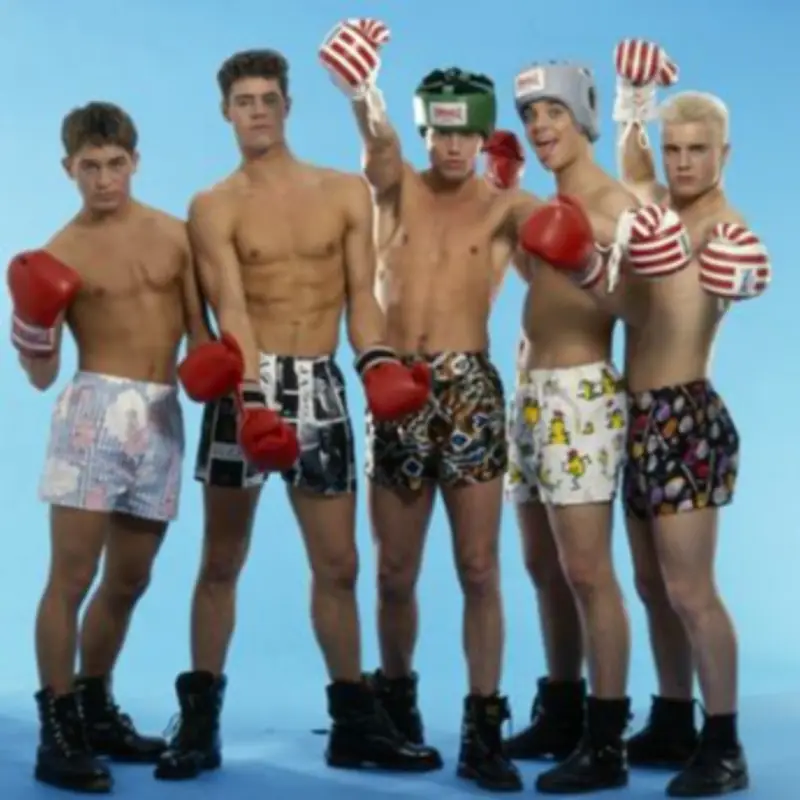
With 45 million records sold, including 28 million in the UK, Take That evolved from a chirpy boyband into one of the biggest manbands of the past 35 years. Formed in Manchester in 1989 by music manager Nigel Martin-Smith, who was inspired by the success of New Kids on the Block, the group centered around singer-songwriter Gary Barlow, discovered performing in local clubs. The rest of the members were assembled through auditions: dancer Howard Donald, former street dancer Jason Orange, the 'cute one' Mark Owen, and a 16-year-old cheeky character named Robbie Williams.
"If Take That succeeds, in five years you guys will hate each other," predicted Martin. "And you will definitely hate me too. But we'll all be very rich." He was spookily accurate. Although success took time, with first single Do What U Like stalling at No. 82, Martin set up nightclub gigs to connect with female and gay audiences. This, coupled with tours of schools, grew a fanbase. Their second single Promises reached No. 38. A string of Top 40 hits followed, culminating in their first No. 1 with Pray, while their debut album Take That & Party reached No. 2. They went on to sell more records than any other English group since The Beatles, becoming the biggest British boy band of the 1990s.
Behind the scenes, things were less rosy as fame's pressure took a toll on their mental health, while Barlow was accused of being controlling. Tensions between Robbie Williams and the rest of the group, particularly Barlow, boiled over. In 1995, just as Take That started making inroads in America with Back For Good, Robbie quit to launch a solo career. "I was always the talented member," he boasted. Later, he admitted to doing some "stupid stuff" after parting ways. The remaining four members soldiered on, releasing Never Forget and a Bee Gees cover, How Deep Is Your Love, before announcing their disbandment in February 1996.
"Unfortunately the rumours are true – How Deep Is Your Love will be our last single, the Greatest Hits will be our last album, nothing more," confirmed Barlow. Fans were distraught, with some declaring their "world had ended" and admitting they would be "crying for weeks." Teenage girls threatened suicide, and the hysteria became so extreme that telephone hotlines were set up by the government to counsel them. But Mark Owen was relieved: "I felt no regret at all. For me it was the best news of the year."
Gary struggled with deep depression and gained weight after the split, refusing to sing and attempting to disguise himself in public. "It was all a bit of a torment," he said. "I was embarrassed to be me, to have people recognise me." He spent lonely days wandering around his mansion, struggling to write his solo album as Robbie's career skyrocketed. "Within six months, this piano drove me mad," he recalled. "I would spend days just looking at it, lying underneath it, rubbing my face on it, slowly going insane, trying to work out why this thing wasn't delivering to me like it used to."
A decade later, the group reformed, minus Robbie. "I realised we needed Take That and we needed each other," Gary said in 2022, expressing regret for not living in the moment. They sold out Milton Keynes Bowl and other huge shows, plotting their first new LP, Beautiful World, which showcased Howard, Jason, and Mark assisting Gary with songwriting. The result was a collection of sweeping ballads and piano-heavy anthems, including the No. 1 single Patience and Mark Owen's impressive vocals on What You Believe In. The album sold millions, as did follow-up The Circus, which sparked an extravagant tour and established Take That as stadium performers.
Then the miracle happened: Robbie rejoined for the sixth studio album Progress in 2010, the first record featuring the original line-up since 1995. It became the fastest-selling album of the 21st century and the second-fastest in British history. But it didn't last. In 2014, both Robbie and Jason Orange left. Robbie had recently become a dad for the second time and cited logistical difficulties. The album III marked a new era as a trio of Barlow, Donald, and Owen, becoming the band's seventh No. 1 in 2014. Regarding Jason, Gary explained: "He'd told us for a while, 'I don't want to be in music any more', and we'd push, push, push. At the end of the day you've got to accept someone doesn't want to do what you're doing any more."
Their success continued with further occasional Robbie hook-ups and even bigger shows, culminating in 2026's return of The Circus tour, a record-breaking Netflix documentary, and more new music imminent. In total, Take That have had 12 No. 1 singles and eight No. 1 albums. Not bad for a cheesy boyband rocking cycling shorts and fluorescent crop tops!