Plot Overview and Structure
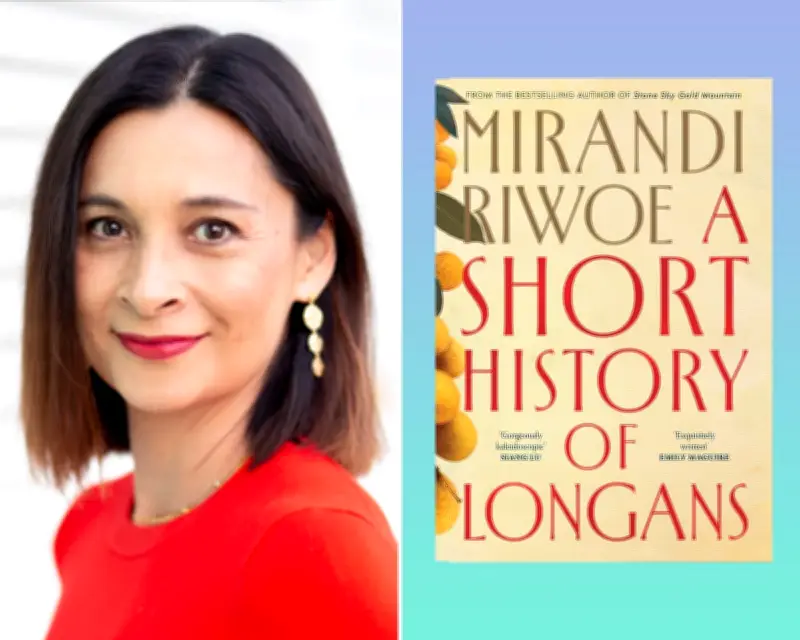
Mirandi Riwoe’s commanding new novel, A Short History of Longans, opens in the year 2049 with Daniel Connelly, a 75-year-old eccentric living a spartan existence after decades of self-imposed isolation. He spends his days sculpting from broken pottery, searching for pieces that fit together. One warm winter day, he discovers that the longan tree in his garden—a family heirloom symbolizing home and belonging—has fallen during a storm.
The novel is not solely Daniel’s story. It unfolds as a multigenerational saga tracing how the longan tree came to be at this point. The book begins with a fictional biography of Ah Yang, a Chinese Australian bushranger active in Queanbeyan in the 1850s, and follows the family lineage that ends with Daniel. As the longan dies, a complex network of relationships and stories is uncovered.
Multigenerational Perspectives
The narrative is told primarily from the perspectives of four characters across 200 years: Daniel in 2049; his aunt Wendy, suffering from early onset Alzheimer’s in the early 2000s; his great-aunt Ruby, a Chinese Australian film actor struggling to break into 1950s Hollywood; and his great-great-great-grandmother Maria, the unlikely matriarch, whose story spans from the 1850s into the mid-20th century. Riwoe explores Chinese Australian experiences across time, examining nuances of race, gender, and immigration as each family member negotiates belonging and assimilation.
Initially, the book seems to unfold in four seasonal movements—winter with Daniel, autumn with Wendy, summer with Ruby, spring with Maria—but the structure loosens and accelerates. Minor characters step briefly into focus, marriages and children accumulate, and the family tree becomes a living organism. Though characters inhabit different times and places, they are shaped by the same inheritances, each influencing the next.
Themes of Memory and Trauma
Riwoe focuses on older characters undergoing transformation, resisting the typical arc of youthful self-discovery. As Wendy forgets her own life, she feels “the narrowing fragments of time bearing down upon her,” asking herself, “Where does the time go?” The novel examines what we cannot remember and what we try to forget. Each family member carries pain and shame that should never have been theirs. “The shame you speak of is counterfeit, my darling,” Maria tells her granddaughter. “Something manufactured by the mean and unimaginative.”
The exploration of intergenerational memory is particularly powerful. Drawing on Gabor Maté’s concept of family trauma as “stories within stories, receding in time,” Riwoe maps this transmission with sensitivity. The novel is almost 300 pages but can be read in a single sitting. Riwoe’s densely descriptive prose is lovely, though some segments feel simplified—Ruby’s experiences as an Oriental expert and actor, for example. However, her ability to inhabit characters’ minds makes even these moments entertaining.
Conclusion
There is a profound sense of connection and continuity at the centre of this work, but also deep pain, loneliness, and misunderstanding. The great tragedy is that these things must sit side by side. Like Daniel’s sculptures, A Short History of Longans is assembled from fragments—memories crossing time and space, each with sharp edges. In bringing them together, Riwoe creates a family portrait that makes two centuries of imagined history feel lived. Published by UQP ($34.99) in Australia.