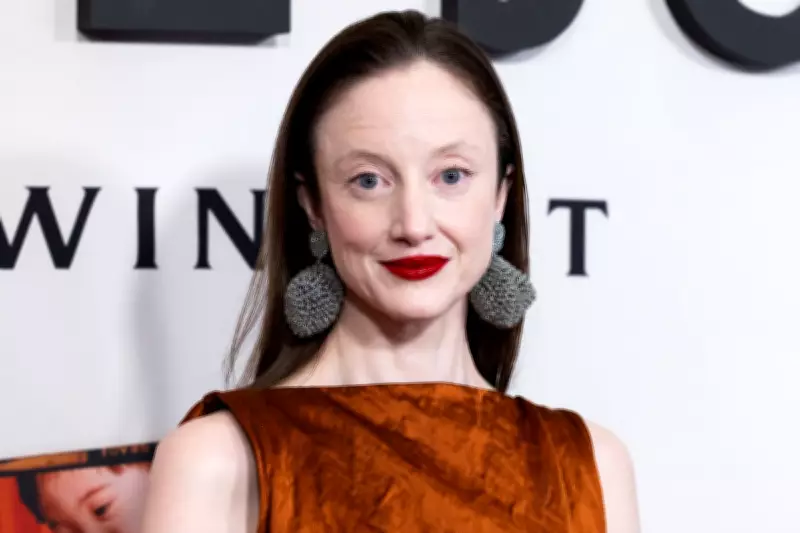
Oscar-nominated actress Andrea Riseborough has candidly revealed the significant physical toll that her deeply immersive acting approach takes on her body, describing developing unusual pains and even permanent wrinkles from her transformative performances.
The Physical Manifestations of Immersion
In a revealing new interview with The Times, the 44-year-old actress explained that fully imagining herself in another person's experience leads to tangible physical consequences. "Imagining being in somebody else's experience is a very odd thing to do," Riseborough stated. "You start having pains in places you don't normally have pains."
The acclaimed performer, who we're about to see opposite Stephen Graham in the upcoming black comedy thriller Good Boy, elaborated on how her method affects her physically. "There've been a couple of characters where I've got a wrinkle that I didn't have because of the facial expression that they make," she continued, highlighting how temporary character traits can become permanent physical changes.

Historical Roles with Lasting Impact
Riseborough's impressive career includes several demanding historical portrayals that left lasting physical impressions. In 2012, she took the lead role in Madonna-directed WE, playing Wallis Simpson, the twice-divorced American socialite for whom King Edward VIII abdicated the British throne.
While portraying Simpson, Riseborough adopted physical mannerisms that caused what she described as "huge amounts of pelvic tension." The actress revealed the recovery period was substantial, noting "It took months after that to start being able to relax again."
Her critically-acclaimed performances extend to her BAFTA-nominated portrayal of a young Margaret Thatcher in the 2008 one-off drama The Long Walk to Finchley, and her Academy Award-nominated role in the 2022 independent film To Leslie.
Psychological Dimensions of Transformation
Riseborough has previously discussed the mental challenges of her chameleonic acting style, telling The Independent: "Psychologically, what I do is no picnic. Or, if it is, it's one where they're serving prickly pears with the skin still on." This metaphor captures the complex, sometimes painful nature of her immersive approach to character work.
Industry Parallels and Similar Experiences
Riseborough's experiences echo recent revelations from other acclaimed performers. Jessie Buckley, the favorite to win Best Actress at this month's Oscars for her performance in Chloe Zhao's drama Hamnet, described an emotionally draining scene where she unleashed a guttural, grief-stricken scream as Shakespeare's wife Agnes Hathaway.
"I have no idea where that came from and I don't really want to know," Buckley told USA Today about the intense moment. Director Zhao praised Buckley's commitment, stating "That is bravery. She was like, 'Destroy my body, break my vocal cords, my body is ready to hold your grief.'"
Similarly, Kate Winslet - who directed Riseborough in last year's Goodbye June - has shared comparable sentiments about immersive acting. Winslet admitted in January that she "can make herself ill because she has zero awareness of just how deeply she can go into a role," highlighting how common such physical and psychological impacts can be among dedicated performers.
These collective experiences from Riseborough, Buckley, and Winslet illuminate the often unseen physical costs of award-winning performances, revealing how the most celebrated acting frequently comes with significant personal tolls that extend far beyond the screen.