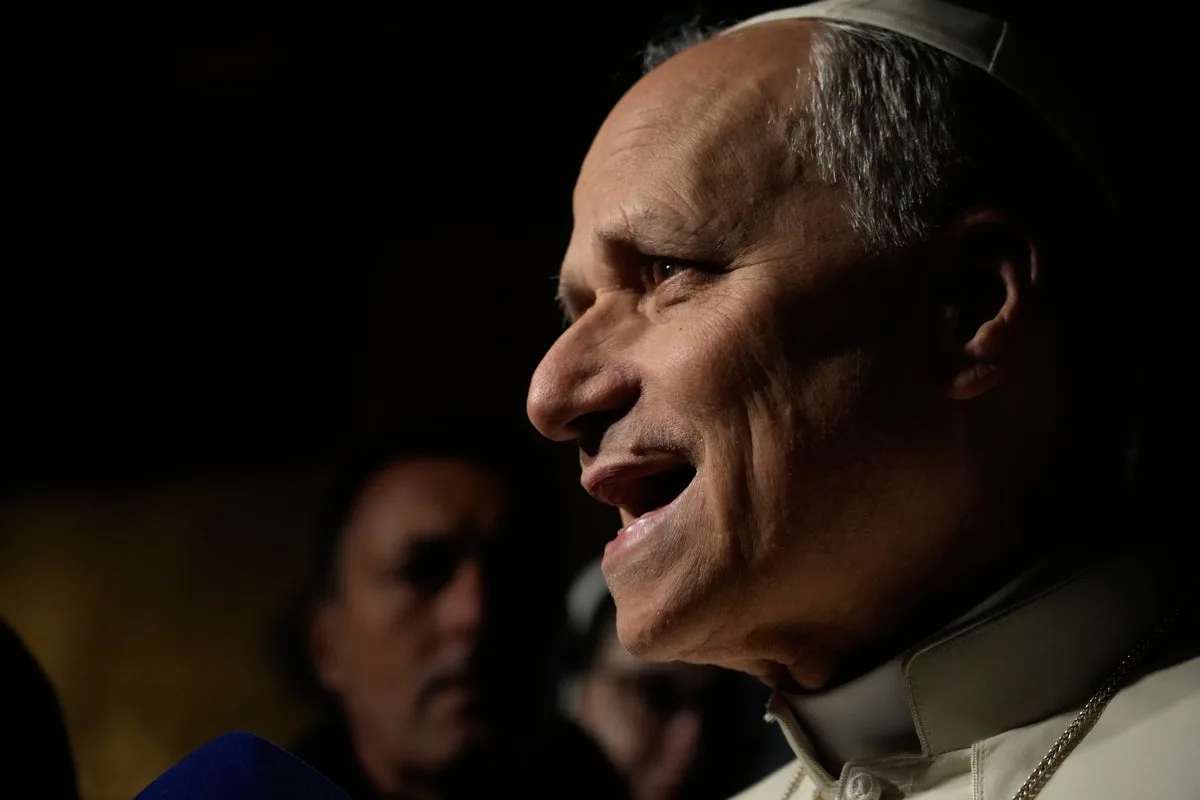
Pope Leo XIV begins a landmark 11-day visit to four African countries on Monday, starting in Algeria. The 70-year-old pontiff will cover over 17,700 kilometers on 18 flights, delivering speeches in French, Spanish, Portuguese, and English. His itinerary includes Algeria, Angola, Cameroon, and Equatorial Guinea, reflecting the Vatican's focus on a continent crucial for the Catholic Church's growth.
Upon his election, Pope Leo declared himself a “son of St. Augustine,” a reference to his Augustinian spirituality. This connection resonated in Algeria, where the 5th-century saint was born and is respected even among the Sunni Muslim majority. The visit aims to promote peaceful coexistence between Christians and Muslims amid global tensions over the U.S.-Israeli war in Iran. The pope will visit the Great Mosque in Algiers, and interfaith dialogue is expected to be a key theme.
In Cameroon, where 29% of the population is Catholic, huge crowds are anticipated, with 600,000 people expected at one Mass. Pope Leo will also preside over a “peace meeting” in Bamenda, a city plagued by separatist violence. “To see His Holiness Pope Leo XIV arrive in Cameroon… it further strengthens our faith,” said Simon Pierre Ngombo, a Catholic Cameroonian.
The pope’s visit to Algeria comes against the backdrop of the country’s brutal civil war in the 1990s, known as the “black decade,” which killed some 250,000 people. Algerian authorities denied a Vatican request for the pope to visit the Tibhirine monastery, where seven French Trappist monks were kidnapped and killed by Islamic fighters in 1996. The government daily El Moudjahid stated, “Algeria has no intention of reopening a painful chapter of its history.” Pope Leo is expected to refer to the monks’ sacrifice during his visit.
Africa contributed more than half of the 15.8 million new Catholics baptized in 2023, with 8.3 million new African Catholics. The continent also supplies thousands of priests and nuns each year, transforming it from a recipient of Western missionaries to an exporter of clergy. Pope Leo’s tour underscores the Vatican’s commitment to a region that is vital for the Church’s future, addressing issues such as migration, exploitation of resources, corruption, and the role of political leaders in authoritarian regimes.