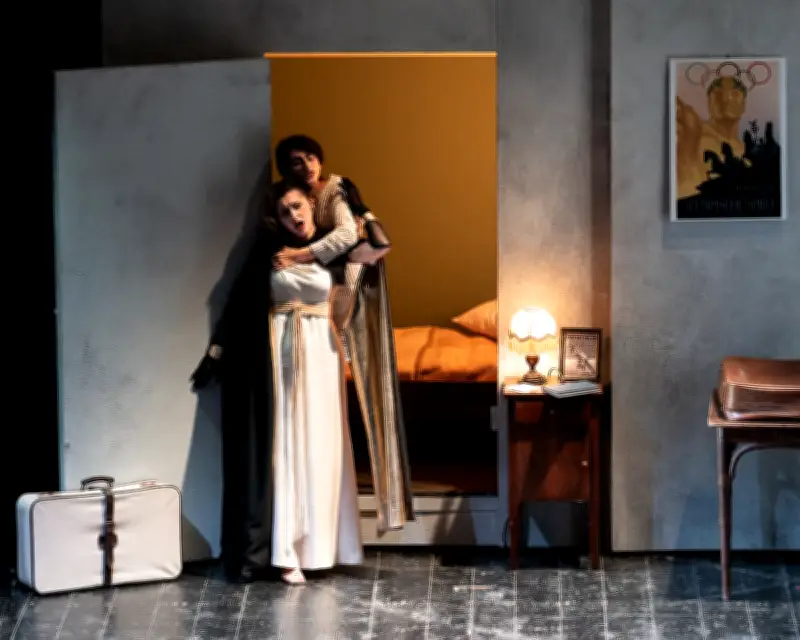
Pergolesi's L'Olimpiade, recorded live in the 18th-century Teatro Pergolesi in Jesi, the composer's hometown, offers a pacy and engaging take on Pietro Metastasio's convoluted tale of love triangles and long-lost twins set in the ancient Olympic Games. The two-and-a-half-hour version, directed by Giulio Prandi, features a fine cast and sinewy playing from the Orchestra Ghislieri.
A Baroque Masterpiece Revived
Metastasio's libretto, depicting dirty doings at the ancient Olympics, proved immensely popular, set to music by over 60 composers including Caldara, Vivaldi, and Cherubini. Pergolesi's version, premiered in 1735 and resurrected in 1937, is among the finest, foreshadowing a glorious operatic career cut short by the composer's death at age 26.
The plot follows Megacle, persuaded to compete in disguise as his friend Licida, unaware that the prize is Aristea, the woman he loves. Added complications include Licida's cast-off mistress Argene masquerading as a shepherdess and the revelation that Licida is Aristea's long-lost twin, creating a brain-addling narrative.
Pacy Conducting and Tightly Sprung Performance
Giulio Prandi's unobtrusive cuts reduce the opera from a four-hour epic to a two-and-a-half-hour drama that flies by. His conducting is ideally pacy, and the Orchestra Ghislieri's playing is sinewy and tightly sprung, though the recording lacks the sonic depth of Alessandro De Marchi's 2010 account.
The cast is uniformly excellent. Carlotta Colombo stands out as a richly rounded Aristea, neatly contrasted with Silvia Frigato's plaintive Argene. Josè Maria Lo Monaco's supple mezzo-soprano brings appropriate complexity to Licida, while Theodora Raftis is a convincingly boyish Megacle.
Live Recording Captures Thrill of Performance
Recorded in 2025 at the Teatro Pergolesi, the album includes stage noise and intermittent applause, but these elements convey the excitement of live performance. Despite some sonic limitations, the recording effectively transports listeners to the intimate setting of Pergolesi's hometown theatre.
This release is a must-hear for baroque opera enthusiasts, offering a compelling interpretation of a rare work. The combination of Prandi's brisk direction, the orchestra's energetic playing, and the strong vocal performances makes for a thrilling listening experience.