Odo of Conteville, the half-brother of William the Conqueror, is finally emerging from the shadows of history as the Bayeux Tapestry prepares for public display in Britain for the first time in nearly a millennium. According to Professor Trevor Rowley, a founder fellow of Kellogg College, Oxford, Odo was the larger-than-life 11th-century nobleman who commissioned the 224-foot-long embroidered cloth, yet his name and extraordinary story have been largely forgotten.
Prof Rowley, 84, argues that Odo deserves far greater recognition, especially now that the tapestry is in the UK. “We all know about William, but Odo’s is not a household name – although I think it should be,” he says. “It’s likely he is the reason we have the Bayeux Tapestry. His story is incredible – it could be made into a movie. He was ambitious, rebellious and sometimes ruthless; a not so lovable rogue. But he led an astonishing and eventful life that’s worthy of a soap opera. He merits being brought out of the shadows.”
The Rise of Odo: From Normandy to Earl of Kent
Born around 1030 in Normandy, Odo was the son of Herleva, who was also the mother of William the Conqueror by the Duke of Normandy. After Herleva married another man, she had two more sons, including Odo. When his father died, William inherited the dukedom, and Odo’s ascent began. While still a teenager, Odo was appointed Bishop of Bayeux, a role he held until his death, helping William control western Normandy. Prof Rowley notes: “Initially, the brothers got on well. Odo was trusted – William made him bishop when he was still very young, which was unusual and shows he rated him.”
Following the Battle of Hastings in 1066, where King Harold Godwinson was defeated, William was crowned King of England. As a reward, he made Odo Earl of Kent, a powerful position that allowed Odo to act as regent when William was in Normandy. This enabled Odo to command vast estates and amass enormous wealth. By 1077, he had built a stunning new cathedral in Bayeux, and experts strongly believe he commissioned the lavish tapestry to adorn its interior and commemorate the Norman Conquest.
The Tapestry: A Masterpiece of Propaganda and Art
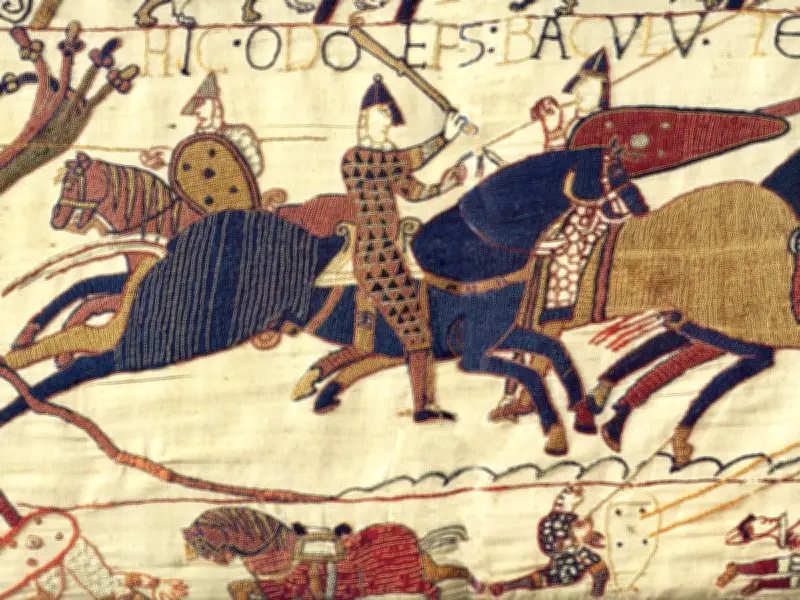
The Bayeux Tapestry, an embroidery made of dyed wool on bleached linen, features 627 figures and 58 distinct scenes. Historians believe it was created by English women renowned for their needlework. The tapestry is almost certainly incomplete, with scholars suggesting it would have ended with William’s coronation at Westminster Abbey. Prof Rowley explains: “There’s nothing like it now and there was nothing like it then. I’ve seen it a number of times and it’s full of humour and tragedy. It’s so vivid and very detailed. It’s unique. And it would have been typical of Odo to highlight his role in the Conquest – possibly gilding the lily about his involvement in it all along the way.”
Odo appears four or five times in the tapestry, more than any figure other than William and Harold. “At one stage he is shown gesticulating to William, as if to say ‘let’s build an invasion fleet’,” Rowley says. “Then he's there looking as if he’s telling his brother what the battle strategy should be. He’s also represented as a Christ-like figure, blessing food before the fighting starts and appears on a horse – the largest one on the tapestry – apparently rallying the troops. He’s carrying a mace too which was a way the clergy could fight without technically shedding blood. Goodness knows what William might have thought when he saw it.”
Odo’s Downfall: Ambition and Betrayal
Odo’s reputation for defrauding the Church and others to build his fortune grew, though Prof Rowley suggests he behaved no worse than many peers. However, his ruthless ambition led him to raise a private army in England, intending to seize the papacy in Italy by force. This infuriated William, who imprisoned him in France for four years, remarking: “I have imprisoned not a bishop but a tyrant.” William only agreed to release Odo on his deathbed, warning that his brother would be “the cause of death and grievous harm to many.”
After William’s death, Odo stoked rebellion against King William II, but his betrayal was discovered, and he was banished from England for life. In 1095, at an advanced age, he joined the First Crusade, perhaps seeking one last military success. He died of illness two years later in Sicily and is buried in Palermo Cathedral.
A Legacy Stitched in History
Prof Rowley, whose fascination with the Norman period began as a child, believes Odo’s character has been unfairly maligned. “No Norman king or duke had seen as much as Odo, but he suffered from a bad press after his death,” he says. “It might be true he wasn’t likeable, but he was compelling and by the standards of his time, he wasn’t a particularly wicked or cruel man. Perhaps his sin was that he was never content and always wanted still more.”
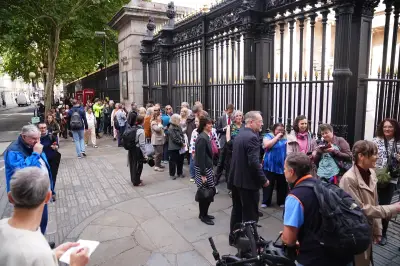
As the British Museum prepares to unveil the Bayeux Tapestry to the public in September, the historian imagines Odo would be thrilled by his lasting legacy. “If he was here, Odo would be looking at the crowds who will come to view the tapestry and think ‘what a great man I was!’” Rowley adds. “He is definitely someone I would love to meet and spend time with. Not too much time, though – I get the feeling that, with him, you would never quite know which way things on a night out might go!”
The Man Behind the Bayeux Tapestry: Odo, William the Conqueror's Half-Brother by Trevor Rowley is published by The History Press, £25.