Margot Robbie's 'Stolen' Diamond Necklace Sparks Wuthering Heights Whitewashing Row
Margot Robbie's 'Stolen' Diamond Necklace Sparks Controversy

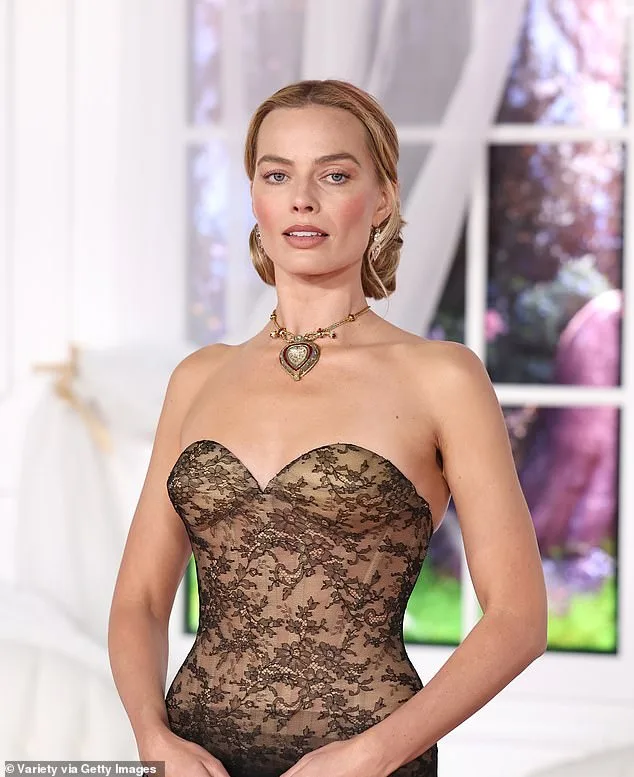
The Los Angeles premiere of the new Wuthering Heights adaptation has been engulfed in a fresh wave of controversy, with lead actress Margot Robbie at the centre of accusations regarding cultural insensitivity and historical whitewashing. The Barbie star, aged 35, attended the event wearing a spectacular £5.7 million diamond necklace loaned by Cartier, which she described as belonging to Hollywood icon Elizabeth Taylor.

Premiere Glamour Meets Historical Dispute

Margot Robbie made a striking appearance on the red carpet, pairing the magnificent jewel with a custom-made strapless lace gown from the designer Schiaparelli. She enthusiastically told reporters, 'This is Elizabeth Taylor's necklace. The actual Elizabeth Taylor. It's the Taj Mahal diamond so it felt like it had a lot of romantic history and felt appropriate for tonight.' She added, 'It's a lot of diamonds tonight, we are bringing the Hollywood glam.'

However, this glamorous statement has ignited a fierce debate about the necklace's true provenance and the broader implications of its display. While the piece was famously worn by Elizabeth Taylor in 1972 after being purchased by Richard Burton for her 40th birthday, its history stretches back centuries to the Mughal Empire.

Wide Pickt banner — collaborative shopping lists app for Telegram, phone mockup with grocery list

Accusations of Cultural Erasure and Theft

Social media reaction was swift and critical, with many users accusing Robbie and the film's production of compounding existing whitewashing concerns. One fan wrote online, 'The movie already whitewashes a South Asian character, then they have the lead actress show up wearing stolen India jewellery to the premiere.'

The necklace's origins are deeply rooted in Indian history. It was originally gifted by the Mughal emperor Jahangir to his wife, Nur Jahan, in the 17th century. The piece was later passed to their son, Shah Jahan, who gave it to his own wife, Mumtaz Mahal—the woman for whom the Taj Mahal was built as a memorial. Many historians and commentators argue the jewel was not legitimately 'taken' to the United States but rather effectively stolen from India during the colonial era.

Another social media user stated plainly, 'Stolen, not taken,' while one noted, 'Margot Robbie wore this diamond necklace to the Wuthering Heights premiere and its appearance reopened discussion about Western celebrities wearing heritage items taken from India.' Critics contend that by referring to the piece solely as 'Elizabeth Taylor's,' Robbie engaged in a form of cultural whitewashing, erasing its South Asian heritage and the contentious circumstances of its acquisition.

A Cascade of Controversies for the Adaptation

This jewellery dispute adds to a growing list of criticisms aimed at director Emerald Fennell's modern reimagining of Emily Brontë's classic novel. The casting has been a particular flashpoint. Margot Robbie, who is 16 years older than the character Cathy in the original text, plays the lead. Meanwhile, her co-star Jacob Elordi, an Australian actor, portrays Heathcliff—a character Brontë described as a 'little lascar,' a term historically used for sailors from the Indian subcontinent, implying a dark-skinned appearance.

This casting choice has led to significant accusations of whitewashing the character's ethnicity. Furthermore, Fennell's decision to use contemporary clothing for the adaptation has also been branded as inappropriate and straying too far from the novel's Gothic moorland setting and period authenticity.

The premiere, intended to showcase Hollywood glamour, has instead highlighted ongoing tensions surrounding cultural appropriation, colonial history, and the responsibilities of modern filmmakers when adapting classic works with diverse characters and contexts.

Pickt after-article banner — collaborative shopping lists app with family illustration