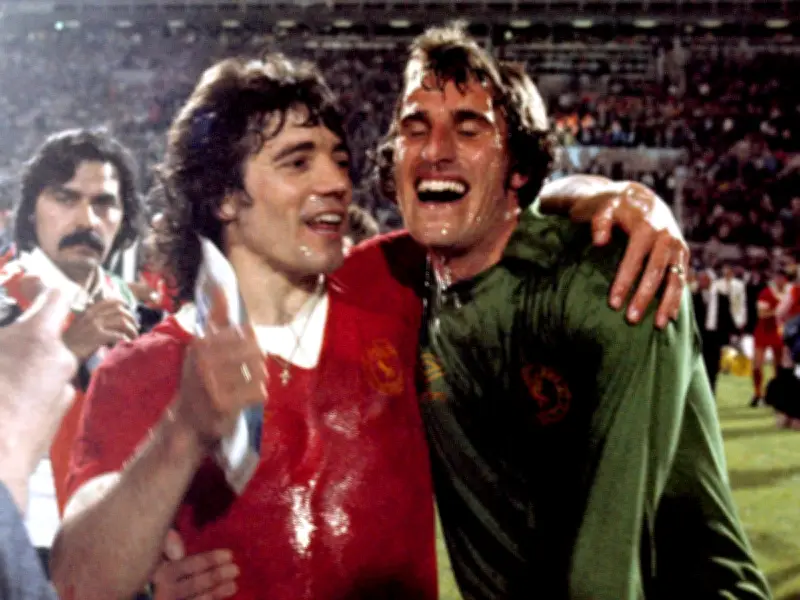
Kevin Keegan, the iconic forward who became Liverpool's first modern superstar and later managed England, has died at the age of 75. Keegan, who had been diagnosed with stage four cancer earlier this year, passed away on Monday surrounded by his wife and daughters.
FA Cup Final 1974: The Defining Moment
Wembley, FA Cup final, May 4 1974. That afternoon encapsulated Keegan's Liverpool career and saw his thrilling present and emotional future collide. As the standout of Bill Shankly's second great Reds team, Keegan faced Newcastle United's Malcolm Macdonald in a shoot-out. The contest was emphatically one-sided as Keegan scored an opening goal that prompted commentator David Coleman's famous quip: 'Goals pay the rent, and Keegan does his share.' By the time Keegan added his second late on, Liverpool had won 3-0 to claim only their second-ever FA Cup triumph.
From Scunthorpe to Stardom
Just three years earlier, Keegan was plucked from fourth division Scunthorpe United as a 20-year-old on the recommendation of Liverpool head scout Geoff Twentyman. Originally signed as a right winger, Keegan was tried up front alongside John Toshack and impressed sufficiently to start the new campaign in tandem with the Welshman. He scored within 12 minutes of his debut and never looked back, becoming arguably Liverpool's first-ever superstar in an era when players became known to the wider public for more than just their on-field efforts.
Modern managers would wince at Keegan competing on the TV show Superstars in 1976, where he suffered severe cuts crashing his bicycle. His celebrity was such that he released several pop singles—one cracked the top 40—and became renowned for advertising aftershave. Even his permed haircut became famous.
On-Field Brilliance and Silverware
Keegan was a regular as Liverpool narrowly missed the league title in his debut season and integral as the Reds went one better the following year, scoring 22 goals in all competitions as the club's first European trophy, the UEFA Cup, was also claimed. After the high of the FA Cup triumph came the low of the Charity Shield when he was sent off along with Billy Bremner. Keegan received an 11-game suspension.
With Bob Paisley in charge, more silverware came in 1976 with another league championship and UEFA Cup, and Keegan was named Footballer of the Year. But he stunned supporters by announcing midway through the next season his intention to leave in the summer, with Hamburg his next destination in a British record deal. His commitment remained unquestioned as Liverpool won another title and the European Cup for the first time, beating Borussia Moenchengladbach in Rome. Keegan ran World Cup winner Berti Vogts ragged and won the penalty that allowed Phil Neal to seal a 3-1 success. He scored 100 goals and provided 73 assists in 323 appearances for the Reds.
'Bill Shankly had gone and I just felt there was another mountain for me to climb somewhere,' said Keegan. 'As it happens they didn't do too badly out of it because they went out and bought Kenny Dalglish. Having sold me for £500,000 and then paying £440,000 for Kenny, they banked £60,000 which was a great piece of business.'
Hamburg and Ballon d'Or Glory
After a difficult start in Germany—Hamburg's players didn't warm to him initially and he was suspended for eight weeks after being sent off in a friendly for punching an opponent—Keegan won his new teammates round. He won the Bundesliga title in 1979 and was a European Cup runner-up the following year. He twice claimed the Ballon d'Or, still the only British player to achieve such a feat. He returned to Anfield in opposition, only to lose 6-0 in the European Super Cup.
Keegan left Hamburg in 1980 and, after Liverpool opted not to re-sign him, spent two years at Southampton before dropping down a division to join Newcastle United. He helped them to promotion in 1984 but had already decided to quit playing after being outsprinted by Mark Lawrenson in an FA Cup defeat at Anfield.
International Career
Keegan scored 21 goals in 63 games for England—31 as captain—having made his debut in 1972. A shining light during a dark period for the Three Lions, his first international tournament wasn't until the 1980 European Championships. Injury limited him to just one 26-minute World Cup appearance from the bench against hosts Spain two years later, missing a great chance as England were held to a goalless draw and slumped out unbeaten.
Managerial Career
With his boots hung up, Keegan dropped out of the game to such an extent he had watched just two matches live in seven years when he surprisingly returned to second-tier Newcastle as manager in February 1992. Within 18 months they were promoted to the Premier League and became title challengers playing attacking football that made the Magpies the second team of many supporters. Anfield provided one of his most indelible images as Newcastle boss, slumped behind the dugout after his team were beaten 4-3 by Stan Collymore's last-gasp winner in what remains the Premier League's greatest match. Newcastle finished second, and within seven months Keegan resigned.
He later managed Fulham, taking them out of the third tier, before being named England boss in February 1999. His team reached the Euros in 2000 but were eliminated at the group stage. After a 1-0 World Cup qualifying loss to Germany at the old Wembley, Keegan resigned. He then had four years in charge at Manchester City—earning them promotion to the Premier League—before a brief and unhappy second stint at Newcastle, after which he moved into punditry.
Legacy and Self-Made Greatness
Keegan was the first to admit he wasn't the most naturally gifted player. 'I was the mongrel who made it to Crufts, and that was fine by me,' he once stated. He acquired his gifts through hard graft, commitment, belief and sheer bloody-mindedness. That attitude was needed when he was diagnosed with cancer earlier this year. 'Liverpool made me, not just as a footballer but as a person,' said Keegan. 'The fans made me.' He remains perhaps the greatest example of the self-made footballer, doing it his way.