Supernanny Star Jo Frost Condemns Reality TV Exploitation, Reveals 'Difficult' Reputation
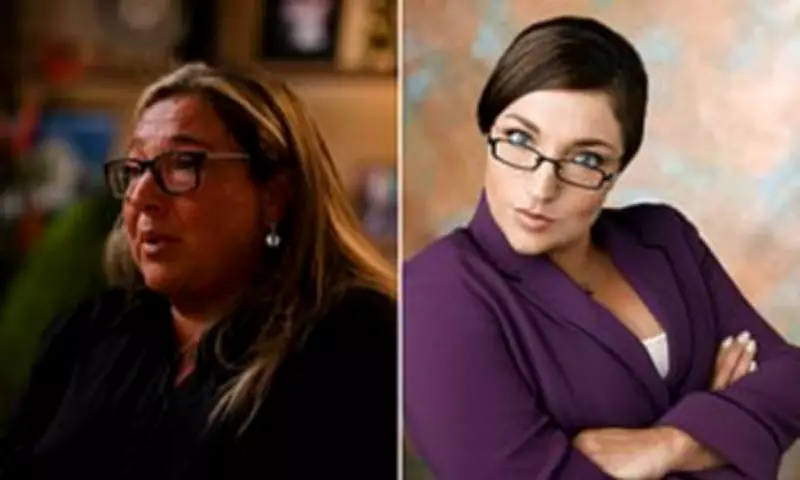
Supernanny icon Jo Frost has launched a powerful critique against the exploitative practices prevalent in reality television, emotionally disclosing how she was branded as 'difficult' for steadfastly refusing to comply with producers' demands to manufacture drama solely for higher ratings. This revelation emerges amidst renewed public scrutiny of major noughties reality programmes, highlighted by Netflix's recent docuseries exposing controversies within America's Next Top Model.
The Era of Reality TV Excess
The landscape of early 2000s television was dominated by a surge of reality shows, with Tyra Banks' America's Next Top Model premiering in 2003 to instant acclaim. This period witnessed hundreds of programmes aggressively pushing boundaries to capture larger audiences, often at the expense of ethical considerations. However, professional nanny Jo Frost, now 55, has asserted that her globally successful show, Supernanny, consciously resisted these exploitative pressures.
'We needed to keep the integrity of the families that genuinely needed help,' Frost emphasised during an appearance on the We Need To Talk podcast. The Channel 4 series, which aired from 2004 to 2008 and spawned international adaptations including an American version also starring Frost, focused on assisting families struggling with children's behavioural issues through alternative discipline and guidance methods.

Contractual Integrity and Casting Control
Frost explained that her unwavering priority was always the wellbeing of the families, leading to inevitable 'friction' with production teams when their objectives diverged. A crucial element in maintaining this integrity was her contractual casting approval, which she described as a 'deal breaker.'
'Because it has to be real,' she stated. 'You have to genuinely go, "I need her help." When those families are vulnerable and they are trusting their lives in your hands, they're not just shaping their own family, but millions who are watching.'
This control ensured families were selected based on genuine need rather than performative potential. 'I needed to keep the integrity of the families that genuinely needed help and not a family that thought, "Oh, I'm going to be on television. And all I have to do is just act out and be performative."'
The Cost of Ethical Stands
However, Frost's principled stance came at significant personal and professional cost. She revealed being routinely labelled 'difficult' and 'troublesome' by production executives, with one incident seeing an executive producer order crew to leave after she refused a request deemed inappropriate for a family.
'I carried on working,' Frost recalled. 'I'm like, "Hey, I just want to let you know that I'm going to carry on. So, like, you're not going to get any of this on camera if you decide to stay out and sulk."'
Her insistence on ethical practices extended to daily operations, prioritising children's needs over production schedules. 'There would be no, "Well, the crew break at 1, so we'll just keep rolling until 1." It'd be like, "No, the kids need to eat. It's 12:00."'
Gender Dynamics and Industry Challenges
Frost confessed that being labelled difficult was particularly challenging as a woman in the industry. 'I found it tough emotionally,' she admitted. 'And as a strong woman that's not right.'
She described encountering prejudice when exploring opportunities with other production companies, who referenced her reputation before meeting her. 'Because I have a vision, because I know what I need to do to help a family. Because I won't say what you want me to say, or you can't control me in a way that you wish that you could.'
Despite these challenges, Frost remains committed to empowering women in television. 'As a leader in this industry, I want to support women to feel empowered, to uplift other women in this industry and to support women who like myself are creative and do have a vision and do want to do good.'
A Broader Philosophy of Care
Beyond television production, Frost articulated a profound philosophy regarding child welfare. Married to Darrin Jackson since 2016 and without biological children, she nonetheless feels an 'innate profound intuitive responsibility' toward all children.

'I have millions,' she responded to critics who question her authority. 'Every child is my business. I think every child should be your business. I think children of the world are our business.'
She connected this ethos to broader societal outcomes, suggesting that proper childhood care could reduce trauma and create a kinder world. 'Because at the end of the day they're going to become adults and they are going to shape the world.'
Frost's revelations provide rare insight into the ethical compromises often demanded by reality television, highlighting both the personal costs of resistance and the enduring importance of principled production practices in an industry frequently criticised for prioritising entertainment over wellbeing.