Hollywood's Cruel Casting Couch: When Rejection Turns Personal
Rejection in any profession stings, but in Hollywood's cutthroat entertainment industry, the reasons behind being denied roles can be particularly vicious and deeply personal. For numerous A-list celebrities, the pain of not landing a part has been compounded by shocking, often discriminatory feedback related to their physical appearance, race, age, or perceived attractiveness.
These stories reveal a troubling pattern of misogyny and bias that has long persisted behind the glamorous facade of Tinseltown.
Body Shaming and Weight Criticism
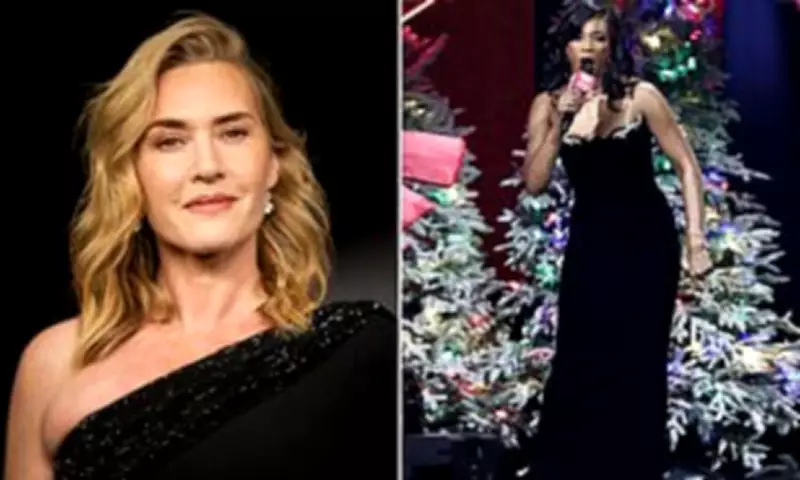
Kate Winslet, now 50 and an Oscar-winning actress, faced harsh body criticism early in her career. She recalled being told she would only be cast in "fat girl" roles while still a student. "It can be extremely negative," Winslet told the Sunday Times. "People are subject to scrutiny that is more than a young, vulnerable person can cope with." The Titanic star noted that her agent would regularly receive calls asking, "How's her weight?" Thankfully, Winslet observes that attitudes are slowly changing in the film industry.

Similarly, Emma Thompson, 66, was repeatedly told she didn't have the "right kind of body" for nude scenes. "I'm too mouthy, not pretty enough, not the right kind of body," Thompson revealed about feedback from male executives. The Love Actually star has long championed body positivity after struggling with body dysmorphia in her youth.
Racial Discrimination and Stereotyping
Tiffany Haddish, now 46, employed a clever tactic to uncover the truth behind her rejections. She would deliberately leave her phone recording in audition rooms to hear what casting directors really said. On one recording, she heard: "She is not as urban as I thought she would be. She's so ghetto, I just can't. Her boobs aren't big enough and I really think we should just go with a white girl. This role should be changed to white." Despite the hurtful comments, Haddish used them as motivation to improve her craft.
Zoë Kravitz, 37, faced similar racial bias when auditioning for The Dark Knight Rises. She was told she was "too urban" for the part. "Being a woman of colour and being an actor, and being told at that time that I wasn't able to read because of the colour of my skin, and the word 'urban' being thrown around like that, that was what was really hard about that moment," Kravitz explained.
Priyanka Chopra, 43, experienced coded racial discrimination when told she had the wrong "physicality" for a 2017 movie role. Her agent later clarified that this actually meant "they wanted someone who's not brown." The Bollywood-turned-Hollywood star also recalled a dehumanizing moment early in her career when a director insisted on seeing her underwear during a scene, commenting that otherwise "why is anybody coming to see this movie?"
Ageism and Appearance-Based Rejections
Amy Adams, 51, was fired from Dr. Vegas for not being "sexy enough" to play Rob Lowe's love interest. Lowe himself echoed this in his book, noting Adams wasn't pretty in a "TV way." Adams clarified that while not technically fired, she knew her fate when they brought in a "really tall blonde" replacement.
Sharon Stone, 68, revealed that in her early career, the term "f**kable" was equated with being "workable" on camera. "It was a pretty misogynistic era twenty years ago," Stone noted, adding that Mel Gibson once thought she was "too old" to star opposite him despite being only three years younger.
Olivia Wilde, 42, was deemed "too old" at age 32 to play opposite 37-year-old Leonardo DiCaprio in Wolf of Wall Street. The role instead went to then-22-year-old Margot Robbie. Wilde later discovered that feedback describing her as "too sophisticated" actually meant "old" in Hollywood code.
Youth and Exploitation
Elle Fanning experienced one of the most shocking rejections at just 16 years old. She was denied a role in a father-daughter road trip comedy because someone deemed her "unf***able." "It's so disgusting," Fanning, now 27, recalled. "And I can laugh at it now, like, 'What a disgusting pig!'"

Melora Hardin was fired from Back to the Future at age 17 because female executives thought she was "too tall" to star opposite Michael J. Fox, fearing it would be "emasculating" for their lead male character. "I burst into tears," Hardin remembered. "It was very sad."
Intelligence and Personality as Liabilities
Reese Witherspoon, 49, was frequently considered "too something" throughout her career - "too short, too feisty, too energetic." She once was told she seemed "too smart" to play a young female character. The Oscar winner reflected on Instagram about how these rejections ultimately strengthened her: "Rejection teaches you perseverance and how to get tough."
These collective experiences highlight systemic issues in Hollywood's casting processes. While many actors note that the industry is gradually evolving, particularly following the #MeToo movement, these stories serve as stark reminders of the personal costs of entertainment industry biases. Each actor has navigated these challenges differently - some using the criticism as fuel for improvement, others speaking out to effect change, and all demonstrating remarkable resilience in the face of often cruel and unjustified rejection.