Gene Simmons Sparks Racism Row Over Hip-Hop Hall of Fame Comments
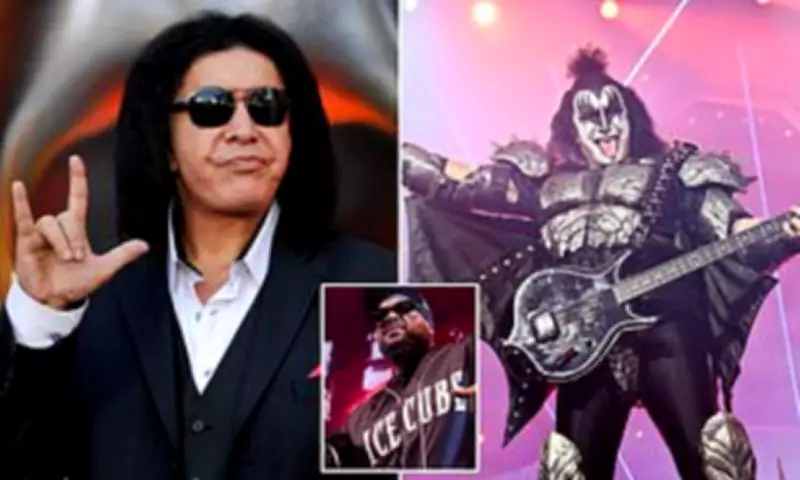
Gene Simmons, the 76-year-old Kiss bassist and singer, has ignited a fierce social media backlash following controversial remarks about hip-hop artists being inducted into the Rock & Roll Hall of Fame. The musician faced widespread criticism on Wednesday after comments made on the Legends N Leaders podcast resurfaced, where he argued that rap and hip-hop do not "speak [his] language."
Social Media Outrage Over "Ghetto" Remarks
Critics were particularly incensed by Simmons stating that he "doesn't come from the ghetto" as justification for why hip-hop artists should not be included in the Cleveland-based institution. Many social media users branded these comments as racist due to their evocation of ghettos, which are often associated with predominantly Black urban communities where hip-hop originated.
The Daily Mail has reached out to both Simmons's representative and the Rock & Roll Hall of Fame for comment regarding the growing controversy.

Simmons's Longstanding Opposition to Hip-Hop Inclusion
Simmons's complaints emerged during a broader discussion about how critics judge artistic importance. He specifically questioned why heavy metal band Iron Maiden remains excluded while hip-hop pioneer Grandmaster Flash has been inducted. "The fact that, for instance, Iron Maiden is not in the Rock & Roll Hall of Fame when they can sell out stadiums, and Grandmaster Flash is," Simmons remarked, using the Hall as a stand-in for critical tastemakers.
The musician then referenced his previous exchanges with rapper-turned-actor Ice Cube, acknowledging Cube as "a bright guy" whose work he respects, but maintaining his position. "It's not my music. I don't come from the ghetto. It doesn't speak my language," Simmons declared.
Defining Rock & Roll's Boundaries
Simmons emphasized that his stance is not new, having expressed similar views in print and during a 2014 interview with Radio.com. "I said in print many times: Hip-hop does not belong in the Rock & Roll Hall of Fame, nor does opera, symphony orchestras," he continued. "It's called the Rock & Roll Hall of Fame."
He recalled Ice Cube pushing back by arguing that hip-hop embodies "the spirit of rock n' roll," to which Simmons responded: "OK, fine ... I just want to know when Led Zeppelin's gonna be in the Hip-Hop Hall of Fame. Music has labels, because it describes an approach."
Hall of Fame Defends Hip-Hop's Place
This controversy echoes previous debates surrounding hip-hop inductions, particularly after Eminem's 2022 induction sparked similar discussions. Rock & Roll Hall of Fame CEO Greg Harris has previously defended the connection between rock and hip-hop, telling Audacy via Billboard: "You listen to his music, it is as hard hitting and straight ahead as any metal song ... It's a chest punch with a message and with a power and with a rhythm and with a band."
Ice Cube, who was inducted with N.W.A. in 2016, articulated a broader definition during his acceptance speech. "Rock n' roll is not an instrument. It's not even a style of music," he argued. "It's a spirit that's been going on since the blues, jazz, bebop, soul, rock n' roll, R&B, heavy metal, punk rock and, yes, hip-hop. Rock n' roll is not conforming to the people who came before you, but creating your own path in music and life."
Simmons's Selective Criticism
Ironically, while Simmons criticizes the Hall for including hip-hop artists like Grandmaster Flash, Run-D.M.C., LL Cool J, Jay Z, and Missy Elliott, his own band Kiss was inducted in 2014. He has maintained that these artists "don't play guitar" but instead "sample and they talk. Not even sing... They can run their organization any way they'd like, but it ain't rock!"
This incident follows Simmons's December apology for comments about late Kiss guitarist Ace Frehley, suggesting a pattern of controversial statements from the veteran musician. The current backlash highlights ongoing tensions between traditional rock purists and advocates for a more inclusive definition of rock and roll that embraces hip-hop's cultural significance.