Christina Ricci Enters Fierce Online Dispute with MAGA Personality Emily Wilson
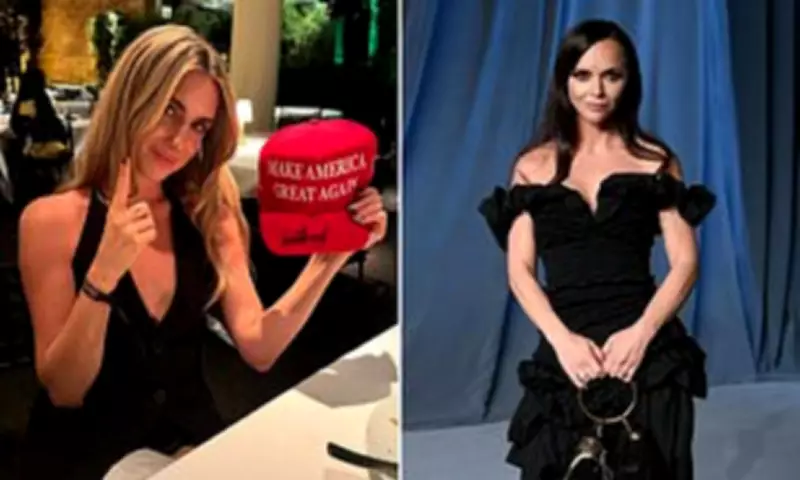
Acclaimed actress Christina Ricci, known for her role in Yellowjackets, has found herself at the centre of a bitter public confrontation with prominent MAGA influencer Emily Wilson. The clash erupted after Wilson, a 32-year-old political media personality with over a million followers on Instagram and TikTok, made derogatory comments about female Democrat voters.
Inflammatory Social Media Post Sparks Immediate Backlash
Emily Wilson, who hosts the podcast and YouTube channel Emily Saves America, ignited the controversy by sharing a selfie on Threads. In the image, she posed in her car wearing a black halter-neck top and sunglasses, accompanied by a caption that read: 'Post-Pilates because fat chicks vote Democrat.' This provocative statement quickly circulated across social media platforms, attracting widespread attention and condemnation.
The remark did not go unnoticed by Christina Ricci, who responded with a sharp and personal retort. The 46-year-old former child star fired back: 'I'm skinnier than you, you a**hole, and I still vote Democrat or as liberal as I can because there is more to life than being thin. What you contribute to this world is what matters, loser.' Ricci's response highlighted her commitment to progressive values while directly challenging Wilson's body-shaming rhetoric.

Escalation of the Feud and Political Polarisation
Wilson, based in Los Angeles, refused to back down, posting a subsequent message that appeared to target Ricci and other Democrat women. She wrote: 'The Democrat women on here are MISERABLE. Damn, I feel bad for y'all so angry, go get some sun.' This exchange rapidly drew in online communities from both sides of the political spectrum, with Democrats and Republicans engaging in personal attacks and amplifying the divisive nature of the dispute.
The public sparring between Ricci and Wilson underscores the deepening cultural and political divides in contemporary discourse. It reflects how social media platforms have become battlegrounds for ideological conflicts, where personal insults often overshadow substantive debate.
Ricci's History of Confronting Conservative Figures
This incident is not the first time Christina Ricci has publicly criticised Republican-aligned personalities. In November of last year, she issued a blistering warning about commentator Megyn Kelly, accusing her of downplaying the crimes of Jeffrey Epstein. Ricci reposted content from betches_news that highlighted Kelly's controversial podcast remarks, including discussions where Kelly drew distinctions between the ages of Epstein's victims.
One post Ricci shared stated: 'There's definitely a difference between a five-year-old and a 15-year-old. But that difference is not "whether or not sleeping with them makes you a pedophile."' Another slide featured quotes from Kelly's interview, where she said: 'I know somebody very close to this case… Jeffrey Epstein, in this person's view, was not a pedophile. He wasn't into eight-year-olds, but he liked the very young teen types… There's a difference between a 15-year-old and a five-year-old, you know?'
Ricci reacted furiously on her Instagram Story, writing: 'This woman is a danger to children.' Kelly later addressed the topic, calling it 'disgusting' and insisting she was not making excuses, but rather sharing factual distinctions. She explained that she had been 'reliably told' about Epstein's preferences until Attorney General Pam Bondi's comments prompted her to reconsider.
Broader Implications and Context
The feud between Ricci and Wilson occurs against a backdrop of heightened political tensions and the ongoing influence of social media influencers in shaping public opinion. Epstein's case, referenced in Ricci's prior criticism, involved federal charges of sex trafficking of minors in July 2019, with victims allegedly as young as 14 years old. Prosecutors claimed Epstein knew many victims were under 18, as some had explicitly informed him.

This confrontation highlights the volatile intersection of celebrity, politics, and online activism, where personal attacks can quickly escalate into wider cultural debates. It also raises questions about the role of influencers in perpetuating harmful stereotypes and the responsibility of public figures in responding to such rhetoric.