The Bayeux tapestry, nearly 1,000 years old, has arrived at the British Museum in London, marking one of the most significant acts of cultural diplomacy between the UK and France in decades. The historic embroidery was transported from France under cover of darkness after years of painstaking negotiations between London and Paris.
First Glimpse for Dignitaries
On Tuesday, a small group of guests, including Culture Secretary Lisa Nandy and British Museum Chair George Osborne, were given a first glimpse of the tapestry as preparations continue for its public unveiling in September. Nandy described the experience: "You get a sense of the sheer vastness of the tapestry when you walk into that room." She noted that when President Macron visited the British Museum last year to sign the official document, "that's when it all felt real to me."
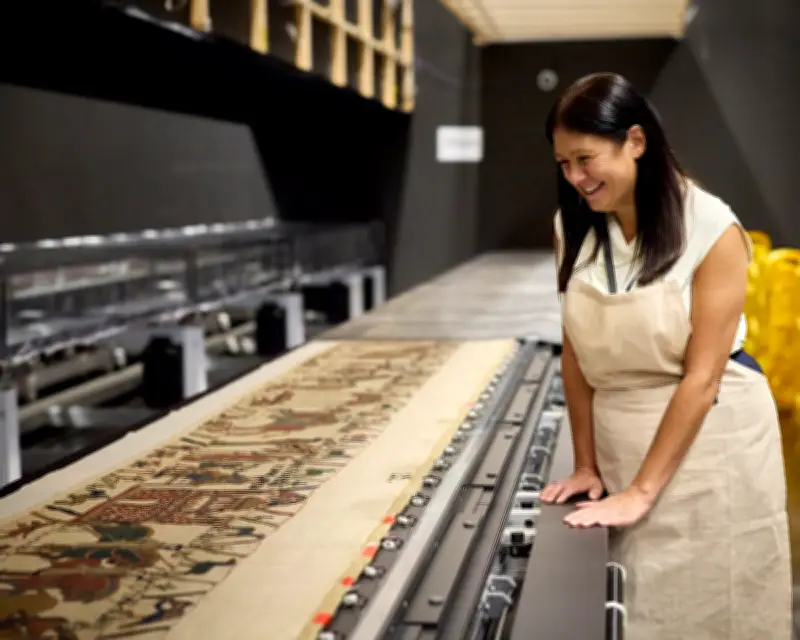
Precautions were strict: phones and pens were banned, and visitors had to wear aprons and protective shoe covers. "We look like a bunch of cheesemongers," Osborne observed. Only one section of the 70-metre tapestry was on display; the rest was covered by a black sheet in a long glass case. But that fragment was enough to silence the room, with the fabric laid out close enough to see individual stitches, faded colours, and tiny details. Conservators watched every movement anxiously.
Diplomatic Significance
Michael Lewis, the British Museum's lead curator, guided Nandy and Osborne through scenes including William the Conqueror, sword raised, receiving a message about Harold. "So someone's sitting on the throne, and someone wants to take it from him," Osborne said. "All in the past!" Nandy joked, "I've been stitched up here." When asked if William had a legitimate claim to the throne, Lewis replied, "Not at all." Osborne quipped, "I just thought we could tell Macron."
The loan, first proposed by Theresa May and Macron in 2018, required years of negotiations over transport conditions, temperature, and lighting to protect the tapestry, which had never before left France. "There couldn't be any risk whatsoever of damage," Nandy said. "A lot of the diplomacy was about the minutiae: what sort of case, how transported, what temperature, what lighting."
The tapestry's arrival was a carefully choreographed operation. The group was shown the enormous bespoke box in which it travelled, folded concertina-style. The UK's special envoy for the tapestry, Peter Ricketts, wore a Bayeux tapestry tie, joined by his French counterpart, Philippe Bélaval, creating a celebratory atmosphere.
Rebuilding Post-Brexit Relations
For Nandy, the loan is evidence of a wider attempt to rebuild Britain's cultural relationships after Brexit. "After the original agreement, talks stalled, not just because of the pandemic, but because there was a very needlessly antagonistic relationship for many years between the UK and France," she said. "This does, in a lot of ways, feel like closing the loop on that chapter."
Nandy first saw the tapestry as a 12-year-old on a school trip to Bayeux. "I remember feeling quite sick from drinking a lot of hot chocolate," she recalled. "But it was amazing to see." She hopes the exhibition will give a new generation the same opportunity, with schoolchildren from across the UK invited to visit.
Cultural Diplomacy and Future Loans
Nandy said the government had sought to make cultural exchange a deliberate part of foreign policy. "One of the things we've been doing is being much more proactive about helping partner organisations navigate complexities." She cited China as an example where cultural links remain valuable but require caution: "People-to-people connections are vital, but there are challenges around free speech, censorship, human rights, and security."
The British Museum has been at the centre of debates about political pressures. Nandy said institutions should not retreat: "I think they relish it. Art has always been a way of challenging the status quo, helping us rethink our past and reinterpret the future." On future loans, she said decisions remain with institutions, but the government can help create conditions for dialogue, "whether it's the Elgin marbles or Benin bronzes or any of the more controversial acquisitions."
During final photographs, conservators reminded visitors not to lean too close. "Put your hands on it," someone joked. "Quelle horreur," came a whispered response—a miniature Anglo-French exchange that felt reassuringly familiar.