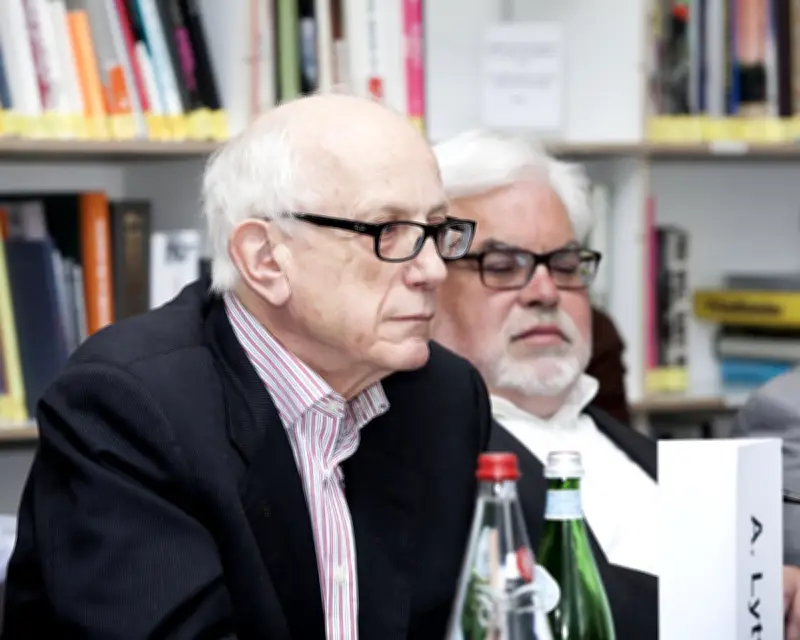
Adrian Lyttelton, the preeminent historian of Italian fascism and author of the groundbreaking study The Seizure of Power: Fascism in Italy, has died at the age of 89. First published in 1973, his work remains the standard text for anyone approaching the subject today.
Early Life and Education
Lyttelton was the youngest son of Oliver Lyttelton, Winston Churchill’s minister of production during the second world war, later Viscount Chandos. His mother was Lady Moira Osborne, daughter of the 10th Duke of Leeds. He followed the traditional family path of Eton and Oxford, though at Eton he was known not for cricketing prowess but for his quick-witted humour.
At Oxford, Lyttelton earned a starred first in history and was immediately elected a research fellow at All Souls College. There he met Margaret Hobson, daughter of theatre critic Harold Hobson, whom he married in 1960. Margaret later became a formidable figure in classical art and architecture.
Academic Career
After nearly a decade at All Souls, Lyttelton moved to St Antony’s College, Oxford, then to the University of Reading. He soon left for Bologna to become professor at the Johns Hopkins School for Advanced Studies, which he considered the happiest period of his life. He retained a strong attachment to the school even after moving to Pisa, where he remained until retirement in 2000.
Sabbaticals took him to Harvard, Princeton and Washington, where he wrote the characteristically brief but penetrating articles that typified his later academic output. He contributed several significant pieces to the New York Review of Books.
Personal Qualities and Legacy
Lyttelton was immensely likable – generous, loyal, ironic and often very funny. He was famously absent-minded, frequently losing his briefcase on trains or planes. Yet he possessed a remarkable memory, able to recall the line and page of something read more than 20 years earlier.
More than a historian, he was steeped in Italian culture – its art, music and literature – equally at home discussing Petrarch or Italian futurism. His last years were marred by ill health and by the sight of Florence, his adopted city, being devastated by overtourism.
Margaret died in 1993. Lyttelton is survived by their children, Celia and Frederick.