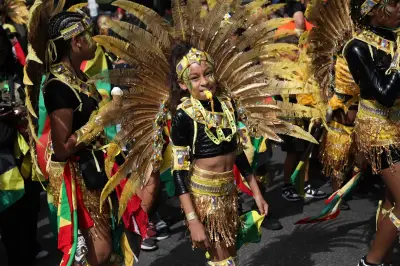
In a deeply personal essay, freelance writer Hilary Hanslin addresses her younger self, reflecting on the pain of growing up with Afro hair in a society that often misunderstood and mocked it. She recalls the frustration of having her hair touched without permission, the sting of being called 'greasy' for using shea and castor oil brought from Ghana, and the hurt of being labelled 'ghetto' or 'chavy' for wearing silk wraps and bonnets designed to protect her hair.
Childhood Memories of Hair Criticism
Hanslin remembers how her cornrows, crafted with precision and confidence, were cruelly compared to snakes by peers, and how girls would poke and prod at her 'frizzy' fro, mocking her 'mane'. She validates these feelings, acknowledging that alongside the injustice and cruelty, there was a sense of hopelessness about the difference she could make.
She reassures her younger self that she is not too sensitive or overthinking, but simply deserves a more respectful and open-minded audience when she chooses to speak. And for the moments when she chooses not to speak, it is entirely within her right.

A Shift in Perception
Hanslin offers hope, telling her younger self that she will go on to inspire, impact, and educate. Classmates will eventually ask about her hair with respect and admiration, rather than treating it like a visit to the petting zoo. Other Black girls will confide and relate through shared laughter and stories, and her little sister will grow up unafraid to call people out, excited to explore the variety of hairstyles her 4C coils offer.
She observes how time has a funny way of rewriting the rules. The hands of those who once called her hair greasy now rummage through local shops to acquire castor oil and shea butter for silky, shiny hair. Bonnets are now all the rage, with white girls on social media tying them with neat bows and praising matching silk pillowcases. The cornrows that were harshly criticised are now worn by white girls, renamed and praised for creativity, with no credit in sight. Those who mocked her fro now spend hundreds on diffusers and curling creams, determined to master 'The Curly Girl method'.
Finding Humour and Hope
Hanslin acknowledges that the code to stop microaggressions entirely is yet to be cracked, but with time, she has found humour in the absurdity. She admits that we are not perfect, still telling the occasional lie about how often we wash our hair to avoid judgment, and feeling nervous before a friend sees our natural hair for the first time.
In this moment, she wants her younger self to feel hope. She urges her to live by the words of Angela Davis: 'Don't accept the things you cannot change, but change the things you cannot accept'. She encourages her to wear box braids, cornrows, and coils with pride, not shame, reminding her that our hair is not an inconvenience or an invitation—it is ours. And if anyone needs reminding, it only takes four words: 'Don't touch my hair'.