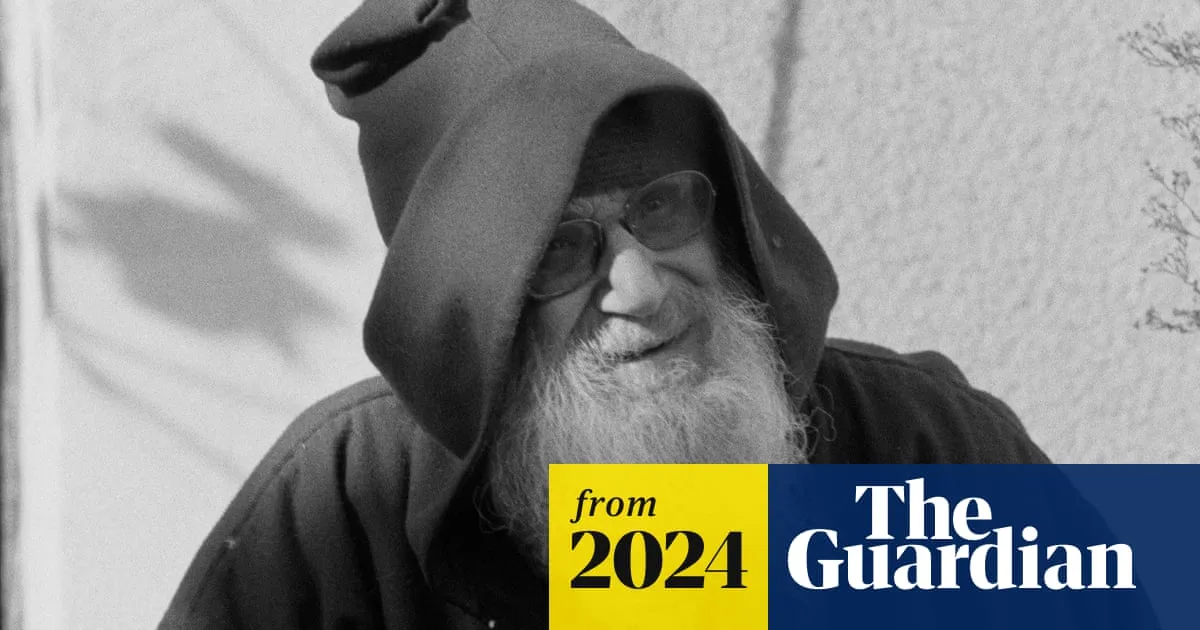
Alexander Grothendieck, once hailed as a revolutionary mathematician who reshaped the field as profoundly as Einstein did physics, died in obscurity in 2014 at the age of 86. In his final years, he lived as a reclusive hermit in the French Pyrenean village of Lasserre, where he tended his garden in a djellaba and wrote by night, shunning contact with family and colleagues. His death came after he sought a revolver to end his life, a request denied by a neighbour who alerted his children.
Born in Germany in 1928, Grothendieck arrived in France as a refugee in 1939. He went on to revolutionise postwar mathematics, introducing concepts that unified geometry, algebra and topology into a new, universal language. His work redefined the notion of space, moving beyond fixed Euclidean points to embrace relativity and probability. Colleagues were awed by the flood of ideas he produced in the 1950s and 60s.
In 1970, Grothendieck quit his prestigious post at the Institut des Hautes Études Scientifiques in protest against military funding. He held minor teaching roles until 1991, when he vanished completely. His whereabouts remained unknown until he was discovered living in Lasserre, where he refused most visitors and spoke of his true friends: the plants. He believed wood was conscious and once told a local bookbinder that his kitchen table 'knows more about you, your past, your present and your future than you will ever know'.
Despite his isolation, Grothendieck's genius continued to attract attention. His memoir, 'Harvests and Sowings', was published in 2022, renewing interest in his work. Today, mathematicians like Olivia Caramello explore his ideas, which some believe could transform artificial intelligence. Yet his later years were marked by paranoia and delusion, with Grothendieck claiming entities in his house might harm him. He died exhausted and alone in hospital, leaving behind thousands of pages of arcane writings and a legacy that straddles brilliance and madness.