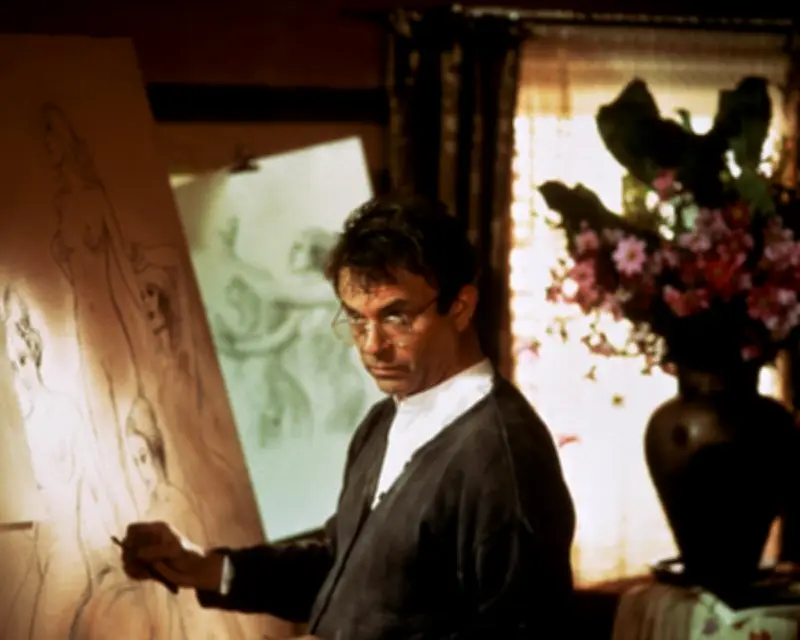
Actress Tara Fitzgerald has penned a heartfelt poem in tribute to Sam Neill, her co-star in the 1994 comedy-drama Sirens. In it, she remembers a man of rare beauty, generosity, and delight, whose presence on set was electric and whose kindness left a lasting impression.
A Mythic Status Before Meeting
Fitzgerald recalls that by the time she met Neill, he had already assumed a kind of mythic status in her household, playing Reilly on Ace of Spies. Her stepfather was his boss. Eleven years later, she got to work with him, playing Norman Lindsay wryly. She describes him as electric-minded, with some fantastic mischief lurking just around the grin, and the twinkle of his eye an astronomical scintillation.
No Time for Acting, Too Busy Being
According to Fitzgerald, Neill had no time for acting—too busy being. He was present, before she even knew what present was, there for the other actor, making it seem so simple. He really asked the question, and could conjure anything, like a Puckish spirit.
Blessed Proximity and Generosity
Fitzgerald feels so blessed to have had that time, the proximity, with the hope that something might rub off. She highlights his softly-softly take, the first tasting of Two Paddocks Pinot Noir on a gentle evening chez lui—another case of his generosity. She describes the satisfying ritual of swirling, sniffing, sipping, the glass half-full raised to the life fully lived.
Fine Unbuttoning of Stories
She remembers the fine unbuttoning of stories and some past glories, never boastful, never cruel, only a delight at the sharing. The wit and the wine wrapped everyone in his open embrace: a shimmer of sirens, a bouquet of sheep shearers, and an exaltation of Hugh Grants. The badinage that flowed on set was an art form in itself.
A Scene of Wonder
Fitzgerald describes watching him shoot his closeup for a scene in the garden, where the children watch a fairy show staged by the artist's models. His face was flooded with imagination, with his own wonder, his own childlike joy. Beautiful. Complete.
Walking Ahead
So he walks ahead, through the weeping grass, towards the house with the light on. We follow in his wake. The poem ends with a quote from Shakespeare's A Midsummer Night's Dream: 'Sometime a horse I'll be, sometime a hound, a hog, a headless bear, sometime a fire; and neigh and bark and grunt and roar and burn like horse, hound, hog, bear, fire at every turn.'