Mem Fox's Remarkable Literary Career
Mem Fox has published more than 50 books since her award-winning debut, Possum Magic, was launched in 1983. After being rejected by nine publishers, her first book went on to sell an astonishing 5 million copies, with readers immediately connecting to its vivid depiction of Australian foods, animals, and place names.
Early Aspirations and the Path to Writing
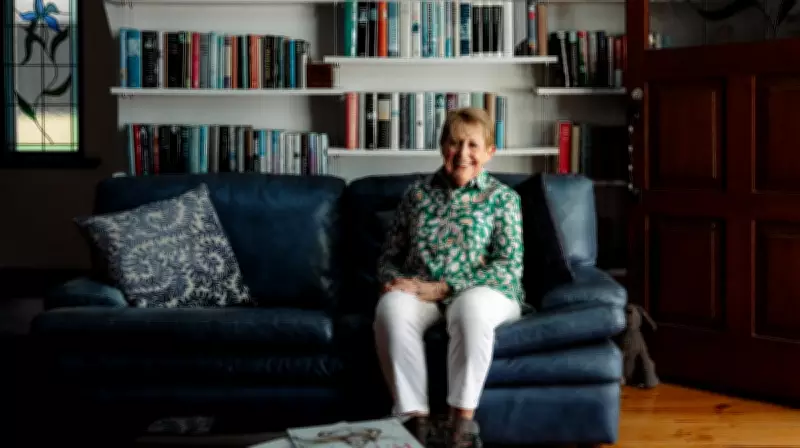
In 1968, while in London completing a three-year drama course, Fox made a pivotal note in her journal: "I don't want to be an actress, I want to be a writer." She recalls this moment from her home in Adelaide, noting that Possum Magic was published when she was 37, showing a long-held passion for writing. Her journey was not straightforward; after moving to Adelaide in the mid-1970s, she lectured in drama at a teacher's college and raised her daughter, Chloë, who loved books.
Fox observed a gap in the market, stating, "When she was little, there were no Australian picture books. There were a lot of English books, there were a lot of American books, but they were not Australian books." Reading to Chloë provided a subliminal introduction to children's literature, leading Fox to enrol in a children's literature course at Flinders University.

The Creation of Possum Magic
An early assignment required writing her own book, a task Fox initially dismissed as "beneath me" due to its perceived simplicity. She soon discovered it was harder than expected but persisted, collaborating with illustrator Julie Vivas to enhance her manuscript, originally titled Hush the Invisible Mouse. Despite earning a high distinction, the publishing industry was sceptical, with nine rejections before a tenth publisher accepted it—on the condition that Fox shorten the text and change the central character to something more distinctly Australian.
This led to the creation of Possum Magic, which became an instant classic upon its 1983 release. It won Australia's children's book of the year in 1984 and sold out its first printing before launch, driven by word of mouth. Fox reflects, "People were starving for it. They just wanted an Australian book. They wanted to be able to read about themselves." She credits the illustrations as a major factor in its success, describing them as "from heaven."
Legacy and Impact on Australian Literature
Following Possum Magic, Fox continued to produce beloved picture books, including Wilfrid Gordon McDonald Partridge in 1984, Where Is the Green Sheep? in 2004, and Ten Little Fingers and Ten Little Toes in 2008. These works have become bestsellers, cherished by generations. Fox expresses pride in seeing many Australian authors on shortlists today, contrasting it with the past scarcity, saying, "You don't realise it at the time at all, but looking back, you think, 'God, there was nothing.' Then there was something ... and then there was a lot."
The Art of Writing for Children
Even with over 50 books to her name, Fox acknowledges that writing for children remains challenging. She emphasises the importance of rhythmic and lyrical language, noting that Where Is the Green Sheep? is only 191 words long. Her love of language was influenced by the King James Bible, which she describes as "sonorous and perfect," with a focus on readability aloud.
Fox avoids being preachy in her books, a lesson learned from reading to her daughter. She states, "I'm not telling people how to think. I'm just stating facts." She also comments on changes in publishing, such as the trend of celebrity-authored children's books, which she sees as potentially short-lived but beneficial for funding other authors.
Looking Ahead
As Fox approaches her 80th birthday in March, she remains active in writing, with new books in the pipeline. She humorously notes that the illustration process can take up to two years, adding, "I might be dead before they come out!" Her dedication to crafting stories that resonate with children, whether read one-on-one or in a classroom, underscores her enduring impact on Australian literature.