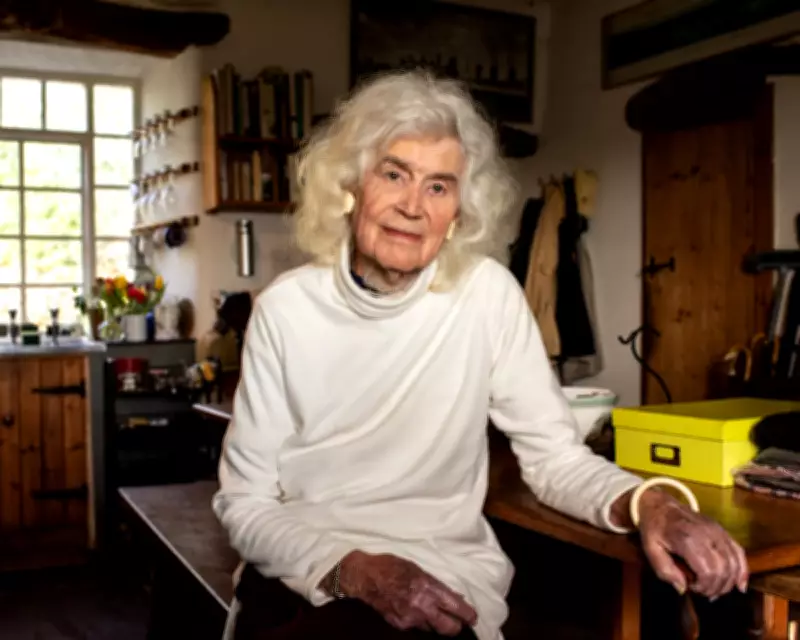
Sara Wheeler's Masterly Biography of Jan Morris
Sara Wheeler's authorised biography of Jan Morris presents a compelling and nuanced portrait of the celebrated writer, journalist, and transgender trailblazer. The book, titled "Jan Morris: A Life," delves into the multifaceted existence of a figure who was both brilliant and deeply flawed, offering readers an intimate look at her extraordinary journey.
A Portrait with Stipulations
Before agreeing to sit for a painting at the National Portrait Gallery in London, Jan Morris made two specific requests. She insisted that her Norwegian forest cat, Ibsen, be included in the portrait, and that one of her calves be visible. The gallery complied, resulting in a striking image of Morris, then nearly 80 years old, wearing a yellow jumper and dark green skirt, with Ibsen beside her bare legs. Morris expressed satisfaction with the portrait, though she humorously noted it could have been slightly larger.
This anecdote encapsulates the complexity of Jan Morris, a person whose life defied simple categorization. She was a sympathetic historian of empire who simultaneously embraced republican Welsh nationalism, yet accepted a CBE. As the author of over 50 books spanning travel writing, biography, history, memoir, and fiction, she was both a workaholic and, as some of her works reveal, capable of surprising laziness. While she preached a "religion of kindness," she was often cruel to her children, creating a paradox that Wheeler explores with sensitivity.

An Impossibly Rich Life
Born James Morris in 1926, she experienced the world first as a man, benefiting from the opportunities that masculinity afforded during that era. Morris used masculine pronouns when referring to this period, a convention followed by Wheeler and maintained here. As James, he won scholarships to private schools, served in the army with prestigious postwar postings in Venice and Trieste, attended Oxford University, and became a star foreign correspondent for the Times.
His career reached its zenith during the 1953 Everest expedition, where he scooped the world with news of the British team's success, coinciding with the birth of his child back home. This fame led to a prolific writing career, with books like "Coast to Coast," "Coronation Everest," and "Venice" achieving both popular and critical acclaim. He interviewed Che Guevara, observed Adolf Eichmann "trembling" in the dock, purchased a manor house, and sent his son to Eton. Over the subsequent two decades, he transitioned from James to Jan, a transformation that would define much of her public identity.
The Writer Above All Else
Regardless of gender, Morris remained a writer first and foremost. The day after waking from vaginoplasty surgery in a Casablanca clinic in 1972, she wrote to her wife, Elizabeth, noting that the experience would make "an excellent and not unentertaining piece of memoir!" That same month, she signed a contract with Faber for that memoir, receiving an advance of £10,000, equivalent to approximately £118,000 today.
The publication of "Conundrum" sparked predictable controversy. Germaine Greer, writing in the Evening Standard, dismissed Morris as "a man who has eaten a great many pills... a man who has had his penis cut off, but a man nevertheless." The New York Times published a lengthy spoof about a woman transitioning into a horse, and the BBC delivered a harsh on-screen critique. Despite this, friends rallied around Morris, readers sent sacks of supportive letters, and the book continues to be read and discussed decades later.
The Complexities of Family Life
Elizabeth Morris, who suffered from advanced dementia by the time Wheeler began writing this biography, remains a somewhat elusive figure. She raised five children, one of whom died in infancy, largely on her own. Morris could be selfish and autocratic, leading to questions about why Elizabeth stayed in the marriage. Elizabeth once told her daughter, Suki, that she remained "because I made a vow to God."

Yet the couple's letters overflow with professions of love, contrasting sharply with Morris's relationship with her children. After Morris's death, Suki wrote that her mother was "a lousy parent who damaged all four of her living children one way or another." Wheeler navigates these familial complexities with the skill of a family therapist, presenting the facts without heavy-handed judgment, though readers may find it difficult to resist forming their own opinions.
A Nuanced Final Assessment
Despite the extraordinary nature of her life, Jan Morris emerges from this biography as a familiar character in many ways. She diligently replied to adoring fans but often avoided family intimacy, hiding behind a veil of charm and using her gift with words to obscure difficult truths. Wheeler's biography is sensitive, beautifully written, and masterly in its execution—a comprehensive portrait that, through its careful perspective, occasionally makes Morris appear rather small.
"Jan Morris: A Life" by Sara Wheeler is published by Faber at £25. This biography not only chronicles the achievements of a trans pioneer and literary giant but also confronts the personal flaws that shaped her relationships, offering a balanced and deeply human account of a truly remarkable individual.