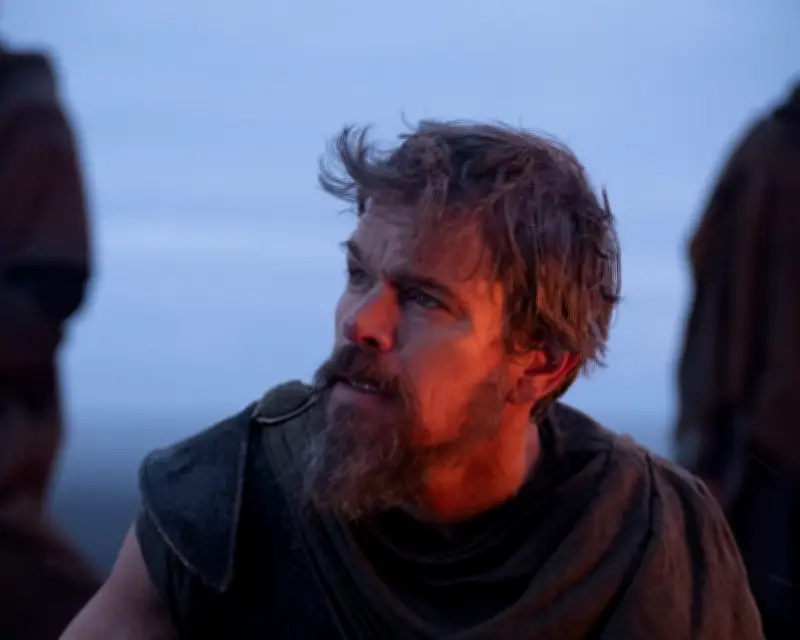
Christopher Nolan's upcoming film adaptation of Homer's The Odyssey has reignited public interest in the ancient Greek epic. For many, the poem remains daunting due to its vast cast, repetitive formulas, and archaic language. However, classicists and recent translations offer practical strategies to make the text accessible.
Start with Context, Not the Text
Antony Makrinos, associate professor in classics at University College London and director of the Summer School in Homer 2026, advises: “Begin with contextualisation.” He recommends exploring Mycenaean civilisation and ancient Greek culture. A visit to the British Museum or watching Simon Armitage's documentary Gods and Monsters can provide essential background on the flawed hero Odysseus.
Podcasts as a Gateway
The podcast Instant Classics, hosted by Mary Beard and Charlotte Higgins, offers an engaging introduction. Their enthusiasm is contagious, revealing that Homer's Odyssey was likely not written by a single author and anticipates postmodernism with its non-linear narrative and self-reference. The epic is not just about Odysseus's journey but also a coming-of-age story, travelogue, and family saga.
Choose the Right Translation
Rebecca Laemmle, professor of Greek Literature at the University of Cambridge, recommends the new Daniel Mendelsohn translation. However, Makrinos, Beard, and Higgins steer general readers toward Emily Wilson's translation. Wilson's version uses iambic pentameter, familiar to English readers, creating a driving rhythm that feels alive compared to older translations like the 1946 EV Rieu edition, which can feel stale. The Norton Critical Edition of Wilson's translation includes detailed footnotes, maps, appendices, and book-by-book summaries that aid comprehension.
Create a Character Cheat Sheet
Laemmle suggests: “Whenever I read a book with a big cast of characters, I map out the relations on a sheet of paper.” Mapping characters like Odysseus, Penelope, Telemachus, and the suitors helps track the story, especially in the early books (1–4). A cheat sheet, though messy, can clarify relationships and roles.
Embrace the Oral Tradition
If repetitiveness is off-putting, audiobooks can help. Laemmle notes: “They might more readily warm up to it when being read to.” Ian McKellen's narration of Robert Fagles's translation brings the epic to life, echoing its original oral performance. Homeric poetry was often chanted to a lyre, but a skilled narrator suffices.
Personal Reflection
After years of struggling, the author finally finished The Odyssey, finding it surprising, modern, and fast-paced. Odysseus is a deeply flawed hero, and key episodes like Books 9–11 and Book 22 remain powerful. A poignant moment in Book 17, when Argos the dog recognises Odysseus, is devastating. The epic continues to inspire works by Margaret Atwood, Madeline Miller, Derek Walcott, and Michael Longley. For those who finish, the journey doesn't end—there's always more to explore.